

Bold experimentation has made Australian whisky a global standout, with over 350 active distilleries shaping an industry rich in innovation and character. For whisky aficionados across Australia, understanding what defines a whisky expression is key to appreciating the artistry behind every premium and rare bottle. This article cuts through the complexity to reveal how varied local techniques, unique ingredients, and creative maturation methods set Australian whisky expressions apart, empowering your selection from the most coveted shelves.
Table of Contents
- Defining A Whisky Expression In Australia
- Types Of Whisky Expressions Compared
- How Expressions Differ By Flavour And Cask
- Distillery Approaches To Creating Expressions
- Choosing The Right Whisky Expression For You
Key Takeaways
| Point | Details |
|---|---|
| Whisky Expressions | Australian whisky expressions are unique variants that reflect local distillers’ craft, showcasing ingredients and production techniques. |
| Influencing Factors | Grain selection, cask maturation, and climate are critical elements that shape the complexity and character of whisky expressions. |
| Diversity in Styles | Common whisky expressions include single malt, blended malt, single grain, and blended whisky, each offering distinct flavour profiles and production methods. |
| Personal Taste Journey | Whisky appreciation evolves over time; beginners should start with lighter styles before exploring more complex expressions to match their developing palate. |
Defining a whisky expression in Australia
A whisky expression represents a unique and specific variant of whisky crafted by a distillery, encompassing the nuanced characteristics that distinguish one bottling from another. Unlike mass-produced spirits, Australian whisky expressions showcase remarkable diversity, reflecting the innovative spirit of local distillers who experiment with unique production techniques and regional ingredients.
In the Australian context, a whisky expression goes beyond simple labelling. It captures the essence of the distiller’s craft, incorporating elements such as grain selection, malting processes, cask types, and maturation environments. These expressions can vary dramatically even within a single distillery’s portfolio, with each release telling a distinctive story about its origin, production methods, and sensory profile. For instance, a single distillery might produce expressions that range from heavily peated single malts to smooth, bourbon-style whiskies, demonstrating the remarkable flexibility of Australian whisky production.
The complexity of a whisky expression is further enhanced by Australia’s diverse climate and agricultural landscape. Unique local grains and innovative maturation practices contribute to expressions that are distinctly Australian. Distillers often experiment with native wood types for barrels, incorporate local barley varieties, and leverage the country’s variable temperature ranges to create whiskies with extraordinary depth and character. This approach means that each whisky expression becomes a liquid representation of its specific geographic and cultural context.
Here’s a summary of key factors that shape Australian whisky expressions:
| Factor | Influence on Whisky Expression | Typical Australian Approach |
|---|---|---|
| Grain Selection | Determines base flavour complexity | Use of local barley and unique grains |
| Cask Maturation | Adds layers of flavour and aroma | Experimental use of Australian wood types |
| Climate Conditions | Affects maturation speed and profile | Variable temperature accelerates ageing |
| Distillery Philosophy | Drives style and consistency | Blend of tradition and bold experimentation |
Pro tip: When exploring Australian whisky expressions, pay attention to the specific details on the label, such as cask type, age statement, and any unique production methods, as these provide crucial insights into the whisky’s distinctive character.
Types of whisky expressions compared
Whisky expressions encompass a remarkable diversity of styles, each representing a unique approach to spirit making. Common whisky types range from single malt expressions, produced entirely from malted barley at one distillery, to more complex blended varieties that combine multiple grain profiles. These different expressions reflect not just production techniques, but the distinctive philosophy of each distiller and the regional characteristics that shape their craft.
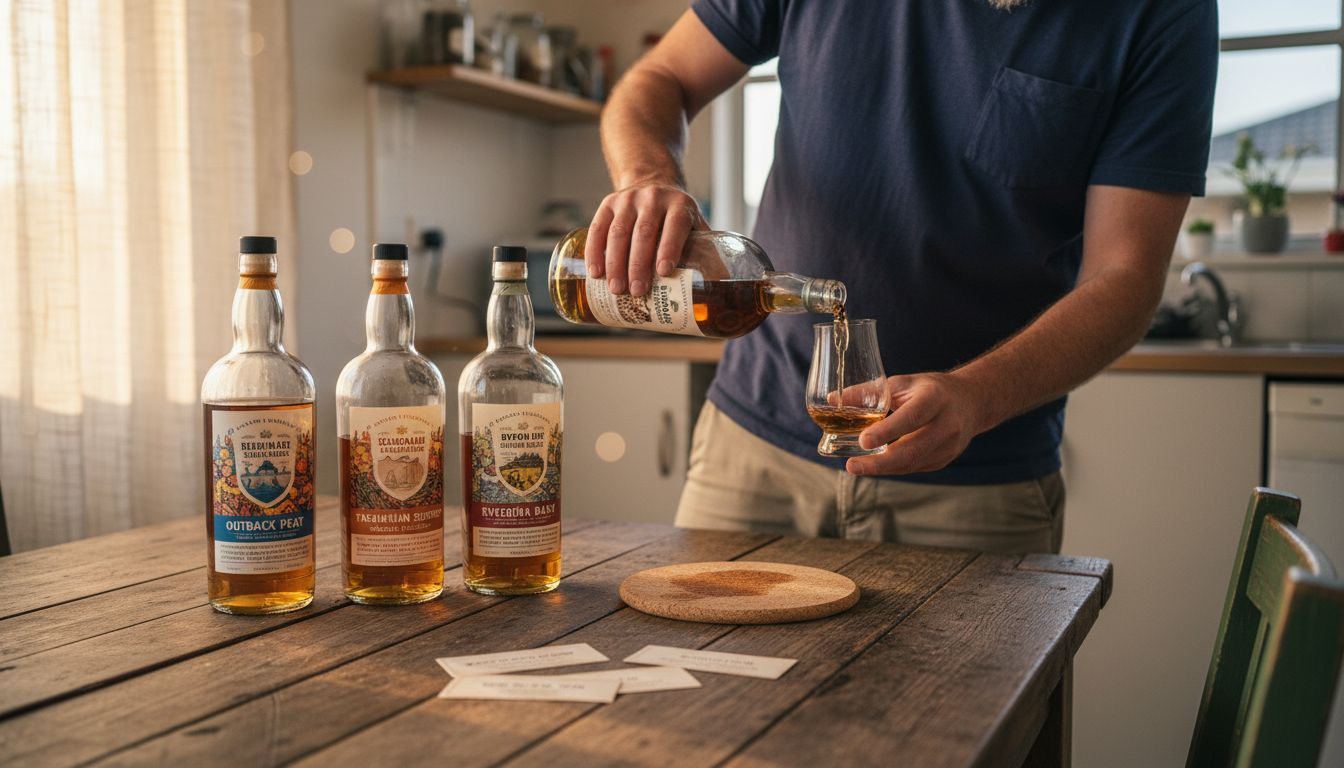
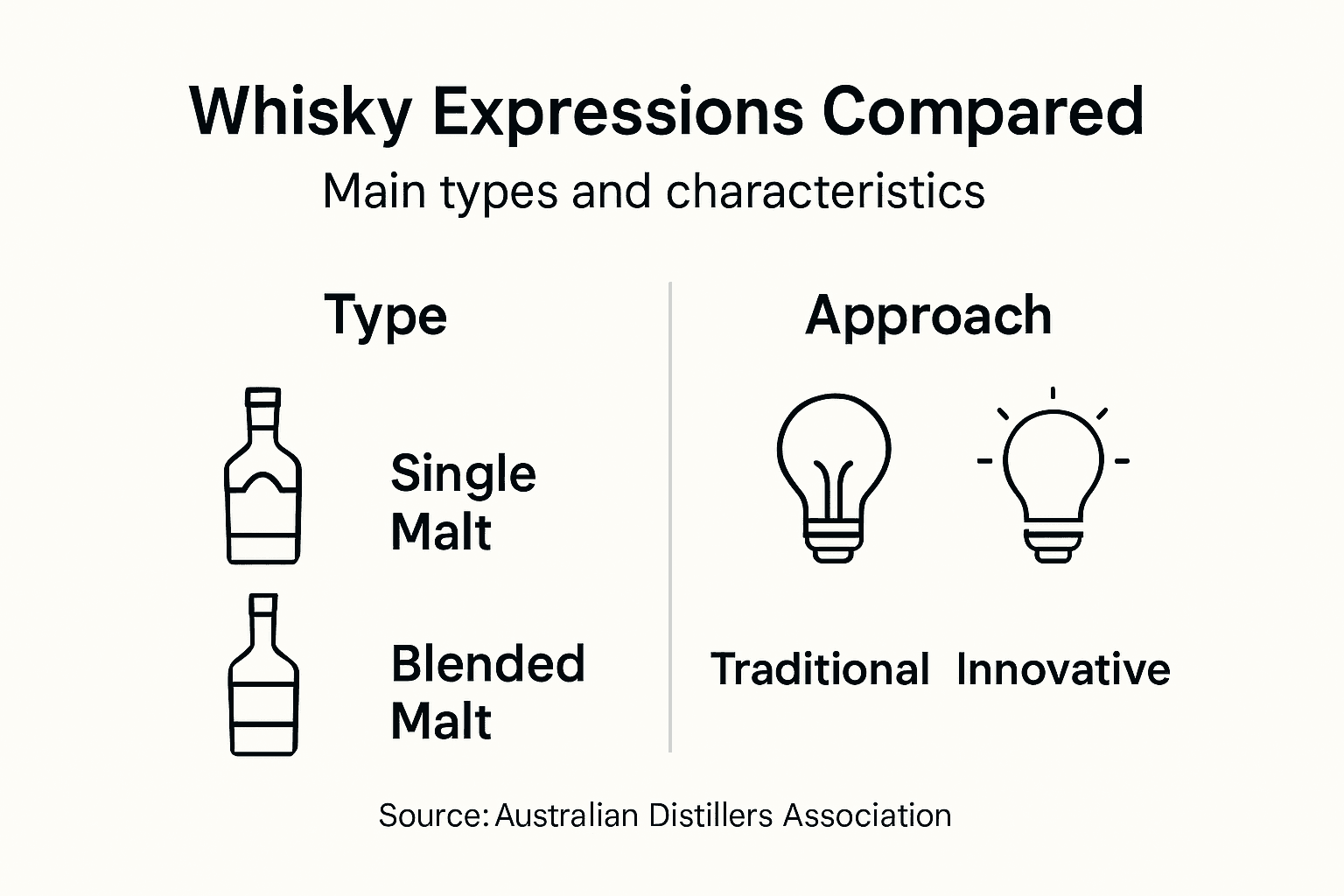
The primary categories of whisky expressions include single malt, blended malt, single grain, and blended whisky. Single malt expressions are typically considered the pinnacle of craftsmanship, featuring whisky from one distillery made exclusively with malted barley. Blended malt expressions combine single malts from different distilleries, creating complex flavour profiles that showcase the blender’s artistry. Single grain expressions, while less common, offer unique alternatives by using grains like corn or rye instead of traditional malted barley, providing distinctive taste experiences that challenge traditional whisky expectations.
Australian distilleries have become particularly innovative in developing whisky expressions, often drawing inspiration from international styles while creating distinctly local interpretations. Bourbon-style expressions using predominantly corn, Irish-style combinations of malted and unmalted barley, and experimental approaches using native Australian wood types demonstrate the creative potential within whisky production. These varied expressions not only represent different technical approaches but also tell stories about regional identity, agricultural traditions, and the evolving craft of spirit making.
The following table compares primary whisky expression types found in Australia:
| Expression Type | Main Ingredient | Production Approach | Typical Flavour Profile |
|---|---|---|---|
| Single Malt | 100% malted barley | One distillery | Rich, layered, malt-forward |
| Blended Malt | Malted barley blends | Multiple distilleries | Complex, balanced, nuanced |
| Single Grain | Corn, rye, wheat | One distillery | Smooth, lighter, versatile |
| Blended Whisky | Grain & malt blend | Multiple distilleries | Accessible, varied, harmonious |
Pro tip: When exploring different whisky expressions, taste progressively from lighter to more intense styles to fully appreciate the nuanced flavour profiles and production techniques.
How expressions differ by flavour and cask
Whisky expressions derive their distinctive characteristics through an intricate interplay of grain selection, distillation techniques, and most critically, cask maturation. The type of cask used during aging profoundly transforms a whisky’s flavour profile, introducing complex layers of taste that distinguish one expression from another. Wine, sherry, bourbon, and even experimental wood barrels each contribute unique sensory dimensions, creating a sensory landscape that reflects both traditional craft and innovative spirit-making approaches.
The flavour journey of a whisky expression begins with its base ingredients but truly comes alive during the maturation process. Sherry casks, for instance, typically impart rich, fruity notes with hints of dried fruits and warming spices, while bourbon barrels contribute sweeter vanilla and caramel undertones. Oak types matter significantly - French oak tends to deliver more subtle, refined characteristics compared to American oak’s more robust and pronounced flavour profiles. Australian distilleries have become particularly adept at experimenting with local wood types, creating expressions that tell a story of regional terroir and craftsmanship.
Beyond wood selection, factors like cask size, previous contents, and aging duration dramatically influence a whisky’s final character. Smaller casks accelerate maturation and intensify flavour interactions, while longer aging allows for more nuanced chemical exchanges between spirit and wood. Some distilleries employ finishing techniques, transferring whisky between different cask types to create multi-layered expressions that challenge traditional flavour expectations. This approach transforms whisky from a simple alcoholic beverage into a complex sensory experience that reflects both scientific precision and artistic interpretation.
Pro tip: When comparing whisky expressions, taste them side by side at room temperature to fully appreciate the subtle variations in flavour introduced by different cask treatments.
Distillery approaches to creating expressions
Australian distilleries demonstrate remarkable creativity in developing whisky expressions, balancing traditional techniques with innovative local approaches. Each distillery crafts its unique identity through strategic decisions about grain selection, fermentation processes, and maturation environments. Some producers closely emulate European whisky-making traditions, while others boldly experiment with distinctly Australian ingredients and techniques, creating expressions that reflect the nuanced terroir of their specific region.
The philosophical approach to creating whisky expressions varies dramatically between distilleries. Some focus on precision and consistency, carefully replicating flavour profiles across batches, while others embrace a more experimental ethos, treating each expression as an artistic statement. Decisions like whether to use peated or non-peated barley, selecting specific wine or bourbon casks for finishing, and determining precise aging durations become critical elements in defining a distillery’s signature style. These choices transform whisky from a mere beverage into a narrative about craft, place, and personal vision.
Regional variations play a significant role in shaping distillery approaches. Tasmania’s cooler climate, for instance, offers different maturation conditions compared to mainland regions, influencing how whisky develops its complexity. Some Australian distilleries leverage local wine industry connections, using barrels from renowned wineries to impart unique flavour characteristics. This cross-pollination between wine and whisky production represents a distinctly Australian innovation, allowing distillers to create expressions that cannot be replicated anywhere else in the world.
Pro tip: When exploring different distillery expressions, collect tasting notes that document the specific production techniques, as these provide fascinating insights into each whisky’s unique character.
Choosing the right whisky expression for you
Selecting the ideal whisky expression requires understanding your personal taste journey and current palate development. Whisky appreciation is an evolving experience that begins with lighter, more approachable styles and gradually moves towards more complex and nuanced expressions. New whisky enthusiasts should approach their selection strategically, considering factors like flavor intensity, sweetness, smokiness, and overall complexity.
The spectrum of whisky expressions ranges from gentle and smooth to bold and challenging. Beginners might start with softer, less peated expressions that offer approachable vanilla and caramel notes, while experienced drinkers often seek out intricate profiles with layers of spice, fruit, and oak influence. Factors such as grain type, cask selection, and maturation duration dramatically impact a whisky’s character, making each expression a unique sensory experience. Understanding these variations helps whisky lovers make more informed selections that align with their evolving preferences.
Australian whisky producers offer remarkable diversity, enabling enthusiasts to explore expressions that range from traditional styles to innovative local interpretations. Some distilleries craft expressions that mirror Scottish traditions, while others leverage local ingredients and unique maturation techniques to create distinctive flavour profiles. Regional variations in climate, local grains, and experimental cask treatments mean that Australian whisky expressions often provide unexpected and exciting taste experiences that challenge conventional whisky expectations.
Pro tip: Always taste whisky expressions in a proper tasting glass at room temperature, and take time to smell the whisky before tasting to fully appreciate its complex characteristics.
Discover and Experience the Spectrum of Whisky Expressions Today
Navigating the world of whisky expressions can feel overwhelming with so many styles, cask types, and regional influences to consider. Whether you seek the rich malt-forward profile of single malts or the smooth balance of blended whiskies understanding these distinctions is key to enhancing your appreciation and finding bottles that truly resonate with your palate. At Uisuki, we recognise the challenge whisky enthusiasts face in uncovering uniquely crafted expressions especially those showcasing diverse techniques such as Australian maturation or rare distillery releases.

Unlock the full potential of your whisky journey by exploring our curated collections including the iconic Glenglassaugh Scotch Whisky known for exceptional craftsmanship or dive into rare treasures within our Older Bottlings selection. Every bottle is accompanied by detailed descriptions highlighting its cask history, flavour profile, and distillery story to help you make informed choices. Start exploring now at Uisuki.com.au and elevate your whisky experience with flavours as unique as your personal taste.
Frequently Asked Questions
What is a whisky expression?
A whisky expression is a unique variant of whisky crafted by a distillery, showcasing its distinct characteristics, production methods, and sensory profile.
How do different cask types influence whisky expressions?
Different cask types impart unique flavors and aromas to whisky, such as sherry casks adding fruity notes and bourbon barrels providing sweetness. The type of wood and previous contents also play a significant role in shaping the whisky’s final character.
What are the main types of whisky expressions?
The main types of whisky expressions include single malt, blended malt, single grain, and blended whisky, each offering different flavor profiles and production approaches based on their ingredients and distillation techniques.
Why is the distillery’s philosophy important in whisky expressions?
The distillery’s philosophy influences its approach to whisky production, affecting choices in grain selection, fermentation processes, and maturation environments. This reflects the distiller’s identity and contributes to the uniqueness of each expression.