

Tasting whisky is never just about taking a sip and guessing a flavour. For collectors in Australia, the pursuit of a refined whisky palate means embracing a deeper, more systematic journey into aroma, texture, and taste. Using resources like the Whisky Tasting Wheel invites you to move beyond simple preferences and truly appreciate every whisky’s complexities. Whether you aim to recognise delicate fruit notes or distinguish between smoky layers, understanding these core concepts can transform your appreciation and inform the curation of your premium selection.
Table of Contents
- Defining Whisky Palate And Core Concepts
- How Flavour, Aroma And Texture Develop
- Types Of Palates And Individual Perceptions
- Techniques To Refine Your Whisky Palate
- Common Pitfalls In Assessing Whisky Palate
Key Takeaways
| Point | Details |
|---|---|
| Whisky Palate Development | Understanding aroma, flavour, and texture is essential for appreciating whisky. Engaging in comparative tastings enhances sensory recognition. |
| Personal Sensitivity | Each whisky taster’s experience varies based on genetics and environmental factors. Engaging in self-reflection through a tasting journal can document palate evolution. |
| Common Tasting Pitfalls | Sensory fatigue and inconsistent conditions can skew evaluations. Proper preparation and palate resets between tastings are crucial for accurate assessments. |
| Structured Tasting Techniques | Systematic approaches improve flavour articulation and depth of tasting. Regular practice helps in recognising nuanced flavour complexities. |
Defining Whisky Palate And Core Concepts
A whisky palate represents the comprehensive sensory experience of tasting whisky, encompassing more than just flavour. It involves understanding the intricate layers of taste, aroma, and mouthfeel that create a unique drinking experience. Whisky tasting wheel provides a systematic framework for exploring these complex sensory interactions.
At its core, the whisky palate integrates multiple sensory perceptions, including:
- Taste receptors on the tongue detecting primary flavour profiles
- Olfactory signals contributing to overall flavour perception
- Textural sensations like smoothness or intensity
- Temperature and alcohol interaction influencing taste experience
The concept of palatability goes beyond simple taste, representing the pleasure derived from consuming whisky. Individual perception of palatability varies based on physiological states, personal preferences, and neurological mechanisms. This means two people might experience exactly the same whisky quite differently.
Professional whisky tasters use structured approaches to systematically evaluate and describe palate experiences. They train themselves to identify nuanced flavour notes ranging from woody and cereal to fruity and peaty characteristics. Understanding these subtleties transforms whisky consumption from mere drinking to a sophisticated sensory exploration.
Pro tip: Start developing your palate by tasting whiskies side by side and taking detailed notes about each sensory experience.
How Flavour, Aroma And Texture Develop
Whisky’s sensory experience is a sophisticated interplay of complex chemical reactions and perceptual mechanisms. Sensory flavor compounds trigger intricate chemoreceptor interactions that transform simple ingredients into an extraordinary tasting experience.
The development of whisky flavour occurs through multiple sophisticated stages:
- Malting process releasing initial flavour precursors
- Fermentation generating complex aromatic compounds
- Distillation concentrating and refining flavour molecules
- Maturation introducing wood-influenced nuanced characteristics
Aroma perception involves two critical pathways: orthonasal and retronasal smelling. Odour and aroma perception demonstrates how volatile compounds interact with our sensory receptors, creating the intricate flavour profile we experience.
Textural elements play a crucial role in flavour interpretation. The whisky’s mouthfeel – whether silky, oily, or sharp – significantly influences how we perceive its overall taste. Chemoreceptors and trigeminal nerves work together, translating physical sensations into complex flavour experiences that go far beyond simple taste.
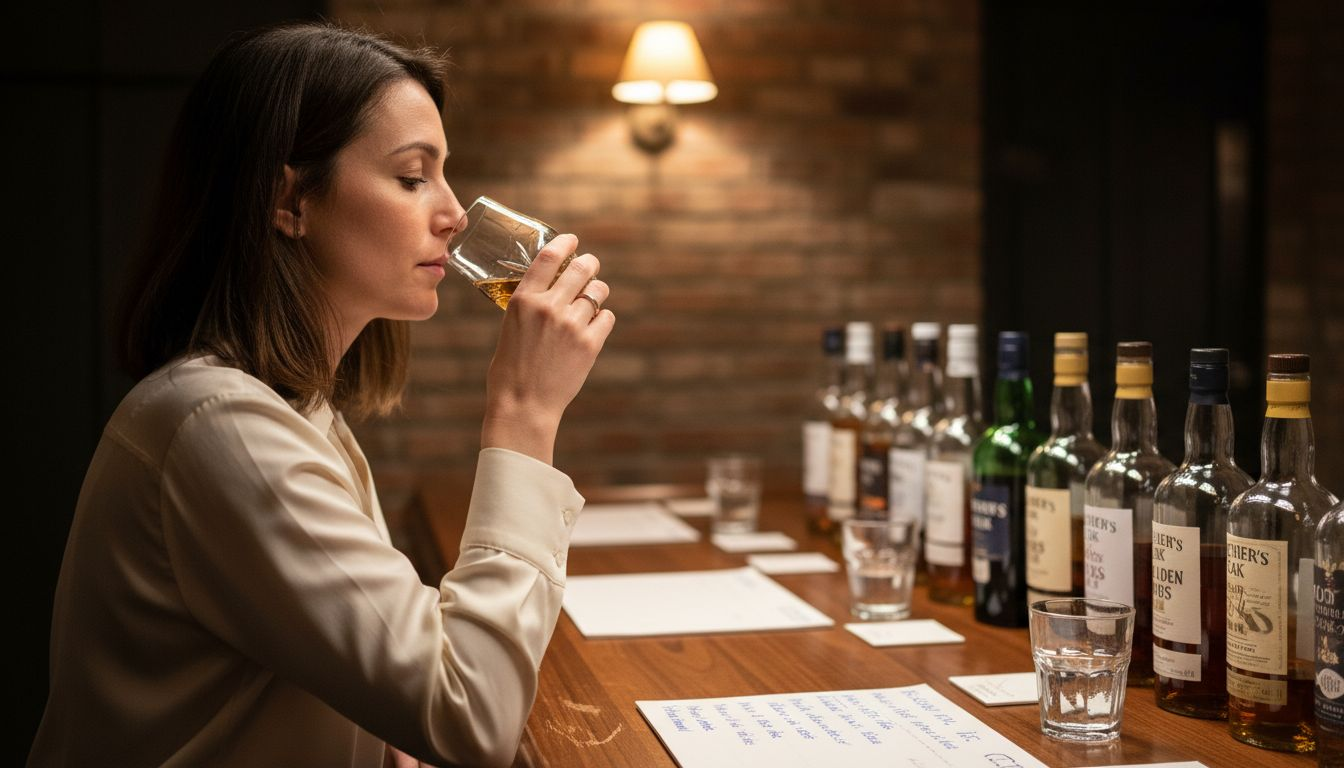
Pro tip: Try holding whisky in your mouth for several seconds to fully appreciate its evolving textural and flavour characteristics.
Types Of Palates And Individual Perceptions
Whisky tasting is a deeply personal experience that varies dramatically between individuals. Each person’s palate is uniquely shaped by genetics, cultural background, previous tasting experiences, and even physiological factors such as age and health.
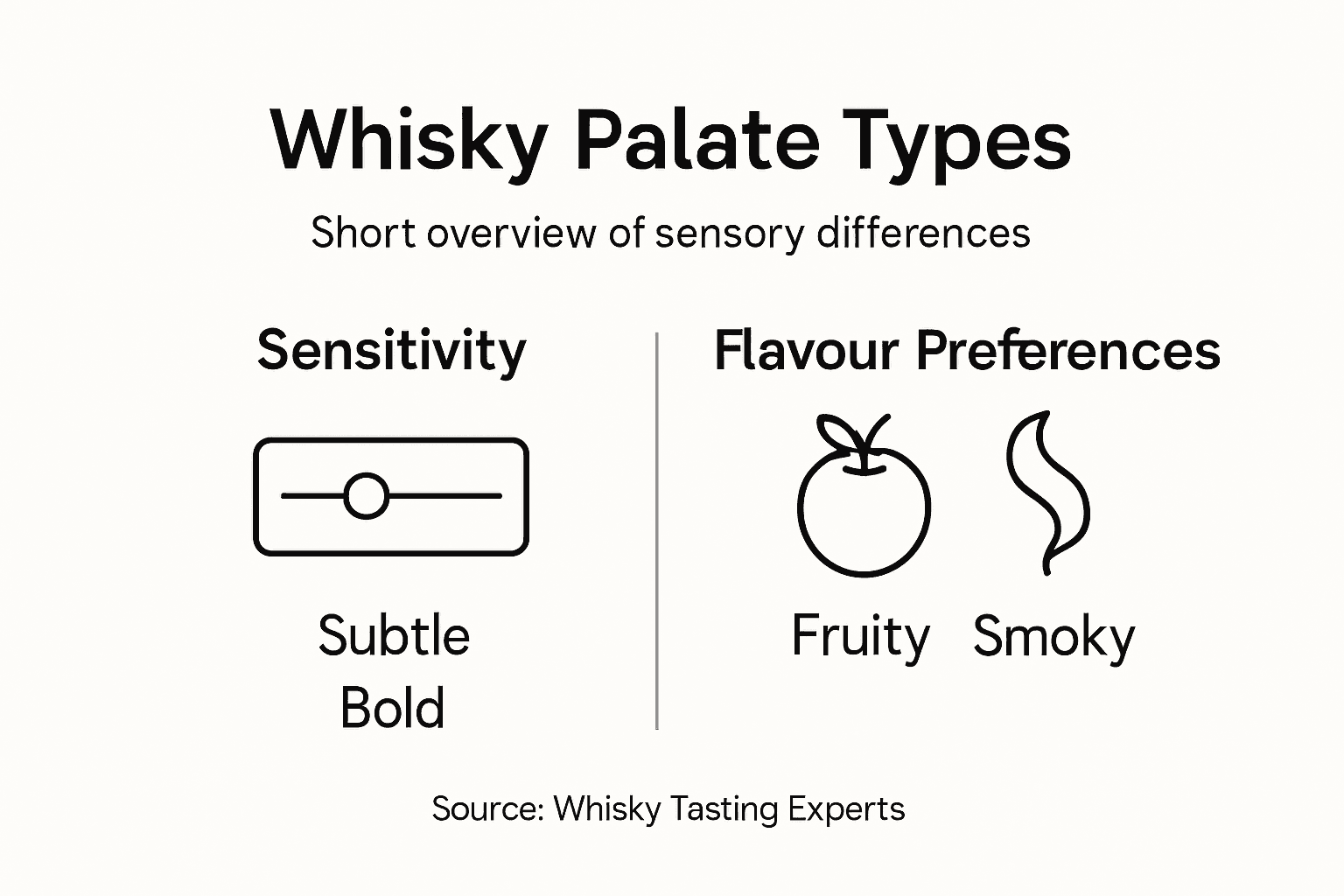
Typically, whisky palates can be categorised into several distinctive profiles:
- Novice palates characterised by sensitivity to strong alcohol notes
- Experienced palates capable of detecting subtle flavour nuances
- Adventurous palates seeking complex and unconventional taste experiences
- Traditional palates preferring classic, well-established whisky styles
Individual perception of whisky involves multiple sensory dimensions beyond simple taste. Genetic variations in taste receptors mean some people are more sensitive to certain flavour compounds, explaining why a single whisky can evoke completely different responses from different tasters.
Furthermore, personal memories, emotional states, and even environmental conditions can significantly influence how we perceive and enjoy whisky. A dram consumed during a celebratory moment will taste fundamentally different from the same whisky consumed during a mundane evening, highlighting the subjective nature of taste experiences.
Pro tip: Keep a whisky tasting journal to track how your palate evolves and develops over time.
Here’s a summary illustrating how different whisky palate types influence tasting experiences:
| Palate Type | Sensory Sensitivity | Preferred Flavour Styles | Example Approach |
|---|---|---|---|
| Novice | Strong alcohol cues | Sweeter, less complex whiskies | Simple sips, basic notes |
| Experienced | Subtle flavour detection | Complex, varied profiles | Detailed tasting comparisons |
| Adventurous | Seeks bold sensations | Unusual, layered whiskies | Mix regional, rare samples |
| Traditional | Appreciates consistency | Classic, well-established malts | Repeat favourite brands |
Techniques To Refine Your Whisky Palate
Developing a sophisticated whisky palate requires deliberate practice and strategic sensory training. Systematic tasting approaches help enthusiasts transform their tasting experience from casual drinking to nuanced appreciation.
Key techniques for palate refinement include:
- Comparative tasting of whiskies from different regions
- Controlled nosing to identify subtle aroma components
- Structured note-taking during each tasting experience
- Sensory reset techniques like cleansing the palate between samples
Using tools like the Whisky Tasting Wheel can dramatically improve your ability to articulate complex flavour profiles. This systematic approach helps categorise and describe the intricate sensory experiences found in different whiskies, moving beyond simple ‘like’ or ‘dislike’ assessments.
Consistent practice is crucial in palate development. Regular tastings, coupled with mindful reflection, help train your sensory receptors to detect increasingly subtle flavour nuances. Environmental factors, your current physiological state, and even emotional context can influence taste perception, making each tasting a unique journey of discovery.
Pro tip: Taste whiskies at different times of day and in various moods to understand how your perception changes.
Common Pitfalls In Assessing Whisky Palate
Whisky palate assessment is fraught with subtle challenges that can dramatically skew perception. Sensory evaluation methods reveal numerous potential errors that even experienced tasters might unknowingly commit.
Common pitfalls in whisky tasting include:
- Sensory fatigue leading to diminished taste perception
- Inconsistent tasting conditions affecting objective evaluation
- Temperature variations altering flavour profiles
- Psychological expectations influencing subjective experience
Analytical approaches to flavor assessment demonstrate that relying solely on subjective impressions can lead to imprecise evaluations. Professional tasters understand that factors like glassware, ambient temperature, and even personal mood can significantly impact whisky perception.
Most critically, many enthusiasts fail to account for the complex interaction between alcohol strength, dilution, and flavour release. The human palate can become overwhelmed or numbed by high-alcohol spirits, making systematic and controlled tasting techniques essential for accurate assessment.
Pro tip: Reset your palate between tastings by sipping water and eating plain crackers to maintain sensory clarity.
The table below compares common pitfalls and ways to mitigate them during whisky palate assessment:
| Pitfall | Impact on Tasting | Suggested Solution |
|---|---|---|
| Sensory fatigue | Dulls flavour detection | Limit tastings, cleanse palate |
| Inconsistent conditions | Biased evaluation | Use standard glassware |
| Temperature variation | Alters aromas | Maintain room temperature |
| Psychological factors | Skews impressions | Focus on objective criteria |
Elevate Your Whisky Palate with Expertly Curated Selections
Understanding the nuances of your whisky palate is just the beginning of a rewarding sensory journey. This article highlights the challenges of refining your taste skills, such as recognising subtle flavour profiles and overcoming sensory fatigue. At Uisuki, we offer a vast collection of whiskies that cater to every palate type, from novice to adventurous, enabling you to explore and train your senses with confidence.

Discover premium options like The Balvenie and a variety of unique expressions in our World Whiskies collection, specially selected to help you identify and appreciate complex aromas and textures. Start your tasting exploration today and take advantage of expert guidance and detailed descriptions at Uisuki.com.au. Elevate your whisky experience now with carefully curated bottles designed to sharpen your palate and transform the way you enjoy whisky.
Frequently Asked Questions
What is a whisky palate?
A whisky palate refers to the comprehensive sensory experience of tasting whisky, including its flavour, aroma, texture, and overall mouthfeel. It involves understanding the intricate layers that create a unique drinking experience.
How can I develop my whisky palate?
You can develop your whisky palate by engaging in comparative tastings, keeping detailed notes, and using structured tasting tools like the whisky tasting wheel. Regular practice and mindful reflection on your sensory experiences will help you identify more nuanced flavours over time.
What factors influence an individual’s whisky palate?
An individual’s whisky palate is influenced by various factors, including genetics, cultural background, prior tasting experiences, and physiological conditions like age and health. As a result, different people may perceive the same whisky differently.
What are common pitfalls in assessing a whisky’s palate?
Common pitfalls include sensory fatigue, inconsistent tasting conditions, temperature variations, and psychological expectations. To mitigate these issues, it’s essential to cleanse your palate between tastings and maintain consistent tasting environments.