

TL;DR:
- Finding rare whisky requires understanding key rarity factors like age, provenance, and cask uniqueness, combined with thorough preparation and network building.
- The best sources include private client channels, auctions, cask programmes, curated retailers, and distillery events, each offering different levels of exclusivity.
- Verification of authenticity relies on provenance documentation, transparent sourcing, and cautious purchasing practices to avoid fakes and inflated claims.
The hunt for rare whisky has never been more competitive. Bottles that once gathered dust on specialist shelves now sell within hours of release, and secondary markets regularly see prices that would make even seasoned collectors flinch. Knowing where to find rare whisky is not a matter of luck. It requires understanding which channels grant genuine access, how to prepare before you search, and which sources consistently deliver authentic, collectible bottles. This guide cuts through the noise and gives you a practical, proven path to securing the whiskies worth pursuing.
Table of Contents
- Where to find rare whisky: understanding what makes it valuable
- Preparing to find rare whisky: tools, knowledge and prerequisites
- Execute your search: the best places to find rare whisky
- Common pitfalls and how to verify authenticity
- Understanding the rarity market and expected outcomes
- My unique take: navigating beyond the hype to truly rare whisky treasures
- Explore premium whisky selections at Uisuki
- Frequently asked questions
Key Takeaways
| Point | Details |
|---|---|
| Rare whisky criteria | Age, exclusivity, provenance, and unique cask characteristics define rarity for collectors. |
| Essential preparation | Register with private client networks and understand auction processes before searching. |
| Best sourcing places | Find rare whiskies through private client teams, specialist auctions, cask ownerships, and niche retailers. |
| Verify authenticity | Always confirm provenance and buy from trusted, documented sources to avoid fakes. |
| Market expectations | Rare whisky availability is irregular and prices can vastly exceed retail on secondary markets. |
Where to find rare whisky: understanding what makes it valuable
Before you start searching, it pays to understand precisely what “rare” means in whisky terms. Not every limited release qualifies, and chasing the wrong bottles wastes time and money.
The most genuine markers of rarity are:
- Age — Whiskies aged 20 years or more occupy a fundamentally different tier. Time in cask is irreplaceable, and as collectors already understand, older expressions command serious premiums for good reason. The 2026 Scotch cask portfolio from Artisan Casks, for instance, features casks all at least 20 years old with impeccable provenance.
- Limited release volumes — Distilleries that bottle fewer than a few hundred cases create natural scarcity. Single cask releases, by definition, can never be replicated.
- Provenance — Where the cask came from, who selected it, and how it was matured matter enormously to collectors and drive value at auction.
- Expert curation — Whiskies selected by respected master blenders or independent bottlers carry credibility that generic releases do not.
- Cask uniqueness — First-fill sherry butts, wine cask finishes, or casks from closed distilleries produce profiles that simply cannot be reproduced.
Understanding these factors focuses your search considerably. Rather than chasing every “special edition,” you start looking for whiskies that meet two or more of these criteria simultaneously. That is where the genuine treasures live.
Preparing to find rare whisky: tools, knowledge and prerequisites
Preparation separates collectors who consistently acquire rare whisky from those who miss out repeatedly. The channels that matter most are not always open to the general public.
Here is what to have in place before you begin your search:
- Register with private client services — Some of the most exclusive releases are never publicly listed. Diageo’s Rare Series, for example, is accessible exclusively through their global Private Client teams via registration. If you are not registered, you simply will not hear about these bottles.
- Understand auction platforms — Specialist whisky auctions require account setup, identity verification, and sometimes a deposit. Getting this done in advance means you can bid the moment the right bottle appears.
- Set a clear budget and preference list — Knowing whether you prioritise Japanese single malts, Scotch from closed distilleries, or American limited editions stops you from diluting your collection with bottles that merely look impressive.
- Build an expert network — A relationship with a knowledgeable retailer or specialist consultant is worth more than hours of independent searching.
| Preparation step | Why it matters | Time needed |
|---|---|---|
| Private client registration | Unlocks ultra-rare allocations | 1 to 3 days |
| Auction account setup | Enables immediate bidding | 24 to 48 hours |
| Budget definition | Prevents reactive overspending | Ongoing |
| Expert network | Access to off-market bottles | Months to build |
| Taste preference research | Focuses acquisition efficiently | Ongoing |
Knowing how to find limited edition whisky and how to select rare whisky will sharpen your criteria considerably before you commit any capital.
Pro Tip: Set up Google Alerts for specific distillery names, master blender announcements, and whisky auction results. This passive monitoring catches news the moment it breaks, giving you a head start on other collectors.
Execute your search: the best places to find rare whisky
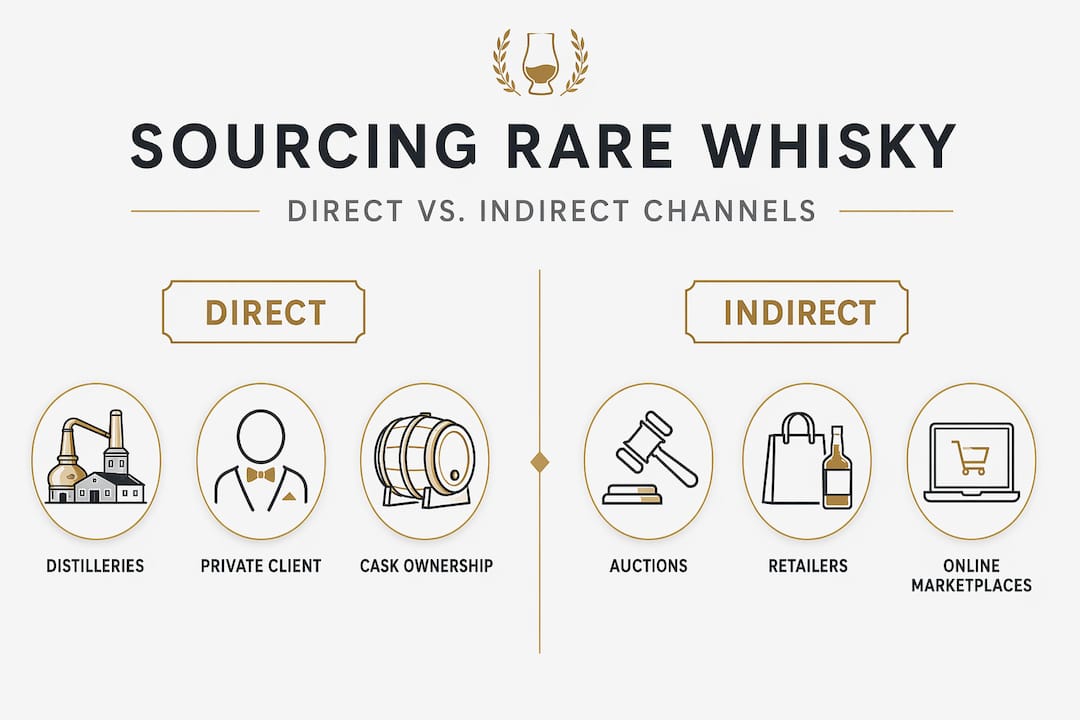
With preparation complete, here are the specific channels that consistently yield rare bottles. Each has a distinct character, and the best collectors use several simultaneously.
-
Private client teams at major producers — This is the most overlooked channel. Producers like Diageo reserve their most exceptional releases for registered private clients, with Rare Series bottles offered exclusively through this route. Registration is typically free and the access it grants is extraordinary.
-
Specialist whisky auctions — Auctions surface bottles that simply do not appear anywhere else. A single Van Winkle auction result at Unicorn Auctions demonstrated this vividly, with Binny’s 18 Van Winkle selling for over $80,600. Timing and strategy matter, but the selection available through auctions is unmatched for historic and discontinued releases.
-
Cask ownership programmes — Owning a cask directly is one of the most satisfying ways to access genuinely rare whisky. Artisan Casks programmes provide single cask ownership with maturation reports and sampling access, meaning you are involved throughout the journey, not just at bottling.
-
Specialist curated retailers — Quality retailers curate their stock actively rather than stocking whatever is available. Look for shops that publish detailed tasting notes, ABV information, and sourcing details. A bottle like Laphroaig The Cask Lore appearing in a carefully curated store tells you more about the retailer’s standards than a hundred generic listings.
-
Whisky festivals and distillery events — Distillery-exclusive releases are sometimes sold only at cellar door events or via festival lottery. These are unpublicised and require being plugged into the collector community to know about them.
| Channel | Typical availability | Price premium | Effort required |
|---|---|---|---|
| Private client teams | Ultra-rare, limited series | High to very high | Low (registration only) |
| Specialist auctions | Historic and discontinued | Variable, often very high | Medium (research and bidding) |
| Cask ownership | Unique single casks | High (long-term investment) | High (active involvement) |
| Curated specialist retailers | Limited editions, new releases | Moderate to high | Low to medium |
| Distillery events | Exclusive cellar door releases | Moderate | Medium (attendance required) |
The practical guide to selecting limited edition whiskies is worth reading alongside this section. And if you want a step-by-step framework, finding unique whisky bottles will take you through the full process systematically.
Pro Tip: When using rare whisky online sources, always check whether the retailer publishes batch numbers, cask references, and distillery documentation. Retailers who do this are invested in accuracy. Those who do not are often reselling without genuine provenance knowledge.
Common pitfalls and how to verify authenticity
Rare whisky attracts fakes, inflated claims, and sellers who bank on collector enthusiasm outpacing collector scrutiny. Protecting yourself is not paranoia. It is standard practice.
Watch for these red flags:
- No provenance documentation — Any rare bottle should come with records: distillery certificates, private client registration receipts, or auction house records.
- Unusually low pricing — Genuine rarity commands a premium. A bottle priced suspiciously below market value warrants serious investigation before purchase.
- Vague seller information — Reputable sources are transparent about where bottles came from. Vague answers about sourcing are a warning sign.
- Damaged or inconsistent packaging — Diageo Rare Series bottles include granite-topped decanters and official provenance documentation as standard. Authentic rare releases at this level are presented with care. Missing or mismatched components suggest something is wrong.
- No returns or authentication policy — Established specialist retailers and auction houses have clear authentication processes and buyer protections.
“The value of a rare whisky is inseparable from the story of its origins. Without provenance, you do not have a rare bottle. You have a bottle of unknown whisky.”
This is why the collector’s edition whisky guide emphasises documentation so heavily. And when you are considering how to find limited edition whisky from secondary markets, provenance records are the first thing to request.
Pro Tip: Photograph the bottle, closure, capsule, and label before accepting delivery from any source. Date-stamp those images. This creates a tamper record that protects your collection’s integrity and supports insurance claims if needed.
Understanding the rarity market and expected outcomes
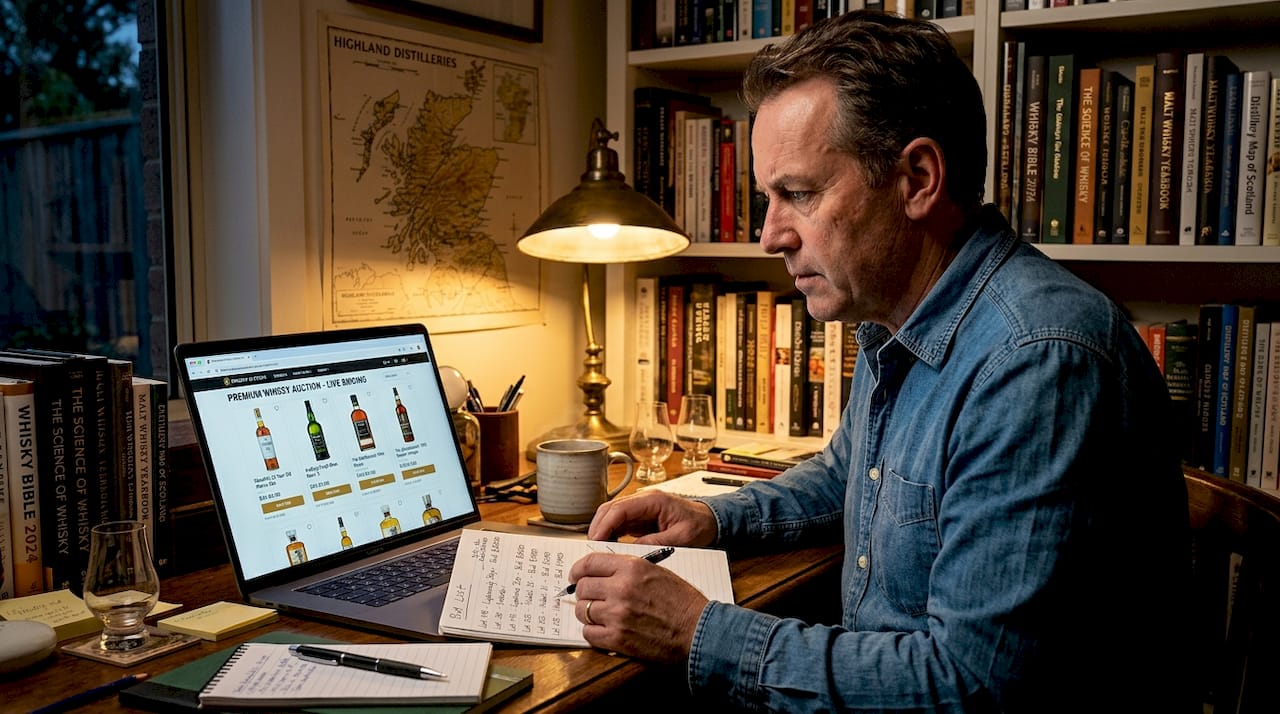
Setting realistic expectations is part of collecting well. The rare whisky market rewards patience and punishes impulsiveness.
| Market factor | Typical outcome |
|---|---|
| Ultra-limited production | Immediate scarcity at release |
| Secondary market sales | Prices often 5 to 700 times retail |
| Irregular release schedules | Unpredictable availability windows |
| Growing global collector base | Sustained upward price pressure |
What you should know about market realities:
- Releases are rarely predictable. Diageo Rare Series releases are dictated by cask availability and master blender decisions, not by commercial calendars. You cannot plan a purchase around a date that does not exist yet.
- Secondary market premiums can be staggering. Binny’s 18 Van Winkle sold for over 700 times its retail price at auction, illustrating just how extreme the gap between retail and secondary market can become for genuinely rare American whiskies.
- Collector demand is a self-reinforcing cycle. As awareness grows and more collectors enter the market, scarcity intensifies, which further drives demand.
- Holding period matters. Whiskies that are not yet fully appreciated can become significant within a decade. Cask programmes and early allocations from emerging distilleries follow this pattern consistently.
Keeping across top whisky trends for 2025 and beyond gives you a read on which regions and styles are gaining momentum before prices reflect that momentum fully.
My unique take: navigating beyond the hype to truly rare whisky treasures
Here is something the standard sourcing guides will not tell you: most collectors focusing exclusively on high-profile releases are actually limiting their access to genuine rarity.
The bottles that attract the most media coverage are, by definition, not a secret. Every serious collector has heard of them. The competition for these is intense, pricing at retail is aggressive if you can even access it, and the auction premiums reflect mass desire rather than genuine connoisseurship.
The collectors who build the most extraordinary collections tend to move in the opposite direction. They focus on artisan cask programmes, lesser-known independent bottlers, and emerging distilleries in regions not yet on most people’s radar. James Mackay’s approach to personal cask selection at Artisan Casks captures this philosophy well. The connection to a specific cask, the ability to monitor its maturation, and the patience to let it develop fully represent a fundamentally different relationship with rare whisky than refreshing auction sites hoping for an allocation.
Patience is the most underrated tool in a collector’s kit. The whisky world rewards people who engage deeply with producers and programmes over years, not those who chase whatever is trending in a given quarter.
The collector’s edition whisky guide explores this philosophy further. The collectors worth learning from are not the ones with the most expensive bottles. They are the ones who can tell you exactly why every bottle in their collection belongs there.
Explore premium whisky selections at Uisuki
For collectors ready to act on what they have learnt here, Uisuki curates a genuine selection of rare and limited edition whiskies from Australia, Scotland, Japan, and beyond.
The Hobart Whisky Bourbon Matured Rum Finished Single Malt is a standout Australian release that demonstrates exactly the cask uniqueness collectors seek. For something from Japan, Ichiro’s Malt and Grain Limited Edition represents one of the most respected names in world blended whisky. And the Ardnamurchan Macleans Nose Blended Scotch brings character from one of Scotland’s most distinctive distilleries. All available with Australian and international shipping, curated for collectors who know what they are looking for.
Frequently asked questions
How can I access Diageo’s Rare Series whiskies?
Diageo’s Rare Series is available exclusively through registration with their global Private Client teams, offering ultra-limited releases to registered collectors rather than through public retail channels.
What should I consider when bidding at whisky auctions?
Research the bottle’s provenance thoroughly, set a firm budget before bidding opens, and account for buyer’s premiums when calculating your ceiling. Auction results like Van Winkle show how quickly prices can exceed expectations for highly sought-after bottles.
How do I verify a rare whisky’s authenticity?
Request official provenance documentation, check packaging details against known authentic examples, and buy only from specialist retailers or auction houses with clear authentication records and buyer protections in place.
Is owning a cask a good way to find rare whisky?
Yes, cask ownership programmes offer exclusive access to genuinely rare single casks with expert selection and ongoing maturation monitoring. Artisan Casks programmes are a strong example of this model, providing sampling opportunities throughout the process.
Are rare whiskies a good investment?
Rare whiskies can appreciate significantly over time, but understanding provenance, rarity, and market dynamics is essential before treating bottles as assets. The secondary market for bottles like Van Winkle shows extraordinary upside, though collecting with genuine passion produces better long-term decisions than chasing pure profit.