

TL;DR:
- Japanese whisky emphasizes harmony and balance, driven by Japan’s natural environment and production philosophy. Its use of Mizunara oak and seasonal maturation creates uniquely nuanced spirits with floral, fruity, and herbal notes. Entry-level options like Nikka From the Barrel and Hibiki offer accessible ways to appreciate Japanese whisky’s complexity.
Japanese whisky is defined by a philosophy of harmony, known in Japanese as Wa, that prioritises elegance and balance over brute intensity. This philosophy shapes every decision, from water source to cask selection, producing spirits that are floral, fruit-forward, and deeply nuanced. Brands like Yamazaki, Nikka, and Hibiki have brought this approach to global attention, and understanding what makes Japanese whisky special means looking closely at the environment, production methods, and rare materials that no other whisky region can replicate.
What makes japanese whisky special: environment and maturation
Japan’s natural environment is the foundation of its whisky character. Soft, low-mineral mountain spring water produces a cleaner, lighter spirit from the outset. Compare that to the harder, more mineral-rich water used in many Scottish distilleries, and you already have a fundamentally different base spirit before a single cask is filled.
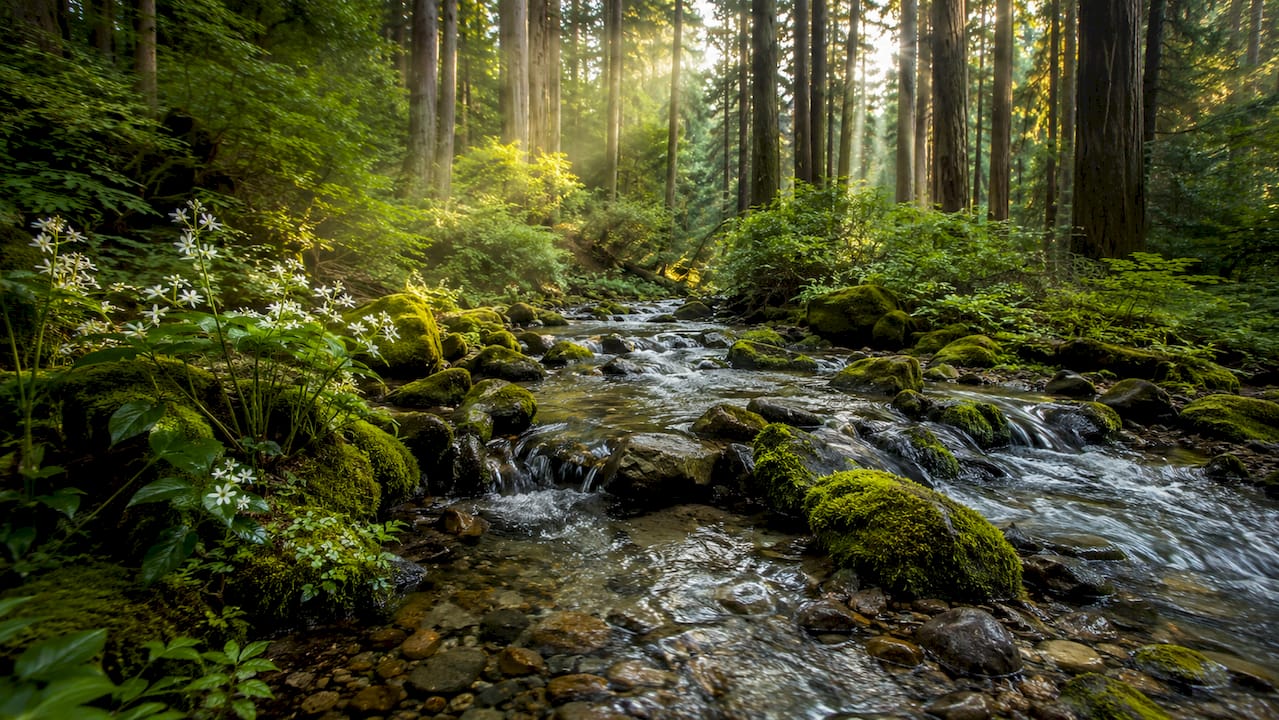
Japan’s four distinct seasons do something remarkable to maturing whisky. Seasonal wood expansion and contraction accelerates flavour development, pushing spirit deeper into the cask during summer heat and drawing it back during winter cold. This cycle compresses what might take decades in Scotland into a shorter, more intense maturation window.
The cool mountain air at sites like Hakushu adds another layer of subtlety. High humidity slows evaporation and allows the spirit to develop gently without losing too much volume. The result is a whisky that feels refined rather than rushed.
How japanese climate compares to scotland
- Scotland’s maritime climate produces slow, steady maturation with consistent humidity and mild temperature swings.
- Japan’s continental climate delivers sharper seasonal extremes, accelerating interaction between spirit and wood.
- Kentucky bourbon experiences hot summers that drive rapid extraction, producing bold vanilla and caramel. Japanese whisky’s seasons are more measured, yielding subtler wood influence.
- Japan’s diverse geography means distilleries like coastal Yoichi and highland Hakushu produce markedly different spirits despite being in the same country.
Pro Tip: If you want to understand how climate shapes flavour, compare a Hakushu 12 Year Old against a Glenfiddich 12 Year Old side by side. The contrast in texture and aromatic lift is immediate and instructive.
How japanese production techniques differ from scotch and bourbon
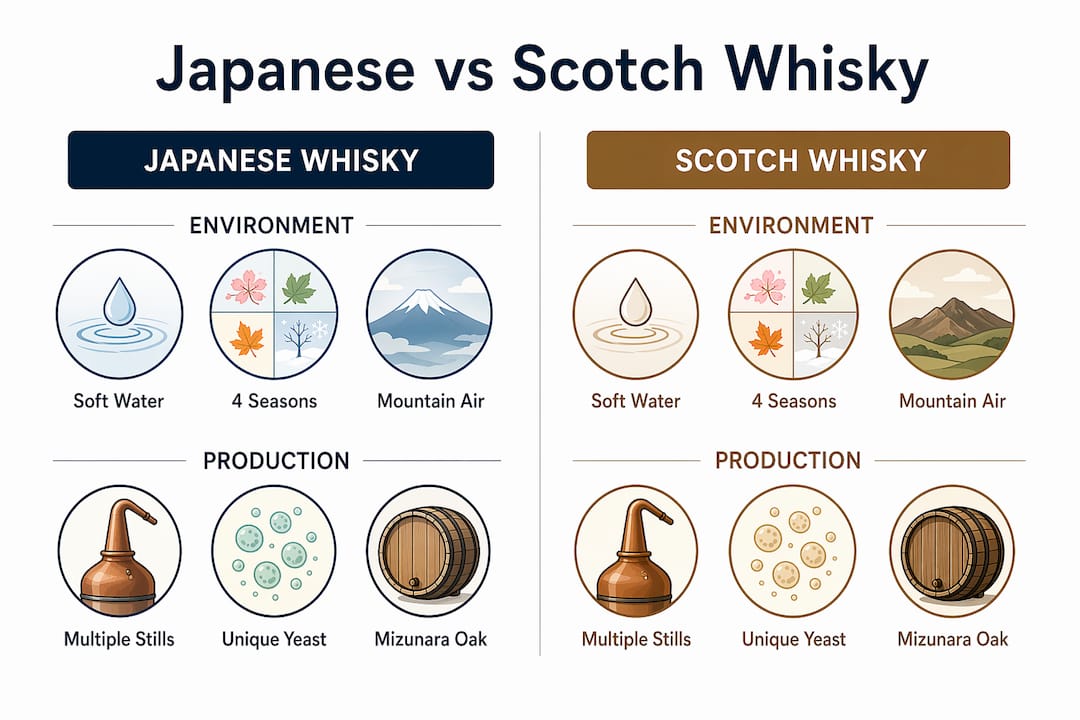
Japanese distilleries operate as self-contained ecosystems, using multiple pot still shapes, diverse yeast strains, and varied fermentation vessels to create a wide range of spirit profiles internally. In Scotland, distilleries traditionally trade casks and blend stocks from multiple producers. Japan’s historically small number of distilleries made that impossible, so producers like Yamazaki solved the problem by building complexity from within.
This internal diversity is not a workaround. It is a genuine advantage. A single Japanese distillery can produce spirits ranging from light and floral to rich and oily, all under one roof, then blend them with the precision of a master perfumer.
Here is how the key production differences stack up:
- Still shapes: Multiple pot still shapes at Yamazaki produce spirits with different weights and textures. Tall, narrow stills yield lighter, more delicate spirit. Short, squat stills produce heavier, oilier character.
- Peat use: Japanese distilleries limit peat use compared to Islay Scotch. Where Laphroaig or Ardbeg deliver full-throttle smoke, Japanese peat is structural and subtle, adding a faint herbal backbone rather than dominating the palate.
- Fermentation vessels: Some distilleries use wooden washbacks alongside stainless steel, each contributing different ester profiles and adding complexity before distillation even begins.
- Grain whisky: Nikka’s Coffey Grain whisky, made in a continuous Coffey still, delivers aromatic richness and sweetness that anchors blends without overwhelming them.
- Blending philosophy: Japanese blends like Hibiki Japanese Harmony (~$75–80) focus on harmony across components rather than showcasing a single dominant flavour.
Pro Tip: Nikka From the Barrel (~$40) is one of the best entry points into Japanese whisky production philosophy. It is a blend of malt and grain whiskies bottled at high strength, showing exactly how internal complexity translates to the glass.
What role does mizunara oak play in japanese whisky?
Mizunara oak, known botanically as Quercus mongolica, is the most distinctive cask material in Japanese whisky production. It imparts sandalwood, coconut, and incense aromas that are genuinely unlike anything American white oak or European sherry oak can produce. Tasters often describe the aromatic quality as “oriental” or spiritual, a character found nowhere else in the whisky world.
The challenge is that Mizunara is extraordinarily difficult to work with. The wood is porous and prone to leaking, requiring at least 30 years of maturation before its signature character fully develops. Coopering a Mizunara cask demands specialist skills, and the wood itself is scarce. Those factors combine to make Mizunara-aged whiskies among the rarest and most expensive in any category.
Yamazaki uses a combination of American, Spanish, and Mizunara oak casks, and the tropical fruit, honey, and sandalwood notes that define its house style come directly from that cask diversity. The Mizunara component is the element that makes Yamazaki unmistakably Japanese.
| Oak Type | Primary Flavours | Maturation Requirement |
|---|---|---|
| American White Oak | Vanilla, caramel, coconut | 8–12 years typical |
| European Sherry Oak | Dried fruit, spice, chocolate | 12–20 years typical |
| Mizunara Oak | Sandalwood, incense, coconut | 30+ years for full effect |
“Mizunara oak imparts a spiritual aromatic quality described as ‘oriental’, not found in other whiskies.” — Kanpai Navi
The rarity of Mizunara explains why bottles like Yamazaki 18 Year Old command prices well above $500. You are not just paying for age. You are paying for a cask material that takes decades to express itself and a cooperage tradition that very few craftspeople in the world can practise.
What are the tasting notes of japanese whisky?
The hallmark of Japanese whisky flavour is a delicate balance that emphasises floral, fruit, and herbal notes over power. Typical tasting notes include green apple, yuzu, pear, lime, mint, and sandalwood. These are not accidental. They are the direct result of soft water, climate-driven maturation, and a production philosophy that treats every element as part of a whole.
Japanese whisky’s restrained peat use often surprises drinkers expecting bold Islay-style smoke. The Hakushu 18 Year Old is a perfect illustration. Its peat is described as a “thin strand” woven through fresh green apple, pear, lime, and herbal notes. The smoke is present, but it serves the balance rather than commanding it.
This approach makes Japanese whisky versatile in cocktails, particularly the Japanese highball. Because the flavour profile is built on harmony and elegance, dilution with soda water amplifies the aromatic lift rather than washing the whisky out. A bourbon highball loses its identity. A Japanese whisky highball finds a new one.
Here is a quick guide to the flavour spectrum across popular styles:
- Hibiki Japanese Harmony: Honey, orange peel, white chocolate, rose. The definitive introduction to Japanese blended whisky.
- Yamazaki 12 Year Old: Red berry, peach, coconut, sandalwood. Fruit-forward with Mizunara influence.
- Hakushu 12 Year Old: Green apple, mint, light smoke, fresh herbs. The most approachable peated Japanese whisky.
- Nikka Coffey Grain: Vanilla, melon, caramel. Unusually rich for a grain whisky, and a revelation for bourbon drinkers.
- Yoichi Single Malt: Peat smoke, brine, dark chocolate. The boldest expression in the Nikka range and the closest Japanese equivalent to an Islay malt.
Pro Tip: Start with Hibiki Japanese Harmony or Nikka From the Barrel before moving to age-statement single malts. Both give you the full picture of Japanese whisky’s unique flavour qualities without requiring a significant outlay.
For a broader look at the range of styles available, the popular Japanese whisky types guide at Uisuki covers the key categories in detail.
Key takeaways
Japanese whisky’s distinctiveness comes from the combination of Japan’s natural environment, self-contained production philosophy, and rare Mizunara oak, producing spirits that no other region can replicate.
| Point | Details |
|---|---|
| Environment drives character | Soft mountain water and four distinct seasons produce lighter, more delicate spirits than Scottish or American climates. |
| Production is self-contained | Japanese distilleries use multiple still shapes and yeast strains internally, creating complexity without external stock exchange. |
| Mizunara oak is irreplaceable | Sandalwood and incense notes from Mizunara casks require 30+ years to develop and cannot be sourced from any other wood. |
| Flavour favours balance | Tasting notes centre on green apple, yuzu, mint, and floral notes, with peat used as a subtle structural element rather than a dominant feature. |
| Entry points exist at every price | Nikka From the Barrel (~$40) and Hibiki Japanese Harmony (~$75–80) deliver the full philosophy without premium age-statement pricing. |
Brendan’s take: why nuance beats noise
I have tasted a lot of whisky across a lot of regions, and Japanese whisky is the category that most consistently rewards patience. The first time you pour a Hakushu 12 and get that lift of green apple and mint with a whisper of campfire smoke, it does not hit you over the head. It asks you to pay attention.
That is the point. Japanese whisky is built for people who find pleasure in subtlety. The craft behind a bottle of Yamazaki is not less than what goes into a heavily peated Islay malt. It is differently directed. Every decision, from still shape to water source to cask selection, is made in service of balance rather than impact.
My honest advice for anyone approaching Japanese whisky for the first time: resist the urge to chase the rarest bottle. The philosophy is present in a $40 Nikka From the Barrel just as clearly as it is in a $500 Yamazaki 18. Start there. Understand what the category is actually doing before you spend up.
The hype around Japanese whisky has driven prices to uncomfortable levels in some cases. But underneath the collector frenzy, there is a genuine tradition of craftsmanship that is worth understanding on its own terms. Explore the distinctive qualities at your own pace, and you will find a category that keeps giving.
— Brendan
Explore japanese whisky at uisuki
Uisuki is Australia’s destination for premium and hard-to-find Japanese whisky, with a curated selection that covers everything from approachable entry-level bottles to rare collector releases.
If you are starting out, the Ichiro’s Malt and Grain Limited Edition is a standout pick. It shows the Japanese blending philosophy at its most expressive, combining malt and grain whiskies from multiple countries into a single, coherent bottle. For those ready to go deeper, Uisuki’s full Japanese range includes age-statement single malts, Mizunara-influenced expressions, and seasonal releases that are difficult to source anywhere else in Australia. Browse the full Japanese whisky range and find the bottle that fits where you are in your whisky journey.
FAQ
What is the main difference between japanese and scotch whisky?
Japanese whisky uses softer water, a more varied internal production approach, and unique cask materials like Mizunara oak. Scotch whisky relies more heavily on regional peat traditions and inter-distillery blending.
Why is mizunara oak so expensive?
Mizunara oak is porous, difficult to cooper, and requires at least 30 years of maturation to express its signature sandalwood and incense character. That combination of scarcity and time makes Mizunara-aged whiskies among the most costly in the world.
Which japanese whisky is best for beginners?
Nikka From the Barrel (~$40) and Hibiki Japanese Harmony (~$75–80) are the two strongest starting points. Both deliver the full flavour philosophy of Japanese whisky at accessible price points.
Is japanese whisky heavily peated like islay scotch?
Most Japanese whiskies use peat sparingly, as a structural element rather than a dominant flavour. Yoichi Single Malt and Akkeshi are notable exceptions, but even these are more restrained than Laphroaig or Ardbeg.
How should i drink japanese whisky to appreciate it fully?
Neat or with a small amount of still water is ideal for tasting. A Japanese highball, made with chilled soda water at roughly a 1:3 ratio, is also an excellent way to experience the aromatic lift that defines the category.