

TL;DR:
- Glenmorangie is a Highland single malt Scotch whisky known for its light, floral flavor and tall copper stills. Its production combines traditional methods with innovative cask experimentation to create a delicate, layered spirit. The distillery emphasizes maintaining a pure base spirit while exploring complex cask influences through a modern research-driven approach.
Glenmorangie is defined as a Highland single malt Scotch whisky produced at a distillery founded in 1843 in Tain, on the northern coast of Scotland. It is recognised globally for its light, floral character, a quality produced by the tallest copper pot stills in Scotland. If you have picked up a bottle with an elegant orange label and wondered what sets it apart from every other Scotch on the shelf, the answer starts with geography, engineering, and one unusually tall still house.
What is Glenmorangie and where does it come from?
Glenmorangie is a Highland single malt Scotch whisky. The name is Gaelic and is pronounced “glen-MOR-an-ee” by the distillery itself. The spirit is made exclusively from malted barley, distilled at a single distillery, and aged in oak casks in Scotland, which are the legal requirements for any single malt Scotch.
The distillery sits on the shore of the Dornoch Firth near Tain in the Scottish Highlands. That location matters because it gives the distillery access to Tarlogie Springs, a source of naturally soft, mineral-rich water that feeds the mashing process. Water chemistry shapes the character of the wort, and Tarlogie Springs water is credited with contributing to Glenmorangie’s clean, delicate base spirit.
The history of Glenmorangie distillery
The site at Morangie farm has a history stretching back to the early 1700s, when it operated as a brewery. William Matheson converted it into a distillery in 1843, making Glenmorangie one of the older continuously operating Highland distilleries. The Morangie farm conversion was not a grand industrial project. It was a practical repurposing of existing farm infrastructure, which shaped the distillery’s modest, craft-focused identity from the start.
Key milestones in Glenmorangie’s history include:
- 1843: William Matheson founds the distillery at Tain on the Dornoch Firth shore.
- Early 20th century: The distillery expands production capacity and begins building its reputation across Scotland and export markets.
- Late 20th century: Glenmorangie launches the “16 Men of Tain” marketing narrative, emphasising the small, skilled team responsible for every bottle. The 16 Men of Tain story became one of the most recognisable brand narratives in Scotch whisky.
- 2004: LVMH, the French luxury goods group, acquires Glenmorangie. The acquisition brings significant investment in research, laboratory facilities, and global distribution.
- Post-2004: Dr Bill Lumsden is elevated to Director of Whisky Creation, and the distillery begins its most ambitious period of cask experimentation.
The LVMH acquisition is worth understanding in context. Glenmorangie did not become a corporate product after 2004. The investment funded a genuine expansion of the distillery’s technical capabilities, including the Lighthouse innovation programme, without altering the core production philosophy.
How does Glenmorangie make its whisky?
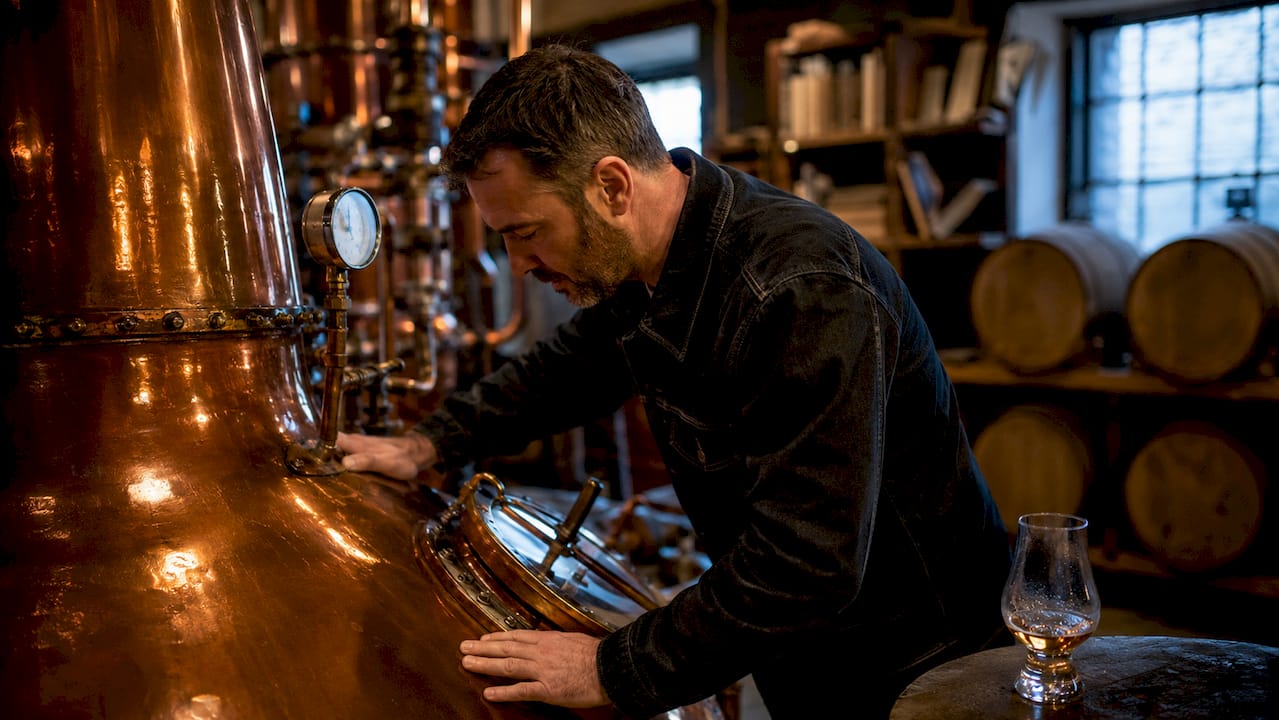
The production process at Glenmorangie is defined by one extraordinary physical feature. The distillery operates 12 copper pot stills, six wash stills and six spirit stills, each standing 5.14 metres tall. That makes them the tallest pot stills in Scotland. Height is not an aesthetic choice. It is a technical decision with direct flavour consequences.
Here is how the production sequence works:
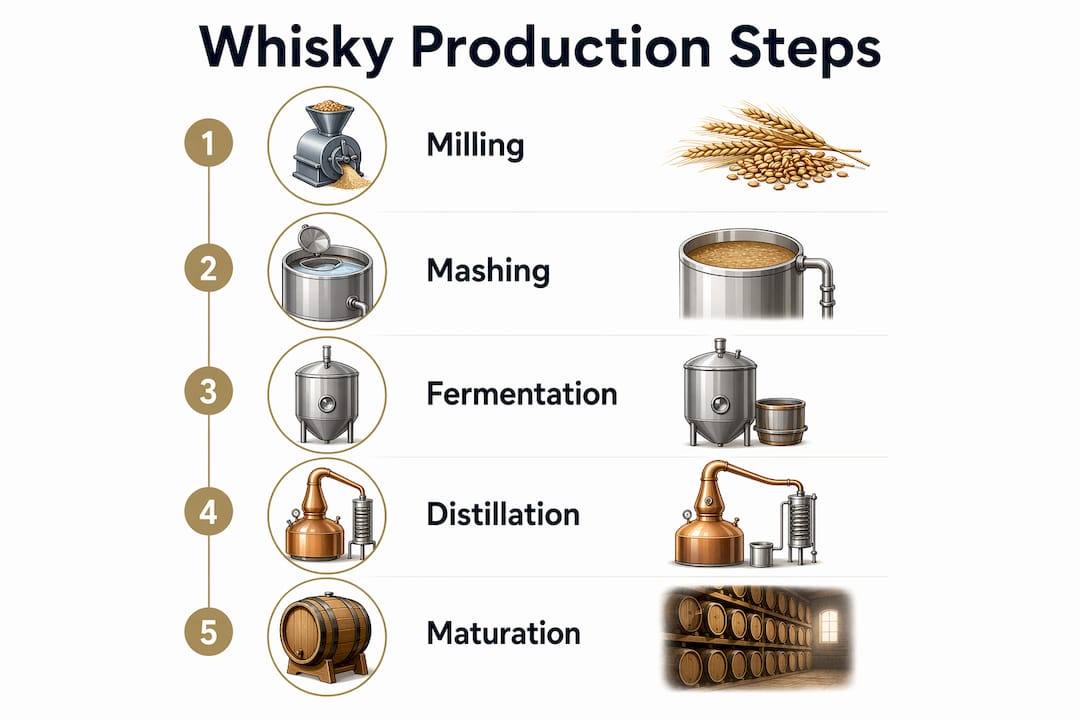
- Mashing: Malted barley is mashed with soft Tarlogie Springs water. The soft water extracts fermentable sugars cleanly without introducing mineral harshness.
- Fermentation: The wort ferments in washbacks, producing a wash of roughly 8% alcohol. Glenmorangie uses longer fermentation periods than many distilleries, which builds fruity ester compounds in the liquid before distillation even begins.
- First distillation: The wash passes through the six wash stills, producing a low wine of around 20–25% ABV.
- Second distillation: The low wines pass through the six spirit stills. This is where the tall still height does its work. Heavier vapours condense and fall back into the still before reaching the lyne arm. Only the lightest, most delicate vapours make it through. The result is a new-make spirit that is clean, bright, and floral from the very first distillation.
- Cask maturation: The new-make spirit fills oak casks. Glenmorangie uses ex-bourbon American white oak casks as its primary maturation vessel, which contributes vanilla and citrus notes. Finishing casks, including sherry, port, Sauternes, and virgin oak, add secondary layers of complexity.
Pro Tip: If you want to understand how tall stills change flavour, compare Glenmorangie’s Original 10 Year Old with a heavily peated Islay malt. The contrast in body and texture is almost entirely explained by still geometry and water source, not just peat.
Dr Bill Lumsden leads the cask experimentation programme. His approach to wood finishing is focused on layering complexity without masking the base spirit. That distinction matters. Many distilleries use heavy sherry casks to cover a mediocre new-make. Glenmorangie starts with an excellent new-make and adds cask influence as a complement, not a correction.
What does Glenmorangie taste like?
Glenmorangie’s flavour profile is defined by lightness, florality, and citrus. The core expressions typically sit at 40–46% ABV, which is the standard range for most Highland single malts. That ABV range preserves the delicate character of the spirit without diluting it into blandness.
The main expressions and their tasting notes break down as follows:
- The Original (10 Year Old): Vanilla, fresh peach, citrus blossom, and a light malty sweetness. The most accessible entry point into the range.
- The Lasanta (12 Year Old, sherry cask finish): Dried fruit, orange peel, and a gentle spice. The sherry influence is present but restrained.
- The Quinta Ruban (14 Year Old, port cask finish): Dark chocolate, mint, and rich berry fruit. The Quinta Ruban is one of the most satisfying expressions in the range for those who prefer a fuller body.
- The Nectar D’Or (12 Year Old, Sauternes cask finish): Lemon tart, ginger, and a honeyed sweetness. The Nectar D’Or is a genuinely unusual whisky, with a wine-like quality that surprises first-time drinkers.
- The Signet: Mocha, dark chocolate, roasted coffee, and exotic spice. Signet uses a proportion of heavily roasted “chocolate” malt barley, which is almost unheard of in Scotch whisky production. It is the most complex and polarising expression in the range.
Serving suggestions depend on the expression. The Original works well neat or with a small splash of still water. The Signet is best served neat at room temperature, where the full aromatic complexity can develop. For cocktail use, the Lasanta and Nectar D’Or both work well in a whisky sour or a simple highball with soda water.
How does Glenmorangie balance tradition and innovation?
Glenmorangie’s success rests on a specific tension. The distillery maintains production methods that have not changed fundamentally since the 19th century, while simultaneously running one of the most active cask research programmes in the Scotch whisky industry. That combination is not accidental.
“Glenmorangie’s success is due to an intentional balance of tradition and forward-thinking innovation rather than heavy reliance on heritage.” — Glenmorangie Distillery Spotlight
The Lighthouse philosophy, introduced after the 2004 LVMH acquisition, formalised this approach. The distillery built dedicated laboratory facilities to test new cask types, yeast strains, and fermentation variables before committing them to full production. This is not how most traditional Scotch distilleries operate. Most rely on established recipes and incremental adjustment. Glenmorangie treats whisky development more like a research programme.
Dr Bill Lumsden’s use of rare casks, including heavily toasted virgin oak and rare wine barrels, produces expressions that sit outside the standard Scotch flavour categories. The A Tale of series, for example, uses casks sourced from specific wine regions to create limited editions with genuinely distinct flavour profiles. This approach keeps the brand relevant to collectors and enthusiasts without abandoning the clean, elegant base spirit that defines Glenmorangie’s identity.
Compared to other Highland distilleries such as Dalmore or Edradour, Glenmorangie occupies a lighter, more floral position on the flavour spectrum. Dalmore leans into rich sherry and chocolate notes. Glenmorangie’s tall stills prevent that kind of heaviness from developing in the first place.
Key takeaways
Glenmorangie is a Highland single malt Scotch whisky defined by its exceptionally tall copper pot stills, soft spring water, and a production philosophy that layers cask complexity onto a clean, floral base spirit.
| Point | Details |
|---|---|
| Founded in 1843 in Tain | William Matheson established the distillery on the Dornoch Firth shore in the Scottish Highlands. |
| Tallest stills in Scotland | At 5.14 metres, the 12 copper pot stills produce a lighter, more delicate spirit than shorter stills allow. |
| Floral and citrus flavour profile | Core expressions deliver vanilla, peach, and citrus notes, while special editions add chocolate and spice. |
| Innovative cask programme | Dr Bill Lumsden leads wood finishing experiments that add complexity without masking the base spirit. |
| LVMH ownership since 2004 | The acquisition funded the Lighthouse innovation programme and expanded global distribution. |
Glenmorangie’s place in the whisky world: my honest assessment
I have tasted Glenmorangie expressions across the full range, from the Original through to the Signet, and the thing that consistently strikes me is how disciplined the distillery is about its base spirit. A lot of whisky brands hide behind heavy cask influence. Glenmorangie does the opposite. The tall stills produce a new-make that is genuinely worth drinking, and the cask programme builds on that rather than compensating for it.
The Signet is the expression that most whisky drinkers underestimate. The use of chocolate malt barley is a genuine departure from Scotch convention, and the result is a whisky that sits closer to a fine espresso than a traditional Highland dram. It is not for everyone, but it demonstrates that Glenmorangie is willing to take real risks rather than just releasing age-statement variants of the same spirit.
For Australian whisky drinkers, Glenmorangie is an excellent reference point. If you are building your palate and want to understand what a light, elegant Highland style tastes like before moving into heavier sherry-bomb territory, the Original 10 Year Old is the clearest possible example. Start there, then work through the Lasanta and Quinta Ruban in order. By the time you reach the Signet, you will have a clear picture of how much range a single distillery can produce from one base spirit.
The one criticism I hold is that the standard 40% ABV bottling of the Original slightly undersells the spirit. At 46%, the same whisky shows more texture and aroma. The Nectar D’Or at 46% proves the point. If you can find the higher-ABV expressions, they are worth the extra spend.
— Brendan
Glenmorangie and premium Scotch whisky in Australia
Glenmorangie’s core and special edition expressions are available through Uisuki.com.au, which stocks a curated range of Scottish, Japanese, Australian, and American whiskies for enthusiasts across Australia. The Glenmorangie Tasting Set is the best starting point if you want to compare expressions side by side before committing to a full bottle.
Uisuki also stocks the Glenmorangie Infinita 18 Year Old for those ready to step into the aged range. If you are after something from a different region to compare against Glenmorangie’s Highland style, the Hobart Whisky Bourbon Matured Rum Finished Single Malt is a standout Australian expression that shows how local distillers are applying similar cask-finishing principles. Uisuki offers free shipping above a set threshold and supports personalised sourcing requests for bottles not currently listed.
FAQ
What does Glenmorangie mean in Gaelic?
Glenmorangie is generally translated as “glen of tranquillity” or “valley of great tranquillity” in Scottish Gaelic. The distillery itself pronounces the name “glen-MOR-an-ee.”
How is Glenmorangie different from Macallan?
Glenmorangie produces a lighter, more floral spirit using tall copper pot stills, while The Macallan is known for a richer, heavier style driven by sherry cask maturation. The two represent opposite ends of the Highland single malt flavour spectrum.
What is the Glenmorangie orange label?
The orange label refers to Glenmorangie The Original, the distillery’s core 10 Year Old expression. It is the entry-level bottling and the clearest example of Glenmorangie’s light, floral, vanilla-forward style.
What are the most popular Glenmorangie expressions?
The Original (10 Year Old), Lasanta (12 Year Old sherry finish), Quinta Ruban (14 Year Old port finish), Nectar D’Or (12 Year Old Sauternes finish), and the Signet are the most widely available and reviewed expressions in the range.
Is Glenmorangie a good whisky for beginners?
Glenmorangie The Original is one of the most recommended entry-point single malts because its light, approachable flavour profile is easy to appreciate without prior whisky experience.