

Not all single malt Scotch whiskies are created equal, and The Macallan makes that point better than almost any other distillery on the planet. While many Speyside expressions lean toward light, floral, and delicate profiles, The Macallan produces a robust, sherry-driven spirit that sits in a category of its own. Collectors chase it at auction. Enthusiasts debate its value. And newcomers often wonder what all the fuss is about. This guide cuts through the noise, walking you through the history, production, cask programme, and core expressions so you can appreciate The Macallan with genuine confidence.
Table of Contents
- The Macallan: a brief history and brand legacy
- How The Macallan whisky is made: distillation, stills, and the spirit cut
- Inside the casks: sherry and cask management defined
- Breaking down the Macallan range: core expressions compared
- Why collectors and critics care: prestige, auctions, and the Macallan debate
- Explore The Macallan at Uisuki
- Frequently asked questions
Key Takeaways
| Point | Details |
|---|---|
| Distinct distillation | Macallan’s uniquely small stills and narrow cut produce a spirit with robust, sherried character. |
| Sherry oak mastery | Careful cask selection drives the rich flavour, deep colour, and collectability of Macallan whiskies. |
| Global collector prestige | Macallan bottles are sought after at auctions, prized for rarity and status. |
| Core range variety | The main Macallan lineup offers different profiles, from classic sherry to lighter and spicier options. |
The Macallan: a brief history and brand legacy
The Macallan was legally established in 1824, making it one of Scotland’s earliest licensed distilleries. Situated in the Speyside region near Craigellachie, it built its reputation slowly and deliberately over nearly two centuries. Today it is owned by Edrington Group since 1999, a Scottish spirits company that has invested heavily in the brand’s global positioning.
The distillery underwent a landmark transformation in 2018 with the opening of a striking new production facility designed by Rogers Stirk Harbour and Partners. The building itself became a tourist attraction, but more importantly, it signalled The Macallan’s intent to scale without compromising its house style. That balance between growth and tradition is central to understanding the brand.
Key milestones that shaped The Macallan’s legacy include:
- 1824: Granted one of Scotland’s first legal distilling licences
- 1999: Acquired by Edrington Group, accelerating global distribution
- 2018: New distillery opened, replicating original still shapes at larger scale
- Ongoing: Bottles regularly break records at Sotheby’s and Bonhams auctions
Not everyone is a convert, though. The Macallan is
“The Macallan has become the Hermès of whisky, a brand where perception and product are inseparable.”
How The Macallan whisky is made: distillation, stills, and the spirit cut
Production is where The Macallan truly separates itself from the Speyside crowd. The distillery runs small copper pot stills, the smallest in Speyside, which is a deliberate and consequential choice. Smaller stills mean less copper contact and a heavier, oilier new make spirit. That weight is exactly what you want when you’re planning to mature whisky in assertive sherry casks.
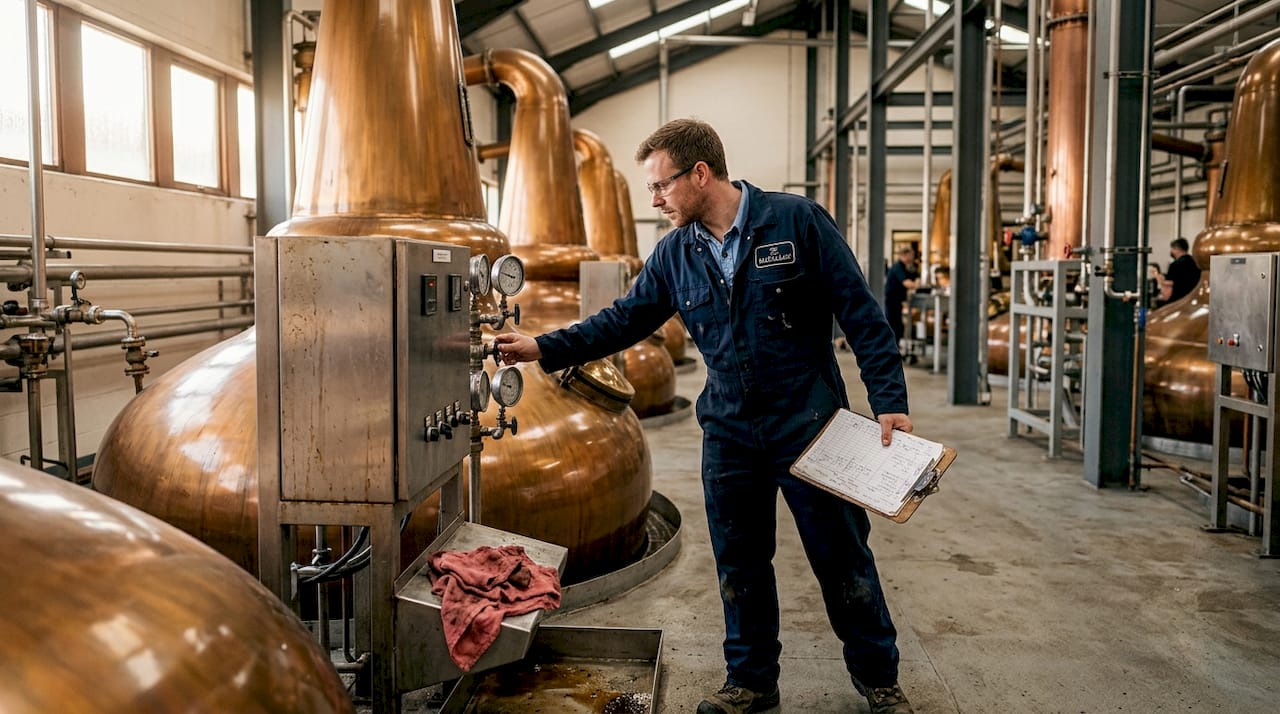
Here’s a snapshot of the still configuration:
| Still type | Number of stills | Approximate capacity |
|---|---|---|
| Wash stills | 12 | 13,000 litres each |
| Spirit stills | 24 | 3,900 litres each |
The spirit cut, meaning the portion of distillate collected during each run, is deliberately narrow. Distillers take only the heart of the run, discarding more of the heads and tails than most distilleries would. This produces a concentrated, flavour-rich spirit that can stand up to years, sometimes decades, inside heavily seasoned oak.
When the 2018 distillery expansion was completed, engineers replicated the original still shapes precisely, even as annual capacity grew to 15 million litres. The goal was stylistic consistency. If the stills changed shape, the spirit would change character. That level of commitment to process is rare in an industry where efficiency often wins.
Pro Tip: If you ever visit a distillery and they mention “still shape,” pay attention. Taller stills with long necks produce lighter spirits. Short, squat stills like Macallan’s produce heavier, richer ones. It’s physics working in your favour as a flavour lover.
“Small stills, narrow cuts, and sherry oak are the three pillars of Macallan’s house style. Remove any one of them and you have a different whisky entirely.”
Inside the casks: sherry and cask management defined
If the stills are the engine, the casks are the soul of The Macallan. The distillery sources sherry-seasoned European oak casks from Jerez, Spain, where they are first used to mature Oloroso sherry before being shipped to Scotland. This seasoning process imparts dried fruit, spice, and a deep amber colour to the whisky.
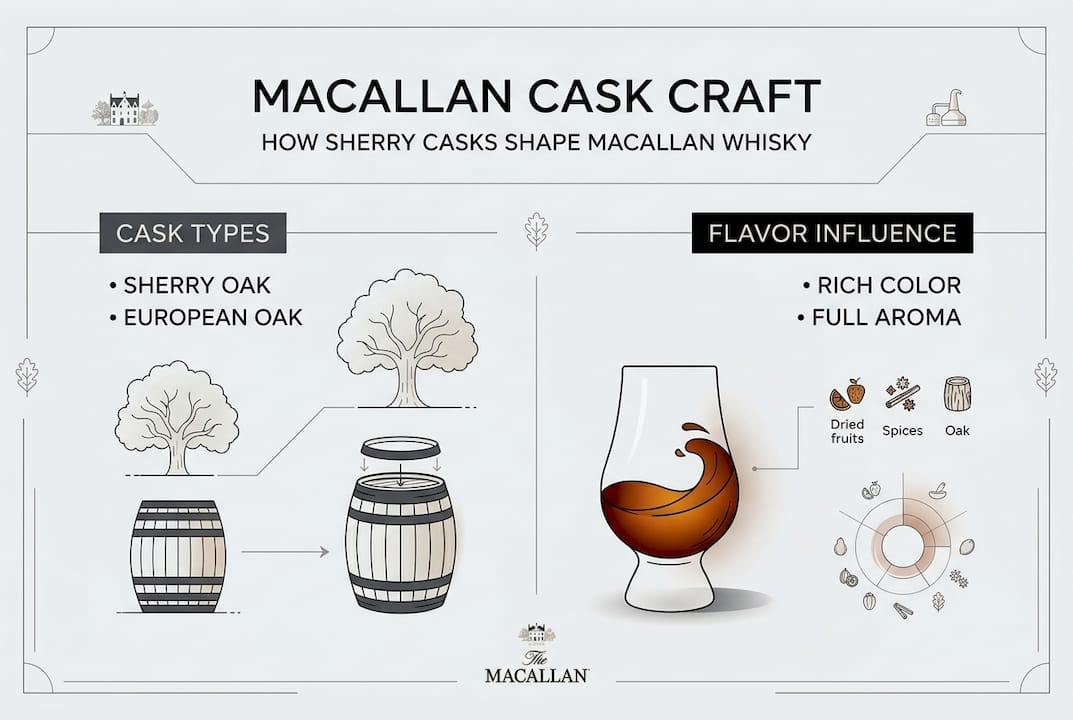
The spirit is deliberately robust so it can withstand the aggressive influence of these heavily seasoned casks without being overwhelmed. A lighter spirit would simply be swamped. The Macallan’s oily, full-bodied new make is built for this relationship.
The core ranges use different combinations of oak:
- Sherry Oak: Exclusively European oak sherry-seasoned casks. Rich, dark, and intensely fruited.
- Double Cask: A marriage of European sherry oak and American sherry oak. Softer, with honey and vanilla alongside dried fruit.
- Triple Cask: Adds ex-bourbon American oak to the mix. The lightest and most citrus-forward of the three.
Crucially, The Macallan uses no artificial colouring. The colour you see in the bottle comes entirely from the wood. This matters to collectors and purists alike, because it means what you see genuinely reflects what’s inside.
Pro Tip: When comparing Macallan expressions side by side, look at the colour first. A deep mahogany Sherry Oak and a pale gold Triple Cask tell you immediately how different the cask influence has been, before you even lift the glass.
For a classic introduction to the Sherry Oak style, the 12 Year Old Sherry Oak is the benchmark expression most enthusiasts start with.
Breaking down the Macallan range: core expressions compared
Choosing a Macallan can feel overwhelming given the breadth of the range. Here’s a practical comparison to help you navigate:
| Expression | Cask type | Key tasting notes | Approx. price (AUD) |
|---|---|---|---|
| 12 Year Old Sherry Oak | European sherry oak | Raisins, figs, dark chocolate | $80 to $160 |
| 12 Year Old Double Cask | European and American sherry oak | Honey, vanilla, dried fruit | $90 to $150 |
| 18 Year Old Sherry Oak | European sherry oak | Brown butter, ginger, rich spice | ~$390 |
| Triple Cask 12 Year Old | European, American sherry oak, ex-bourbon | Citrus, light vanilla, gentle spice | $100 to $140 |
The Sherry Oak 12 delivers raisins, figs, and dark chocolate at 40 to 43% ABV, while the 18 Year Old adds layers of brown butter and warming ginger. These are not subtle whiskies. They announce themselves.
If you’re buying your first Macallan, here’s a simple approach:
- Start with the 12 Year Old Sherry Oak if you love rich, dark, fruit-forward drams.
- Try the 12 Year Old Double Cask if you prefer something slightly softer and more approachable.
- Step up to the 18 Year Old Sherry Oak once you’re ready to experience what extended maturation does to the house style.
“The 12 Year Old Sherry Oak is the handshake. The 18 Year Old is the conversation you never want to end.”
Why collectors and critics care: prestige, auctions, and the Macallan debate
The Macallan occupies a fascinating and sometimes contentious space in the whisky world. On one hand, it is a top auction performer and consistently ranks among the world’s best-selling single malts, trailing only Glenfiddich in global volume. On the other hand, critics argue that its premium pricing owes as much to marketing as to what’s in the glass.
Both positions have merit. Here’s why collectors are drawn to it:
- Rarity: Limited releases like the Lalique series and Fine and Rare collection are produced in tiny quantities.
- Consistency: The house style is recognisable across decades of bottlings, which matters for long-term collecting.
- Global reputation: Macallan is understood and respected in every major whisky market, which supports resale value.
- Cask transparency: The no-colouring policy and named cask types give collectors confidence in what they’re buying.
The criticism is equally fair. A well-aged GlenDronach or Glenfarclas can deliver comparable sherry-driven complexity at a fraction of the price. The Macallan’s premium is partly a brand tax, and serious enthusiasts should know that going in.
For those interested in rarer expressions, the 21 Year Old limited edition from the Colour Collection represents the kind of release that straddles the line between drinking whisky and collectible asset.
Explore The Macallan at Uisuki
Understanding The Macallan is one thing. Having access to the right bottles is another entirely.

At Uisuki, we stock a carefully curated selection of Macallan expressions, from the approachable 12 Year Old Sherry Oak through to rare and limited releases that are genuinely hard to find in Australia. Whether you’re building a collection, searching for a special gift, or simply ready to pour your first proper Macallan, our team can help you find exactly what you’re looking for. We offer expert guidance, detailed tasting notes, and reliable shipping across Australia. If a specific expression isn’t currently listed, reach out and we’ll do our best to source it for you.
Frequently asked questions
Is all Macallan matured in sherry casks?
Most core expressions use some sherry oak, but the Double and Triple Cask ranges also incorporate American oak and ex-bourbon barrels for a lighter, more layered result.
Why is The Macallan so expensive?
Premium sherry cask sourcing, limited releases, and strong global demand all contribute, though the brand is also critiqued for marketing-driven pricing relative to comparable sherried Scotch whiskies.
What makes Macallan’s distillation unique?
The smallest stills in Speyside combined with a very narrow spirit cut produce a rich, oily new make spirit specifically designed to absorb and balance pronounced sherry oak influence over maturation.
What’s the best starter Macallan whisky?
The 12 Year Old Sherry Oak and Double Cask 12 are the classic entry points, offering genuine complexity at a price that makes regular sipping realistic without guilt.