

TL;DR:
- Whiskey encompasses three main types: bourbon, Scotch, and Irish, each with unique origins and flavors. Understanding their production rules, ingredients, and regional styles helps drinkers appreciate and taste them confidently. Irish whiskey is the smoothest for beginners, while bourbon suits those who prefer sweet, full-bodied spirits, and Scotch rewards patience with its complex regional varieties.
Whiskey is a broad category of spirits made from fermented grains and aged in wood, and it divides into three main types that matter most to drinkers: bourbon, Scotch, and Irish whiskey. Each of the 3 types of whiskey differs by country of origin, grain bill, production method, and flavour profile. Bourbon is sweet and full-bodied, Scotch is complex and often smoky, and Irish whiskey is light and smooth. Understanding these three categories gives you a solid foundation for choosing, tasting, and appreciating all types of whisky with confidence.
1. What are the 3 types of whiskey?
The three main whiskey categories are bourbon, Scotch whisky, and Irish whiskey. These are the styles most drinkers encounter first, and they represent the broadest range of whiskey flavour profiles available. Each type is legally defined and regulated by its country of origin, which means the name on the label tells you a great deal about what is in the glass. Newcomers often mistake whiskey for a single uniform drink, when it is actually a wide family of styles shaped by grain, climate, and tradition.
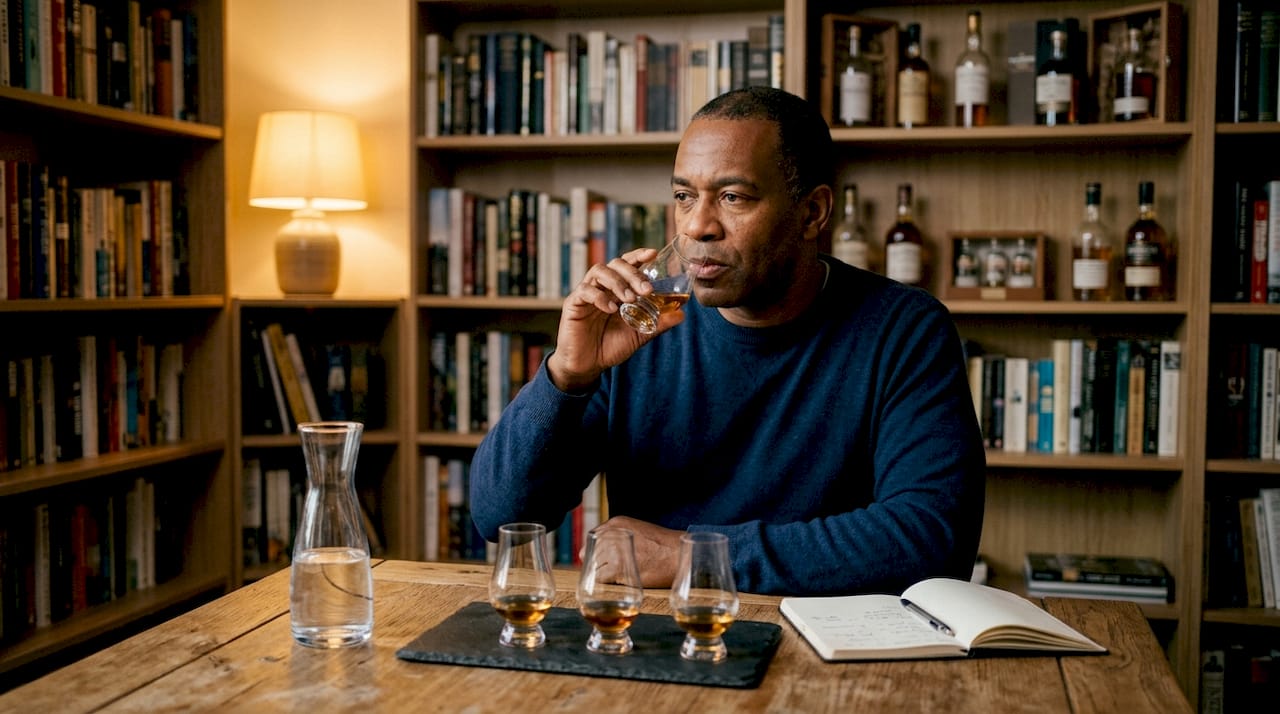
One quick note on spelling: “whiskey” (with an ‘e’) is the convention used in Ireland and the United States, while “whisky” (without the ‘e’) is used in Scotland, Japan, and Canada. The spelling signals regional origin and is a meaningful cue for anyone building their knowledge of different whisky types.
2. Bourbon: America’s sweet, full-bodied classic
Bourbon is an American whiskey defined by strict legal rules. It must contain at least 51% corn in its grain mix and be aged in new charred oak barrels. That combination produces bourbon’s signature flavours: vanilla, caramel, brown sugar, and toasted oak. Production is concentrated in Kentucky, though bourbon can legally be made anywhere in the USA.
The new charred oak barrel requirement is what sets bourbon apart from every other whiskey style. No other major category demands a fresh barrel for each batch. That direct contact with virgin wood extracts sugars and tannins quickly, giving bourbon its rich sweetness even at relatively young ages.
Bourbon comes in two main variations worth knowing:
- Wheated bourbon replaces rye in the grain mix with wheat, producing a softer, sweeter result. Pappy Van Winkle is the most famous example.
- High-rye bourbon uses a larger proportion of rye alongside corn, adding spice and a drier finish.
Bourbon is the base spirit for the Old Fashioned cocktail, and its sweetness suits cocktail mixing far better than the spicier rye whiskey used in a Manhattan or Sazerac. It also drinks well neat or over a large ice cube.
Pro Tip: Bourbon has shifted from a budget-friendly category to a premium spirit in recent years. If you are starting out, look for widely available expressions before chasing allocated bottles.
3. Scotch whisky: complex, regional, and steeped in tradition
Scotch whisky is legally required to be distilled and matured entirely in Scotland for a minimum of three years. The primary grain is malted barley, though grain whiskies made from wheat or corn also play a role in blended Scotch. Scotland’s five official regions each produce distinct styles, making Scotch the most regionally diverse of the popular whiskey types.
The five main Scotch categories are:
- Single malt Scotch: Made from 100% malted barley at a single distillery. Islay malts are famously peaty and smoky; Speyside malts tend to be fruity and floral.
- Single grain Scotch: Made at a single distillery but from grains other than malted barley, or a mix. Lighter in character.
- Blended malt Scotch: A mix of single malts from multiple distilleries. No grain whisky included.
- Blended grain Scotch: A mix of single grain whiskies from multiple distilleries.
- Blended Scotch: The most widely sold style globally. Combines malt and grain whiskies from multiple distilleries for consistency and approachability.
Scotch’s flavour complexity comes largely from its ageing flexibility. Distillers use ex-bourbon, sherry, or port casks to create fruity, nutty, or spiced notes that vary dramatically from one expression to the next. A Speyside single malt aged in a sherry cask tastes nothing like an Islay peated malt aged in ex-bourbon wood.
| Region | Typical flavour notes | Style |
|---|---|---|
| Islay | Smoke, peat, brine, iodine | Bold, peated |
| Speyside | Fruit, honey, vanilla, floral | Light to medium |
| Highland | Heather, dried fruit, spice | Medium to full |
| Lowland | Floral, grassy, gentle | Light, unpeated |
| Campbeltown | Brine, toffee, dried fruit | Full, complex |
Scotch is best enjoyed neat or with a small splash of still water to open up the aromas. It rewards slow sipping rather than mixing.
4. Irish whiskey: smooth, light, and approachable
Irish whiskey is typically triple-distilled and unpeated, which produces a lighter, smoother character than Scotch. That extra distillation pass removes harsher compounds and creates the clean, gentle texture Irish whiskey is known for. It uses barley, sometimes a blend of malted and unmalted barley, and is aged in used oak casks.
The flavour profile of Irish whiskey sits at the approachable end of the spectrum. Common tasting notes include:
- Light fruit: green apple, pear, and citrus
- Gentle sweetness: honey, vanilla, and light toffee
- Soft grain: biscuit, cereal, and mild spice
- Clean finish: little to no smoke or heavy tannin
Irish whiskey is regulated under Irish law, which requires production and maturation on the island of Ireland for a minimum of three years. That legal framework protects the category’s identity in the same way Scotch regulations protect Scotland’s output.
Triple distillation makes Irish whiskey ideal for highballs and casual sipping. It mixes well in an Irish coffee and works beautifully in lighter cocktails where a heavy spirit would overpower the other ingredients.
Pro Tip: If you are new to whiskey, Irish whiskey is the most forgiving starting point. Its smooth, clean profile means you can taste the spirit clearly without being distracted by smoke or heavy oak.
5. How do the three whiskey types compare?
The differences between bourbon, Scotch, and Irish whiskey come down to four factors: grain, distillation, barrel type, and geography. Wood ageing is the common thread across all three, but the type of wood and the number of times a barrel has been used changes the outcome significantly.
| Feature | Bourbon | Scotch whisky | Irish whiskey |
|---|---|---|---|
| Country of origin | USA | Scotland | Ireland |
| Primary grain | Corn (≥51%) | Malted barley | Barley (malted/unmalted) |
| Distillation | Double (column/pot) | Double (pot still) | Triple (pot still) |
| Barrel requirement | New charred oak | Used oak (varied) | Used oak (varied) |
| Minimum ageing | 2 years (straight) | 3 years | 3 years |
| Flavour profile | Sweet, vanilla, caramel | Smoky, malty, fruity | Smooth, light, fruity |
| Typical serve | Neat, on the rocks, cocktails | Neat, small water | Neat, highball, cocktails |
| Spelling | Whiskey | Whisky | Whiskey |
The spelling distinction is worth noting for practical reasons. When you see “whisky” on a label without the ‘e’, you are almost certainly holding a Scottish, Japanese, or Canadian product. “Whiskey” with the ‘e’ points to Ireland or the USA. For a deeper look at how these styles sit within the Australian whisky market, the range of expressions available locally has grown considerably.
6. When to choose each type and how to taste them well
Matching whiskey type to occasion makes a real difference in enjoyment. Bourbon suits anyone who prefers sweeter, fuller-bodied drinks and is a natural fit for cocktail lovers. Scotch rewards patience and suits drinkers who enjoy complexity and regional character. Irish whiskey is the most versatile of the three, working equally well in a glass on its own or as the base for a mixed drink.
A few practical tasting tips:
- Use a tulip-shaped glass (a Glencairn or similar) to concentrate aromas. A wide tumbler disperses them.
- Nose before you sip. Hold the glass just below your nose and breathe gently. Identify one or two aromas before tasting.
- Add a few drops of still water to cask-strength or high-ABV expressions. Water opens up flavour compounds that alcohol can mask.
- Taste in order of weight: start with Irish whiskey, move to bourbon, finish with peated Scotch. Going from light to heavy preserves your palate.
Pro Tip: For beginners exploring whiskey, try one expression from each of the three main categories before investing in a full bottle. Many bottle shops and specialist retailers offer sample pours or smaller formats.
The whiskey styles comparison becomes much clearer once you have tasted all three side by side. Reading about flavour notes only takes you so far. The difference between a peated Islay Scotch and a wheated bourbon is immediately obvious the moment you smell them together.
Key takeaways
Bourbon, Scotch, and Irish whiskey are the three core whiskey categories, each defined by distinct grains, production rules, and flavour profiles that make them genuinely different spirits.
| Point | Details |
|---|---|
| Bourbon’s defining rule | At least 51% corn and new charred oak barrels produce its sweet, vanilla-driven flavour. |
| Scotch’s regional diversity | Five regions and varied cask types create styles ranging from floral Speyside to smoky Islay. |
| Irish whiskey’s smoothness | Triple distillation and no peat make it the lightest and most approachable of the three. |
| Spelling as a guide | “Whiskey” signals USA or Ireland; “whisky” signals Scotland, Japan, or Canada. |
| Tasting order matters | Start with Irish whiskey, then bourbon, then Scotch to preserve your palate across a session. |
Brendan’s take on learning the three main types
Most people come to whiskey through one bottle, usually a gift or a round at a bar, and then assume the whole category tastes like that one experience. That assumption holds a lot of drinkers back. The gap between a lightly fruity Irish whiskey and a heavily peated Islay Scotch is wider than the gap between a Pinot Noir and a Shiraz. They are genuinely different drinking experiences.
My honest advice is to resist the urge to pick a favourite too early. I have watched people declare themselves “bourbon people” after two bottles and then discover they love Speyside Scotch once they try it. The three main categories are a starting point, not a destination. Each one contains dozens of expressions that taste nothing like the entry-level bottles most people start with.
The whiskey world in 2026 is also more interesting than it has ever been. Australian distilleries are producing single malts that sit comfortably alongside Scottish expressions. Japanese whisky continues to push blending techniques in new directions. The three classic types are the foundation, but the category keeps expanding around them.
Start broad. Taste widely. And do not let anyone tell you there is a correct way to drink whiskey. The only rule that matters is whether you enjoy what is in your glass.
— Brendan
Premium whiskey selections available at Uisuki
Knowing the three main whiskey types is one thing. Finding quality bottles that actually represent each style is another challenge entirely, especially in Australia where allocation and availability vary.

Uisuki stocks a curated range of bourbon, Scotch, and Irish whiskies sourced from trusted producers across the USA, Scotland, Ireland, and beyond. For something that bridges bourbon and single malt traditions, the Hobart Whisky Bourbon Matured expression is a standout Australian bottle worth exploring. For Scotch lovers, the Ardnamurchan Macleans Nose blended Scotch offers genuine Highland character at 46% ABV. Uisuki also carries limited editions and hard-to-find bottles for collectors ready to go beyond the basics.
FAQ
What are the 3 main types of whiskey?
The three main types are bourbon, Scotch whisky, and Irish whiskey. Each is legally defined by its country of origin, grain bill, and production method.
What is the difference between whiskey and whisky?
“Whiskey” (with an ‘e’) is the spelling used in Ireland and the USA, while “whisky” is used in Scotland, Japan, and Canada. The spelling indicates the regional tradition and origin of the spirit.
Which whiskey type is smoothest for beginners?
Irish whiskey is the smoothest and most approachable for beginners. Its triple distillation and unpeated production create a light, clean flavour with little harshness.
Does bourbon have to be made in Kentucky?
Bourbon must be made in the USA but is not legally required to come from Kentucky. Kentucky produces the vast majority of bourbon, but distilleries in other American states also produce it legally.
How long does Scotch whisky have to age?
Scotch whisky must be matured in Scotland for a minimum of three years. Most premium expressions age for considerably longer, with 12, 18, and 25-year statements common across major distilleries.