

Some bottles of whisky have sold for over a million dollars at auction, stunning even the most seasoned collectors. Rare whisky is more than just a drink; it carries a rich legacy of craftsmanship, heritage, and storytelling that makes each bottle unique. Whether you collect out of passion or for investment, understanding what truly sets rare whisky apart reveals why these bottles inspire such intense devotion and high demand.
Table of Contents
- Defining Rare Whisky And Its Unique Value
- Key Types Of Rare Whisky Collectibles
- What Makes Whisky Rare And Sought-After
- Investment Potential And Market Trends
- Risks, Authenticity, And Legal Considerations
- How To Avoid Common Rare Whisky Pitfalls
Key Takeaways
| Point | Details |
|---|---|
| Understanding Rarity | Rare whisky is defined by factors such as limited production, unique characteristics, and exceptional provenance, significantly enhancing its appeal and value. |
| Investment Potential | The rare whisky market shows strong investment potential, often outperforming traditional financial assets, requiring collectors to navigate it with knowledge and strategic insight. |
| Risks of Forgery | Authentication is critical in rare whisky collecting, as the market is vulnerable to counterfeit products and requires verification of provenance and storage conditions. |
| Avoiding Pitfalls | Successful collectors should avoid impulsive purchases and pay close attention to storage, provenance, and market trends to maintain the authenticity and value of their collections. |
Defining Rare Whisky And Its Unique Value
Rare whisky represents more than just an alcoholic beverage - it’s a complex world of craftsmanship, history, and collectible artistry. According to Collectinsure, rare whiskies are distinguished by unique characteristics that elevate them far beyond standard commercial offerings.
At its core, rare whisky encompasses bottles with extraordinary provenance, limited production runs, exceptional age statements, or distinctive distillery characteristics. These bottles are sought after by collectors and enthusiasts who appreciate the nuanced stories behind each unique expression. Factors that contribute to a whisky’s rarity include:
- Limited Production Runs: Whiskies produced in extremely small quantities
- Unique Distillery Exclusives: Special releases only available from specific distilleries
- Historic Significance: Bottles representing significant moments in whisky production
- Exceptional Age Statements: Older expressions with remarkable maturation periods
The value of rare whisky extends beyond mere monetary worth. Each bottle represents a snapshot of cultural heritage, representing the meticulous craft of distillation passed through generations. For serious collectors, identifying rare whisky editions becomes an art form that requires deep knowledge, careful research, and genuine passion for understanding the intricate world of premium spirits.
Key Types Of Rare Whisky Collectibles
Rare whisky collecting encompasses a diverse range of extraordinary bottles that captivate enthusiasts and investors alike. According to Robbie Burns, the world of collectible whiskies extends far beyond standard releases, featuring multiple intriguing categories that distinguish these exceptional spirits.
Limited Edition Releases represent one of the most sought-after categories in rare whisky collecting. These bottles are typically produced in extremely restricted quantities, often commemorating significant milestones or representing unique experimental batches from prestigious distilleries. The Bottle Boutique highlights several key types of rare whisky collectibles:
- Discontinued Bottlings: Whiskies no longer in production
- Special Cask Finishes: Unique maturation techniques creating distinctive flavor profiles
- Anniversary Edition Bottles: Commemorative releases marking distillery milestones
- Single Cask Selections: Incredibly rare bottles from individual, unblended casks
For serious collectors, understanding limited edition whisky becomes crucial in building a remarkable collection. These bottles are not just beverages but living historical artifacts, representing specific moments in distilling craftsmanship and offering a tangible connection to the rich traditions of whisky production. The most valuable collectibles often combine exceptional provenance, remarkable backstory, and near-perfect preservation conditions.

What Makes Whisky Rare And Sought-After
The allure of rare whisky goes far beyond simple liquid in a bottle. According to Collectinsure, certain whiskies become exceptionally sought-after due to a complex interplay of unique characteristics that distinguish them from standard commercial releases.
Provenance stands as a critical factor in determining a whisky’s rarity and desirability. This encompasses not just the whisky’s origin, but its entire historical narrative. Collectors prize bottles that tell a compelling story, whether through exceptional distillery heritage, unusual production methods, or connection to significant moments in whisky-making history. The most coveted bottles often represent:
- Discontinued Distilleries: Whiskies from shuttered or legendary production sites
- Exceptional Vintage Releases: Bottles from specific, remarkable years of production
- Unique Maturation Techniques: Experimental cask finishes or extraordinary aging processes
- Limited Production Quantities: Bottles produced in microscopic numbers
For serious enthusiasts, single cask whisky selections represent the pinnacle of collectibility. These extraordinary bottles are not merely drinks, but liquid investments that capture a precise moment of distilling artistry - each one a unique expression that can never be exactly replicated. The most valuable rare whiskies combine impeccable craftsmanship, historical significance, and an almost mythical quality that transforms them from mere beverages into cherished collector’s items.
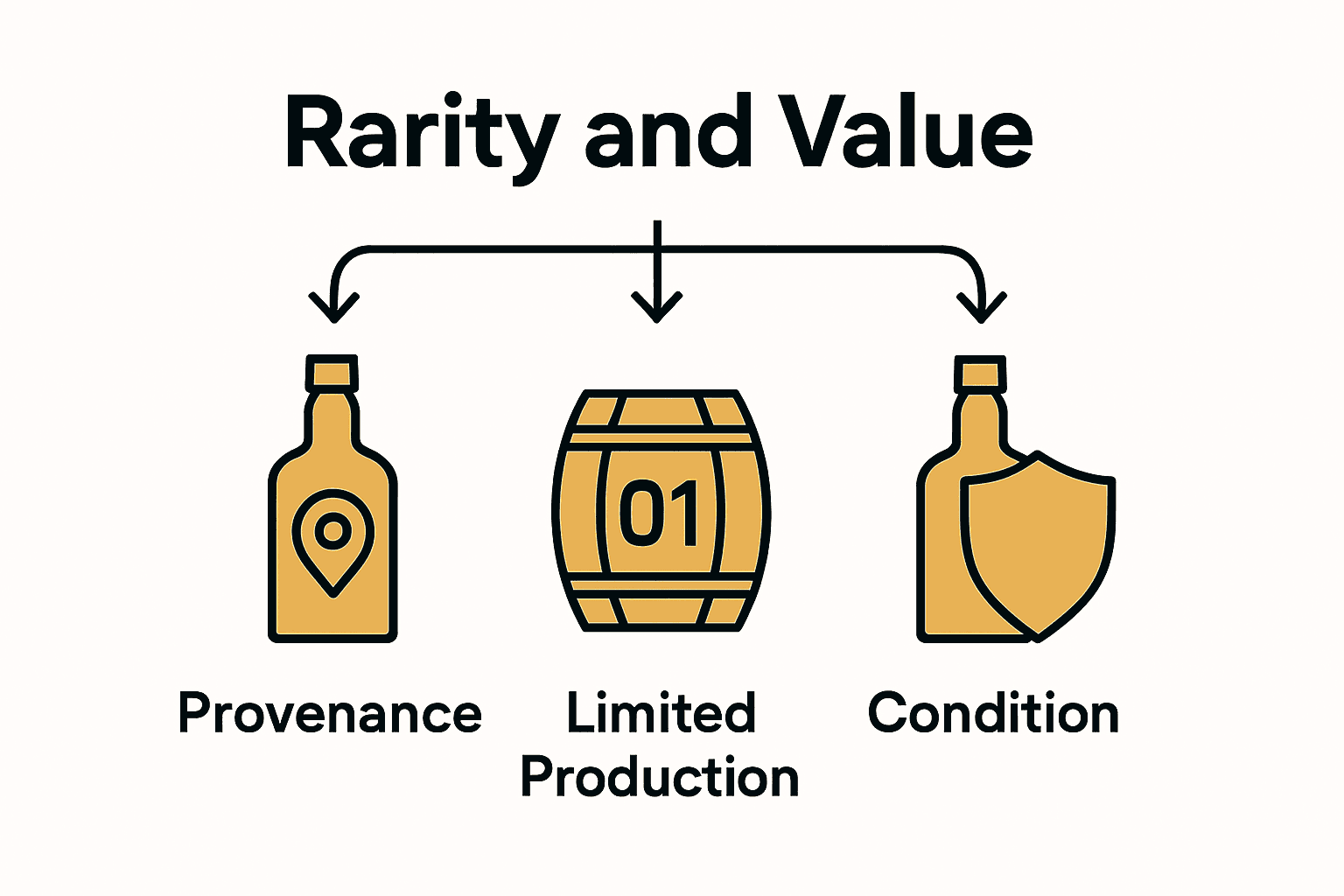
Here’s a comparison of the main factors that contribute to rare whisky’s value and appeal:
| Factor | Description | Impact on Value |
|---|---|---|
| Provenance | Historical background & distillery heritage | High – drives collectibility |
| Limited Production | Small batch, single cask, exclusive releases | High – increases rarity |
| Age Statement | Years and maturity period | Medium – older often prized |
| Distillery Reputation | Status of producing distillery | High – sought-after names |
| Condition & Preservation | Packaging, storage, original seals | Essential – preserves worth |
| Unique Characteristics | Special casks, vintage year, finish | Medium – adds distinction |
| Historical Significance | Links to milestones or defunct distilleries | High – creates demand |
Investment Potential And Market Trends
Rare whisky has emerged as a surprisingly robust alternative investment option, transcending traditional financial assets. According to Robbie Burns, the rare whisky market demonstrates remarkable resilience and potential for substantial returns that often outperform conventional investment vehicles.
Market Dynamics play a crucial role in determining the investment potential of rare whiskies. Collectinsure highlights several key factors that drive value and collector interest:
- Distillery Reputation: Bottles from prestigious or legendary distilleries
- Limited Edition Releases: Scarce productions with restricted availability
- Historical Significance: Bottles representing pivotal moments in whisky production
- Condition and Preservation: Perfectly maintained bottles with original packaging
For serious investors, understanding limited edition whisky becomes essential in navigating this complex market. Successful whisky investments require deep knowledge, patience, and an understanding that these are not just financial assets, but tangible pieces of cultural heritage. The most sophisticated collectors treat rare whisky as a nuanced investment class that combines passion, expertise, and potential financial appreciation.
Risks, Authenticity, And Legal Considerations
The world of rare whisky collecting is fraught with complex challenges that demand sophisticated understanding and vigilance. According to Eprints, the whisky market faces significant threats from fraudulent products that can undermine collector investments and industry integrity.
Authentication represents the most critical safeguard for serious whisky collectors. The risks associated with rare whisky investments extend far beyond simple financial considerations and include:
- Forgery Threats: Sophisticated counterfeit bottle reproduction
- Provenance Verification: Confirming the true origin and history of each bottle
- Storage Conditions: Ensuring proper preservation that maintains value
- Legal Transfer Restrictions: Navigating complex international trading regulations
For serious collectors, understanding the difference between whisky varieties becomes crucial in protecting against potential fraud. Successful collectors develop a comprehensive approach that combines expert knowledge, rigorous authentication processes, and a deep understanding of the intricate legal landscape surrounding rare whisky collection. The most prudent investors treat each acquisition as a complex transaction requiring meticulous research, expert consultation, and an unwavering commitment to verifying every aspect of a potential purchase.
How To Avoid Common Rare Whisky Pitfalls
Collecting rare whisky requires more than passion - it demands strategic knowledge and careful navigation. According to The Bottle Boutique, enthusiasts often fall into predictable traps that can diminish their collection’s value and authenticity.
Strategic Collecting involves understanding the complex landscape of rare whisky acquisitions. Collectinsure highlights critical pitfalls that novice collectors must avoid:
- Impulse Purchasing: Buying without thorough research and verification
- Neglecting Storage Conditions: Improper preservation that degrades bottle value
- Overlooking Provenance: Failing to confirm a bottle’s authentic history
- Ignoring Market Trends: Purchasing without understanding current collector dynamics
For serious collectors, choosing single malt whisky becomes an art form requiring patience, expertise, and discernment. The most successful collectors develop a disciplined approach that combines meticulous research, expert consultation, and a nuanced understanding of the rare whisky market’s intricate ecosystem. Ultimately, avoiding common pitfalls means treating each potential acquisition as a complex investment requiring careful evaluation and strategic thinking.
Discover Rare Whisky Treasures Right Here
The expert guide you just explored reveals how rare whisky stands apart through its limited editions, exceptional provenance, and unique maturation techniques. If you are passionate about building a distinguished whisky collection or seeking that perfect bottle steeped in history and character you understand the challenges of sourcing these elusive gems. At Uisuki, we bring the world of rare and premium whiskies straight to your doorstep with a curated selection that spans legendary Scotch malts and exceptional global offerings.

Explore our exclusive World Whiskies collection and browse the latest New Arrivals to find those singular bottles that echo the craftsmanship and story behind every rare whisky. Act now to secure your place in a community of discerning collectors. Visit Uisuki and take the first step toward elevating your collection with confidence and ease.
Frequently Asked Questions
What defines rare whisky?
Rare whisky is defined by unique characteristics such as limited production runs, extraordinary age statements, historic significance, and distinctive distillery traits, making them highly sought after by collectors.
Why are limited edition releases important in rare whisky collecting?
Limited edition releases are significant because they are produced in small quantities and often celebrate milestones or unique experimental batches, enhancing their collectibility and value among enthusiasts.
What factors impact the value of rare whisky?
The value of rare whisky is influenced by factors such as provenance, limited production, age statement, distillery reputation, condition and preservation, unique characteristics, and historical significance.
How can collectors avoid common pitfalls when acquiring rare whisky?
Collectors can avoid pitfalls by conducting thorough research, confirming the provenance of bottles, ensuring proper storage conditions, and staying informed about current market trends to make educated purchasing decisions.
Recommended
- How to Identify Rare Whisky: Expert Guide for Collectors – Uisuki.com.au
- Understanding Why Limited Edition Whisky Matters – Uisuki.com.au
- Single Cask Whisky Explained: Complete Connoisseur Guide – Uisuki.com.au
- Understanding the Difference Between Whisky and Rye – Uisuki.com.au
- How to Spot Quality Wine in South Africa (2025) | Vinty