

Most australian whisky collectors are surprised to learn that a 100 proof American bottle is not the same strength as a 100 proof British or Australian whisky. This confusion stems from varied historical systems for measuring alcohol content, often leading buyers to misjudge a spirit’s true potency. Knowing how proof impacts flavour, value, and collectibility equips australian enthusiasts to make smarter choices and appreciate every sip with deeper insight.
Table of Contents
- Whisky Proof Defined And Common Misconceptions
- Global Proof Systems And Modern ABV Standards
- The History And Evolution Of Proof Measurement
- How Proof Affects Flavour, Texture, And Use
- Choosing Bottles: Proof’s Role For Collectors
Key Takeaways
| Point | Details |
|---|---|
| Understanding Proof | Whisky proof measures alcohol strength and varies globally, leading to potential confusion among collectors. |
| Regional Differences | The United States uses a simple doubling of ABV for proof, while the UK and Australia traditionally factor a different calculation. |
| Impact on Flavour | Higher proof whiskies tend to deliver bolder flavours, while lower proof options offer a softer experience and are better for casual sipping. |
| Collector Insights | Proof plays a crucial role in whisky investment, with higher proof bottles often valued for their unique characteristics and ageing potential. |
Whisky Proof Defined And Common Misconceptions
Whisky proof is a measurement of alcohol strength that often confuses even seasoned enthusiasts. Originally developed as a taxation method in England, the proof system represents the alcohol content in a spirit, with different standards used globally. Alcohol proof measurement historically involved creative methods like testing whether spirits could ignite gunpowder, which sounds more like a pub challenge than a scientific technique.
In the United States, proof is calculated by simply doubling the alcohol by volume (ABV) percentage. For instance, a whisky with 50% ABV would be 100 proof. Australian and British systems traditionally used a slightly different calculation where proof was 1.75 times the ABV, creating potential confusion for international whisky collectors. This variation means that a 100 proof American whisky is not exactly the same strength as a 100 proof British whisky.
Common misconceptions about proof include believing it’s a consistent global standard or thinking higher proof automatically means better quality. In reality, proof is merely a measure of alcohol concentration. Some whisky enthusiasts mistakenly equate higher proof with superior taste, but alcohol strength doesn’t inherently indicate superior flavour complexity. Proof primarily helps consumers understand the alcohol content and potential potency of their chosen spirit.
Pro Tip: When comparing whiskies from different regions, always check the specific proof calculation method to understand the true alcohol strength.
Global Proof Systems And Modern ABV Standards
Global proof systems reveal a fascinating history of alcohol measurement that varies dramatically across different regions. Proof designation worldwide reflects unique historical approaches to understanding and regulating alcoholic beverages. The United States maintains a straightforward system where proof represents twice the alcohol by volume (ABV) percentage, making calculations relatively simple for consumers.
In contrast, European countries have developed their own distinctive measurement approaches. The United Kingdom traditionally used a complex method where 100 proof represented 57.1% ABV, a standard derived from historical gunpowder ignition tests. France adopts the Gay-Lussac system, which directly equates alcohol percentage to proof, creating yet another layer of complexity for international whisky enthusiasts. Alcohol measurement variations demonstrate how deeply cultural and historical contexts influence even seemingly straightforward technical measurements.
To help clarify international differences, compare global whisky proof systems below:
| Country/Region | Calculation Method | Example (100 Proof) |
|---|---|---|
| United States | 2 × ABV percentage | 50% ABV |
| United Kingdom | 1.75 × ABV percentage | 57.1% ABV |
| France | ABV equals Proof | 100% ABV (theoretical) |
| Australia (historic) | 1.75 × ABV percentage | 57.1% ABV |
Modern standards increasingly favour Alcohol By Volume (ABV) as a universal measurement, recognising the need for clarity in international trade and consumer understanding. Despite this trend, traditional proof systems persist, particularly in the United States, where the measurement remains deeply ingrained in regulatory practices and consumer expectations. This creates an interesting dynamic where historical measurement methods coexist with contemporary standardisation efforts.
Pro Tip: When purchasing international whiskies, always cross-reference the proof or ABV to understand the exact alcohol content.
The History And Evolution Of Proof Measurement
The origins of proof measurement trace back to 16th-century England, where tax officials developed ingenious methods to verify alcohol content. Alcohol proof origins reveal a fascinating tale of scientific improvisation, where spirits were tested by mixing them with gunpowder and attempting to ignite the mixture. If the gunpowder successfully burned, the spirit was considered ‘proven’ to have sufficient alcohol content and thus taxable, giving birth to the term ‘proof’.
Initially, this method was more art than science, with variations in gunpowder quality and moisture levels creating significant inconsistencies. British authorities eventually standardised the measurement, defining 100 proof as spirits containing 57.15% alcohol by volume. The United States later simplified this approach, adopting a more straightforward calculation of proof being exactly twice the ABV percentage. This evolution demonstrates how measurement systems emerge from practical challenges, transforming from rudimentary field tests to precise scientific standards.
As international trade and scientific understanding expanded, proof measurement continued to evolve. Different countries developed unique systems reflecting their cultural and regulatory contexts. While some nations maintained traditional proof calculations, others gradually transitioned to the more universally understood Alcohol By Volume (ABV) standard. This shift represented more than a technical change; it reflected a global movement towards standardisation and clearer consumer communication about alcoholic beverage strength.
Pro Tip: Research the specific proof system of the country where your whisky originated to truly understand its alcohol content.
How Proof Affects Flavour, Texture, And Use
The alcohol proof of a whisky fundamentally transforms its sensory experience, influencing everything from initial taste to final mouthfeel. Whisky proof characteristics reveal a nuanced relationship between alcohol strength and flavour complexity. Lower proof whiskies typically offer a gentler introduction, with softer flavour profiles that invite casual sipping and broader appeal among less experienced drinkers.
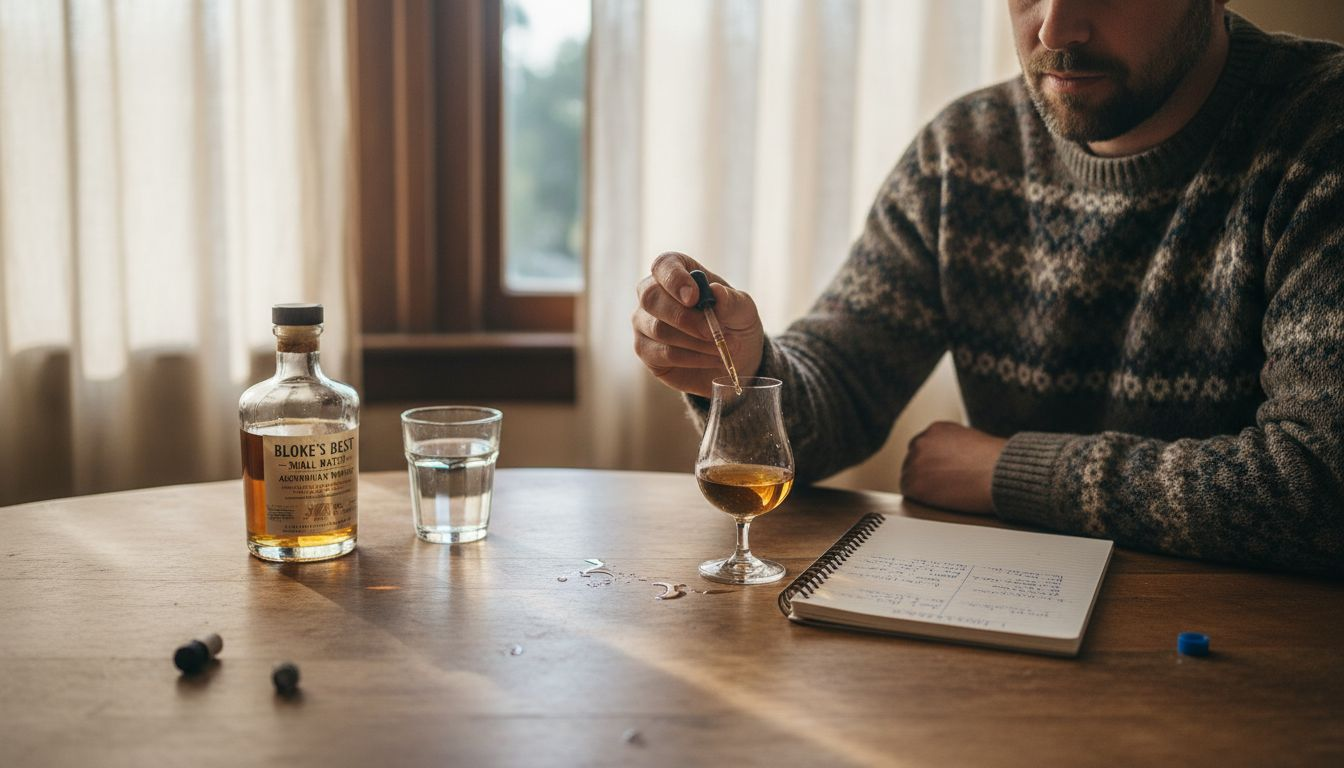
As proof increases, the whisky’s character becomes more pronounced and intense. Mid-range proofs (86-100) strike a delicate balance, presenting a harmonious blend of flavour depth and drinkability. Higher proof whiskies (100+) deliver a more concentrated sensory experience, often featuring bold, robust flavour notes that demand careful appreciation. Whisky sensory experience demonstrates how alcohol concentration can dramatically alter a spirit’s texture, with higher proof expressions typically presenting a thicker, more viscous mouthfeel.
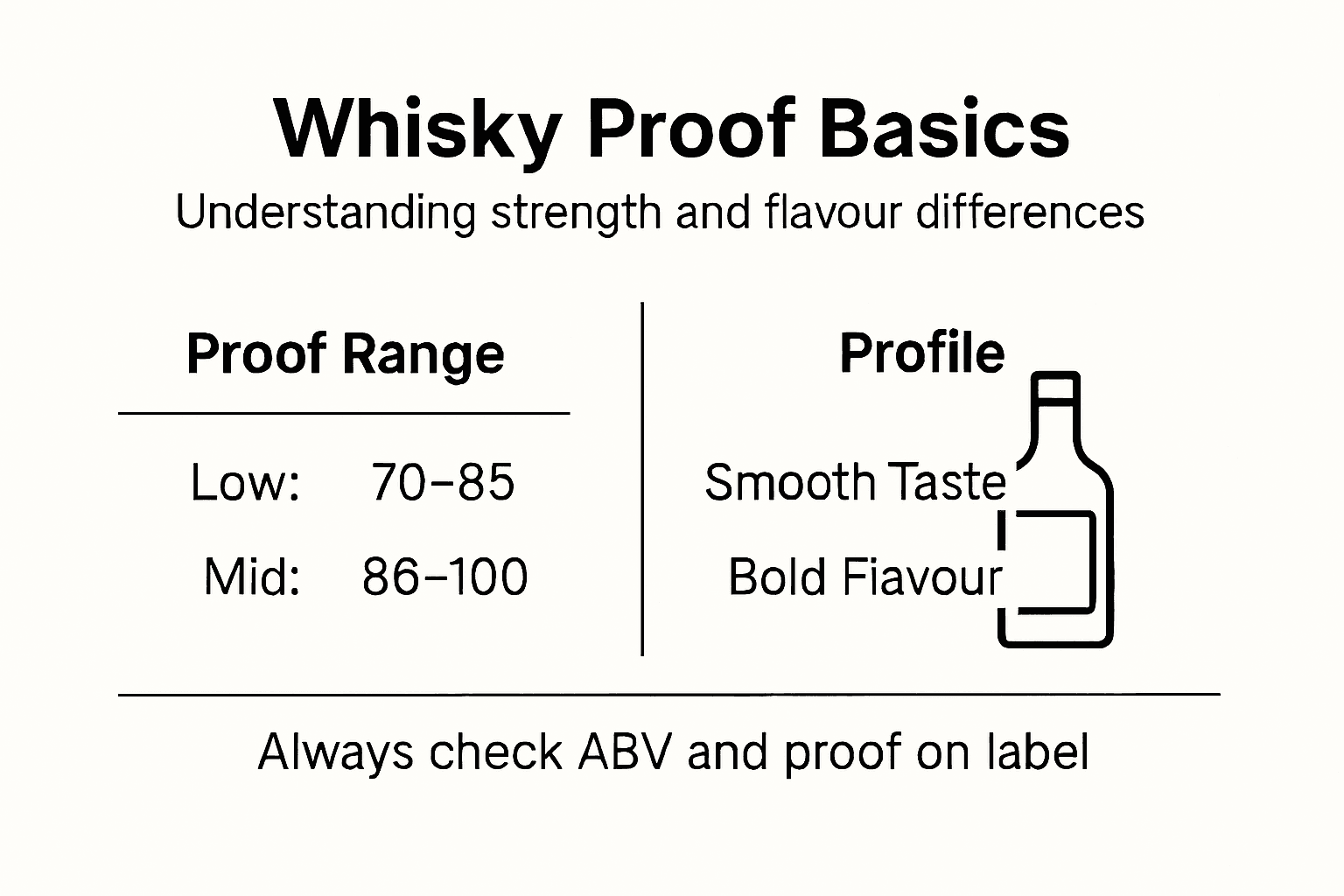
Here’s a summary of how different proof levels impact whisky characteristics:
| Proof Range | Flavour Profile | Texture | Ideal Use |
|---|---|---|---|
| Low (Below 86) | Softer, approachable | Light mouthfeel | Neat or simple mixers |
| Mid (86-100) | Balanced, complex | Medium body | Sipping or cocktails |
| High (100+) | Bold, intense | Thick, viscous | Serious tasting, diluting |
The proof also significantly impacts a whisky’s versatility in cocktails and mixed drinks. Lower proof whiskies blend more seamlessly, while higher proof variants can stand up to complex mixers and provide a more assertive base. Experienced whisky enthusiasts often use water or ice to ‘open up’ higher proof whiskies, revealing subtle flavour nuances that might otherwise be masked by intense alcohol heat. This technique allows drinkers to explore the full spectrum of a whisky’s potential, transforming the drinking experience from simple consumption to a sophisticated sensory journey.
Pro Tip: Experiment with a few drops of water in high-proof whiskies to unlock hidden flavour layers.
Choosing Bottles: Proof’s Role For Collectors
While some collectors focus exclusively on age and rarity, proof plays a nuanced and critical role in whisky selection. Whisky collector strategies reveal that proof is far more than a simple alcohol measurement—it’s a key indicator of a bottle’s potential value, complexity, and collectibility. Cask-strength and barrel-proof expressions are particularly prized, representing unaltered liquid that captures the whisky’s most authentic character.
Collectors understand that proof levels dramatically influence a whisky’s investment potential and future development. Higher proof whiskies, typically bottled at their natural maturation strength, offer unique characteristics that can appreciate in value over time. These bottles often represent limited releases with distinctive flavor profiles that become more nuanced and complex as they age. Barrel proof collecting requires careful consideration of how proof impacts a whisky’s long-term preservation and potential market value, making it a sophisticated aspect of serious whisky collecting.
The relationship between proof and collectibility extends beyond mere numbers. Experienced collectors assess proof as part of a holistic evaluation that includes provenance, distillery reputation, and potential flavor evolution. Some seek out specific proof ranges that represent pivotal moments in a distillery’s production history, while others focus on bottles that showcase unique maturation techniques. This approach transforms proof from a simple alcohol measurement into a sophisticated marker of a whisky’s intrinsic quality and potential future worth.
Pro Tip: Photograph and document the proof of rare bottles in your collection, as this detail can significantly impact future valuation.
Discover the Perfect Whisky Proof for Your Palate and Collection
Understanding whisky proof gives you the power to choose bottles that truly match your taste and collecting goals. Whether you prefer the bold intensity of high proof whiskies or the smooth approachability of lower proof expressions, navigating proof can be challenging without expert guidance. Key terms like ABV, cask strength, and barrel proof matter deeply when selecting your next bottle.
Explore our curated selection including Glenfiddich, The Balvenie, and Scotch Whisky (all) - Glenglassaugh to find whiskies with precise proof levels to suit your unique preferences.

Take control of your whisky experience today at Uisuki.com.au and shop with confidence. Discover rare and premium bottles with detailed proof information and expert insights designed to elevate your enjoyment and collecting journey. Don’t wait — unlock the perfect balance of flavour and strength now.
Frequently Asked Questions
What is whisky proof?
Whisky proof is a measurement of the alcohol strength in a spirit, calculated by doubling the alcohol by volume (ABV) percentage in countries like the United States.
How does proof affect the flavour of whisky?
Higher proof whiskies tend to have bolder, more intense flavours and a thicker mouthfeel, while lower proof whiskies generally offer a softer, more approachable taste.
Why does proof matter when choosing whisky?
Proof is essential as it indicates the alcohol concentration, which influences the whisky’s character, flavour complexity, and versatility in cocktails or neat drinking.
Are higher proof whiskies always better quality?
Not necessarily. While higher proof can reflect intensity, it doesn’t inherently mean better quality; flavour complexity and personal preference play a crucial role in determining the quality of whisky.