

Speyside is Scotland’s most densely packed whisky region, home to more than 40 working distilleries clustered along the River Spey. Buyers gravitate here because no other region offers this breadth: delicate, honeyed sherry-free malts sit on the same shelf as rich, dried-fruit sherry bombs and the occasional heavyweight outlier. If you like fruit and honey, start light. If you want depth and spice, go sherry-forward.
TL;DR:
- Most Speyside whiskies are either lightly sherried or bourbon-matured, with age statements ranging from modest to premium-priced collector bottles.
- Expect affordable options for daily drinking, but sherry cask scarcity has caused prices for high-end, sherry-heavy expressions to rise significantly.
- Tasting both a bourbon-matured and a sherry-matured Speyside side by side helps define your preferred style before investing in rarer or aged bottles.
- The region offers diverse styles beyond the fruity norm, including heavier, oilier spirits from distilleries like Craigellachie and lightly peated options.
- Reliable, transparent retailers provide detailed ABV, cask info, and sourcing options to help buyers select compositions matching their tastes and budget.
Table of Contents
- What is Speyside Scotch whisky?
- What does Speyside Scotch taste like?
- How to choose a Speyside bottle: a buying checklist
- Recommended Speyside styles to try
- How to taste and enjoy Speyside whisky
- Why trust this guide on Speyside whisky
- An editorial take on buying Speyside whisky
- Shop curated Speyside picks
- Sources
- FAQ
What is Speyside Scotch whisky?
Speyside sits inside the Highlands for legal labelling purposes, but its whisky-making history and concentration of distilleries have earned it recognition as its own distinct region. Strathspey, the valley carved by the River Spey, gives the area its name and its water. No other Scotch region packs anywhere near the same number of distilleries into so small a footprint.
That density matters practically as well as historically. Distilleries here often sit within a short drive of each other, which is why Speyside has become the easiest region in Scotland for visitors to tour multiple producers in a single trip. It also means shared infrastructure: coopering skills, maltings, and warehousing built up over generations.
Three local factors shape the region’s character:
- Soft water from the Spey and its tributaries, prized for fermentation and reputed to give a cleaner spirit.
- Reliable barley supply from the surrounding farmland, feeding a concentration of maltings still active in the area.
- A deep coopering tradition, which kept sherry and bourbon cask supply chains running long after some other regions scaled back.
Speyside single malts account for roughly half of all Scottish malt production, according to industry estimates from TasteSCOT, which says plenty about how central this valley is to the wider category.
What does Speyside Scotch taste like?
The quintessential Speyside profile runs orchard fruit, honey and vanilla, with a smoothness that has made it the classic gateway into single malt Scotch. Apple, pear, honey, toffee and butterscotch turn up constantly across the region, according to the Scotch Whisky Association, often layered with a light floral note that gives even young expressions some polish.
Cask choice does most of the heavy lifting on flavour:
- Bourbon casks lean the spirit toward fresh fruit, vanilla and a lighter body, letting the base spirit’s fruitiness show through.
- Sherry casks push things toward dried fruit, spice, nuttiness and a darker, chewier texture, especially in older expressions.
- Finished or double-matured bottles borrow characteristics from both, often finishing in sherry wood after years in bourbon barrels.
Speyside produces about half of Scotland’s malt whisky output, spread across dozens of distilleries with wildly different house styles, per TasteSCOT’s regional data.
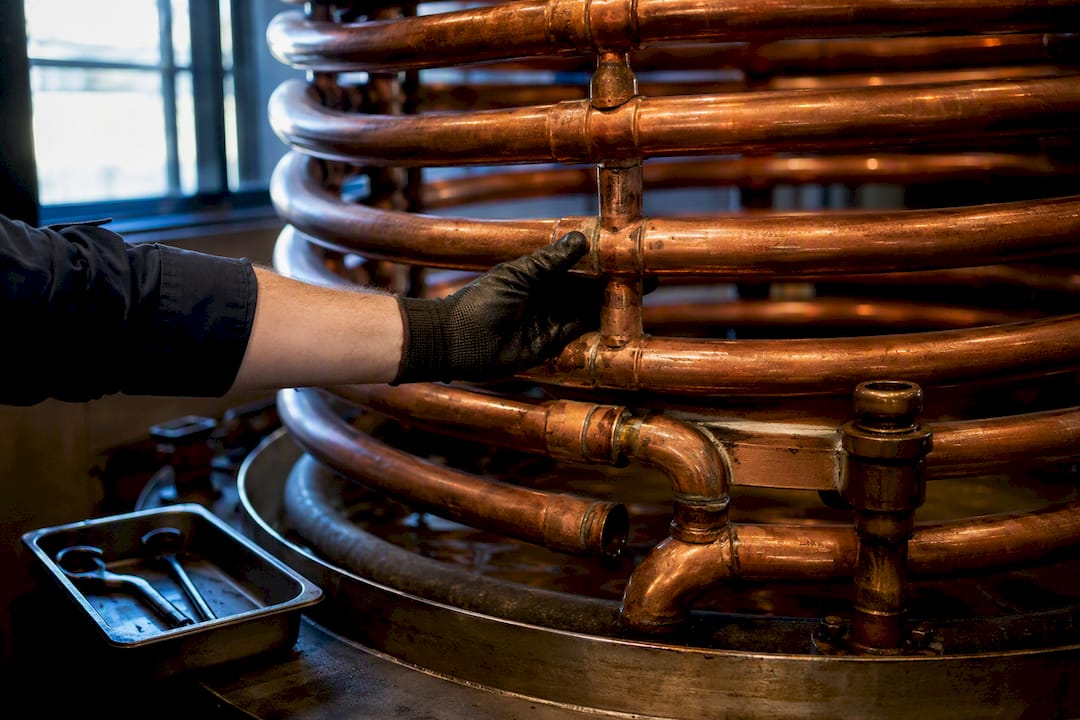
Not every Speyside malt fits the fruity, sherried template. Craigellachie is the standout example: its worm-tub condensers produce a heavier, oilier, almost meaty spirit that stands well outside the region’s mainstream, and a handful of other distilleries run light peating for the same reason, to offer something genuinely different from the fruit-forward norm.
How to choose a Speyside bottle: a buying checklist
Work out what you actually want the bottle to do before you look at labels. A daily dram, a special-occasion sherry bomb and a cellar piece call for different criteria.
- Define your goal first. An approachable daily dram wants balance and drinkability over intensity; a sherry bomb wants depth and spice for slow sipping; a cellaring prospect wants age, provenance and scarcity.
- Read the label properly. Check the age statement, cask type (first-fill vs refill, sherry vs bourbon), and ABV. Non-chill-filtered, natural colour bottlings are worth a premium because they show more of the cask’s actual influence rather than a filtered, adjusted version of it.
- Understand the price bands. Entry-level Speyside typically sits in the everyday-drinking bracket with no age statement or a modest one. Mid-range bottles usually carry either extra years or better cask selection. Above that, price tends to track scarcity and cask cost directly, and sherry cask supply has genuinely tightened since the 2010s, which is a real driver behind rising prices on heavily sherried flagship releases.
- Check provenance before you buy. A trustworthy retailer lists ABV, cask information, batch codes and pricing clearly rather than burying the detail. Choosing Speyside by style gets much easier once you know exactly what’s in the bottle.
Pro Tip: If a listing hides the ABV or cask type, treat that as a red flag. Reputable Speyside bottlings, independent or official, spell out both without you having to ask.
Recommended Speyside styles to try
Different goals call for different bottles. Here’s how to think about the region by purpose rather than by brand name alone.
- Starting point: Look for a lightly sherried or bourbon-matured expression with a modest age statement. These are built to be easy company, and they’re the best route in for beginners still working out what they like.
- Sherry bomb territory: Fully sherry-matured malts in the 15 to 18 year range deliver the dried fruit, spice and dark toffee that collectors chase, and something like the Glenallachie 15 Year Old is a solid benchmark for what that style should deliver.
- Cellaring and special occasions: Older, higher-strength or limited releases carry both rarity and staying power. Industry award coverage, including recent Global Spirits Masters recognition. This is a genuinely useful signal, since it points to bottles that have been judged against peers rather than just marketed well.
- The curious outlier: Seek out a worm-tub or lightly peated Speyside to see how far the region can stretch beyond its fruity reputation. It’s the fastest way to understand that “Speyside” describes a place, not a single flavour.
How to taste and enjoy Speyside whisky
A tulip-shaped glass, like a Glencairn, concentrates aroma far better than a tumbler. Pour a standard 30ml serve and let it sit at room temperature for a few minutes before nosing it.
- Add a few drops of water gradually. It typically opens up the aroma and softens the alcohol burn, especially in cask-strength bottlings above 46% ABV.
- Sherry-forward Speysides pair well with dark chocolate, dried fruit or a strong cheddar.
- Lighter, fruitier styles suit a simple whisky sour or work fine alongside soft cheeses and fresh fruit.
Pro Tip: Nose the whisky with your mouth slightly open. It sounds odd, but it stops the alcohol vapour overwhelming your sense of smell and lets the fruit and honey notes come through properly.
Why trust this guide on Speyside whisky
The retailer runs detailed product listings for many bottles, often including ABV, cask notes and pricing, rather than vague marketing copy. The Ardnamurchan listing is a good example of the level of specification buyers get across the catalogue.
Beyond stocked releases, some retailers take custom sourcing requests for rare or hard-to-find Speyside bottlings, drawing on industry relationships. Curated listings combined with sourcing services can distinguish some retailers from others who resell widely distributed products.
An editorial take on buying Speyside whisky
The conventional advice on Speyside is to treat it as “the easy region,” a soft landing before you graduate to Islay peat. That undersells it badly. Speyside isn’t a training-wheels region, it’s the deepest and most varied region in Scotch, and treating it as beginner-only means missing the sherry bombs, the worm-tub oddities and the genuinely collectible age statements sitting right alongside the easy-drinking staples.
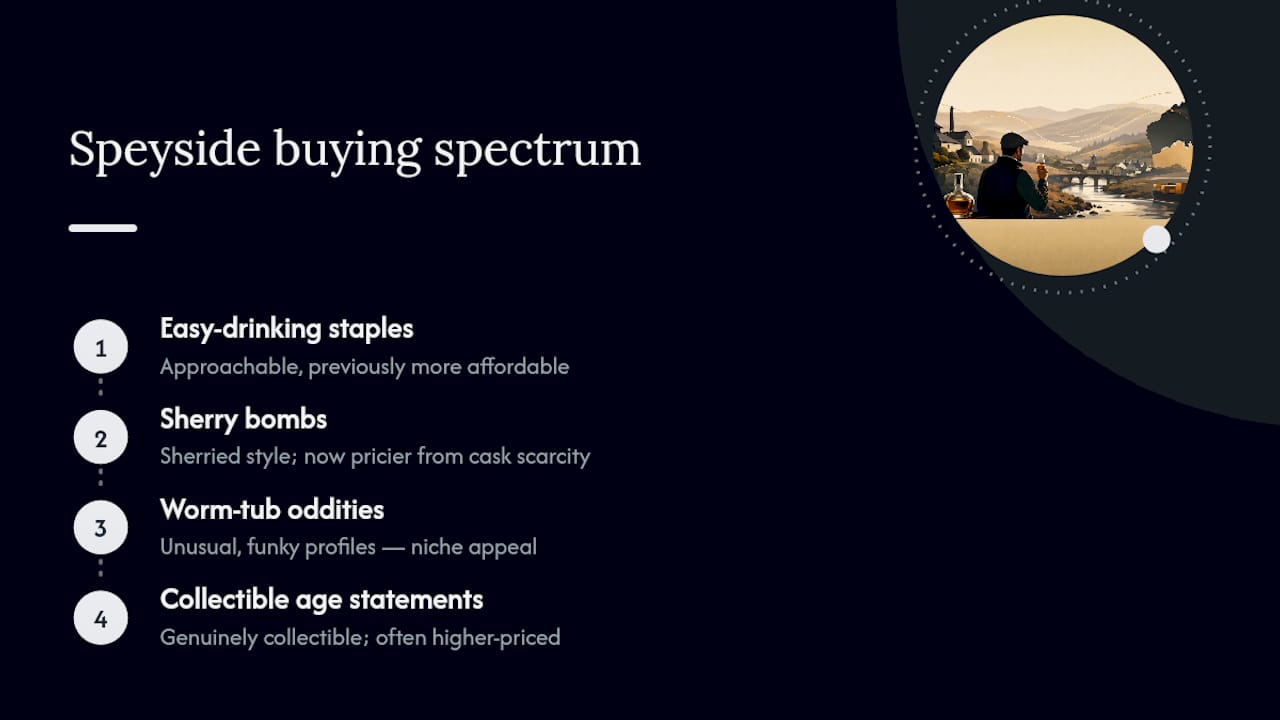
Where most guides fall short is price framing. They talk about Speyside as universally affordable, which was truer a decade ago. Sherry cask scarcity has pushed flagship sherried releases up in price, and that’s a market reality buyers should factor in rather than get caught out by.
My honest priority order for a new Speyside buyer: taste one bourbon-matured and one sherry-matured expression side by side before you spend big on anything. That single comparison teaches you more about your own palate than reading ten tasting notes ever will. Everything else, age statements, awards, rarity, only matters once you know which side of that fence you actually sit on.
— Brendan
Shop curated Speyside picks
Online retailers can offer direct ways to buy whisky styles with transparent listings and cask details. Every bottle carries clear ABV, cask and pricing information, and the range runs from approachable everyday drams through to rare, limited and sherry-heavy releases sourced specifically for collectors.

If a customer can’t find a desired style or distillery, some retailers provide custom sourcing services to assist. A good place to start browsing is a rum-finished single malt like the Hobart Whisky Bourbon Matured, Rum Finished release, which shows the kind of cask experimentation now showing up alongside classic Speyside sherry and bourbon styles. Browse the current arrivals and check specs before you commit to a bottle.
Sources
- Scotch Whisky Association — whisky regions (Speyside)
- TasteSCOT — Speyside whisky guide
- Wikipedia — Speyside single malt
- Forbes — Speyside’s top single malts (2026)
- Craigellachie distillery
FAQ
What type of Scotch is Speyside?
Speyside is a single malt Scotch region within the Highlands, legally recognised in its own right, known for fruit-forward, honeyed whiskies often matured in sherry or bourbon casks.
What is the best Scotch from Speyside?
There’s no single “best,” since the region spans everyday sippers to sherry bombs and rare cask-strength releases, but bottles that pick up recognition at events like the Global Spirits Masters are a reliable starting point for collectors, and the Glenallachie 15 Year Old is a strong benchmark for sherry-forward style.
What are the top Speyside whiskies to try?
Rather than a fixed top ten, aim for a spread across styles: one bourbon-matured entry point, one full sherry-matured expression, one older cellaring bottle, and one worm-tub or lightly peated outlier like Craigellachie to see the region’s full range.
What makes Speyside Scotch different from other regions?
Its combination of distillery density, roughly 40 to 50 producers, and consistent access to soft water and long-standing cask supply chains gives it the widest stylistic range of any Scotch region, from delicate florals to rich sherry-dominant malts.