

Over 80 percent of new australian whisky collectors admit to confusion about what truly makes a bottle collectible. Misconceptions about age and rarity often cloud sound decisions, putting valuable investments at risk. For anyone hoping to succeed in this high-stakes market, understanding the secrets behind genuine collectible whisky is crucial. This guide unpacks what sets authentic treasures apart, dispels common myths, and reveals what serious collectors need to know before making their next purchase.
Table of Contents
- Defining Collectible Whisky And Common Myths
- Key Types Of Collectible Whisky Bottles
- Critical Factors Influencing Collectability
- Legal, Tax, And Storage Considerations
- Risks And Pitfalls For Collectors
Key Takeaways
| Point | Details |
|---|---|
| Understanding Collectibility | Collectible whisky is determined by rarity, age, provenance, and market dynamics, not merely by age alone. |
| Categories of Collectible Whisky | Collectible bottles include single cask releases, commemorative editions, and closed distillery bottles, each offering unique investment opportunities. |
| Legal and Storage Considerations | Collectors must navigate complex legal regulations and invest in optimal storage conditions to protect their investments. |
| Risks Involved | Authenticity challenges and financial volatility require collectors to employ rigorous verification methods and maintain detailed records. |
Defining Collectible Whisky and Common Myths
Collectible whisky represents far more than a simple beverage acquisition - it’s an intricate world where rarity, age, and historical significance converge to transform ordinary spirits into prized collector’s items. These extraordinary bottles often transcend their liquid contents, becoming investment pieces that can appreciate significantly in value over time. Understanding what elevates a whisky from standard to collectible requires nuanced knowledge about provenance, production limitations, and market dynamics.
Within the realm of collectible spirits, vintage spirits like rare whisky bottles represent a fascinating subset of liquid history. These rare bottles, sometimes referred to as ‘dusties’, are typically characterised by specific qualities that set them apart from standard commercial releases. Key distinguishing factors include:
- Limited production runs
- Discontinued distillery releases
- Unique packaging or commemorative editions
- Historical significance of the distillery
- Exceptional age or maturation process
Many collectors fall prey to common myths about whisky collecting. Contrary to popular belief, not every old bottle automatically becomes valuable, and age alone doesn’t guarantee collectibility. The whisky market demands precise conditions: pristine preservation, verifiable authenticity, and genuine scarcity. Serious collectors understand that true value emerges from a complex interplay of historical context, brand reputation, and market demand.
Navigating the collectible whisky landscape requires deep research and careful evaluation. Aspiring collectors should focus on understanding distillery histories, tracking market trends, and developing a discerning eye for genuine rarities. While some might view whisky collecting as a speculative endeavour, true enthusiasts recognise it as a passionate pursuit of liquid craftsmanship and cultural heritage.
Key Types of Collectible Whisky Bottles
Collectible whisky bottles represent a diverse and sophisticated realm of spirit collection, encompassing multiple categories that appeal to different types of enthusiasts and investors. Vintage spirits offer collectors an extraordinary opportunity to acquire bottles with remarkable historical significance and potential investment value. These collectible categories range from limited edition releases to discontinued distillery bottlings, each with unique characteristics that distinguish them in the marketplace.
The primary categories of collectible whisky bottles include:
- Single Cask Releases: Unique bottles drawn from a single barrel, typically numbered and representing an extremely limited production
- Commemorative Editions: Special releases marking significant milestones for distilleries or historical events
- Closed Distillery Bottles: Whiskies from distilleries that have permanently ceased operations, creating inherent scarcity
- Milestone Anniversary Bottlings: Rare releases celebrating significant distillery anniversaries
- Experimental or Prototype Releases: Unique bottlings representing innovative production techniques
Understanding the nuanced world of collectible whisky requires deep knowledge of market trends, production histories, and preservation conditions. Serious collectors recognise that not all rare bottles appreciate in value equally. Factors such as bottle condition, original packaging integrity, and provenance play crucial roles in determining a whisky’s long-term collectibility and potential investment worth.
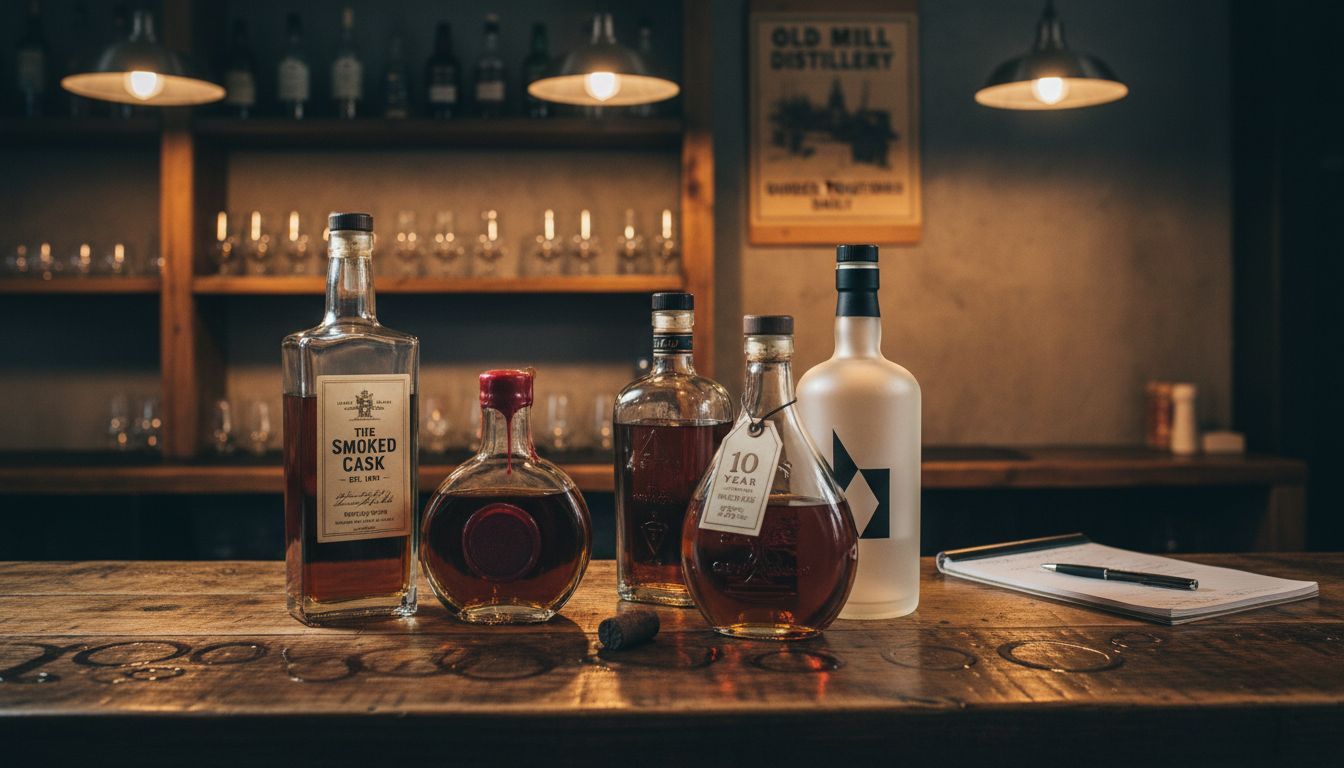
Aspiring collectors should approach whisky bottle acquisition with a strategic mindset. Rare whisky types represent more than simple liquid assets - they are tangible pieces of cultural and manufacturing heritage. Developing expertise involves continuous learning, networking with other collectors, and maintaining meticulous records of each acquisition’s background and market potential.
Critical Factors Influencing Collectability
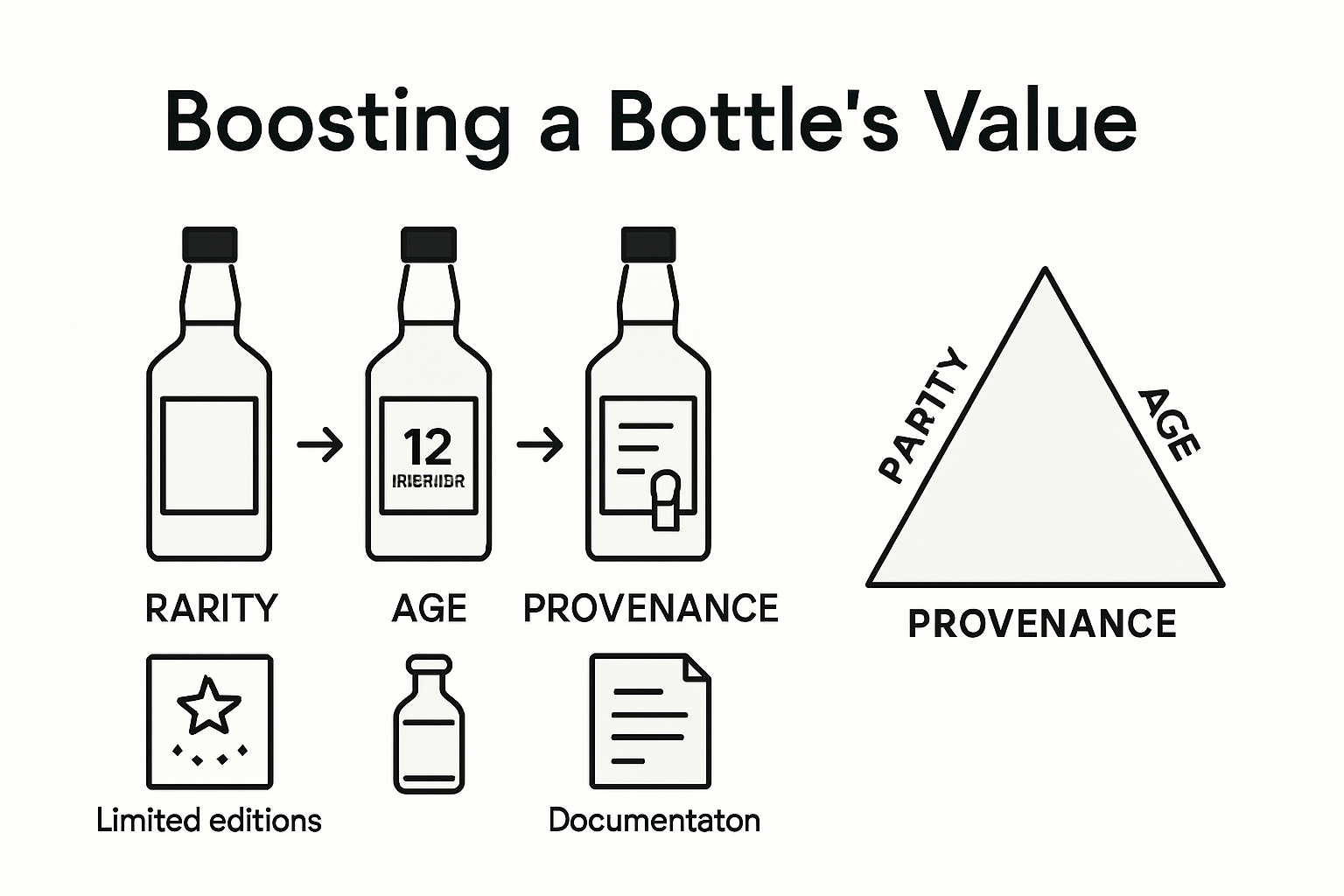
Collectible whisky represents a complex ecosystem where multiple intricate factors converge to determine a bottle’s ultimate value and desirability. Vintage spirits emerge as prized possessions primarily through their rarity, with age serving as a critical secondary consideration. Understanding these nuanced elements requires a sophisticated approach that goes beyond simple surface-level evaluation.
The key factors influencing whisky collectability include:
- Distillery Reputation: Historical significance and brand prestige
- Production Volume: Scarcity created by limited manufacturing runs
-
Bottle Condition: Preservation quality, including:
- Intact original packaging
- Uncompromised seal integrity
- Minimal label damage
- Provenance: Verifiable history and ownership documentation
- Age and Maturation: Unique aging processes and exceptional vintage years
While rarity remains the primary driver of collectibility, sophisticated collectors understand that value extends far beyond simple numerical constraints. Factors such as historical significance, production techniques, and cultural context play pivotal roles in determining a whisky’s long-term investment potential. Some bottles appreciate dramatically based on subtle nuances that might escape casual observation, requiring deep market knowledge and expert insight.
Rare whisky types represent complex investment assets that demand meticulous research and strategic acquisition. Serious collectors develop comprehensive understanding of market dynamics, tracking subtle shifts in collector interest, global economic conditions, and emerging trends that might influence future valuations. The most successful collectors approach whisky collection not merely as a hobby, but as a sophisticated form of cultural and financial preservation.
Legal, Tax, and Storage Considerations
Vintage spirits acquisition involves complex legal considerations that collectors must navigate with exceptional care. The regulatory landscape surrounding whisky collection is intricate, with significant variations across different jurisdictions that can dramatically impact purchasing, selling, and transporting rare bottles. Legal compliance represents a critical foundation for any serious collector, demanding thorough research and professional guidance.
Key legal and regulatory considerations include:
- Import/Export Regulations: Specific documentation requirements for cross-border transactions
- Tax Implications: Potential capital gains and investment income classifications
- Age Restrictions: Varying legal frameworks for purchasing and selling aged spirits
- Authenticity Verification: Requirements for proving bottle provenance
- Insurance and Valuation: Professional assessment and protection strategies
Sourcing and preserving old liquor bottles requires meticulous attention to regulatory compliance and strategic storage management. Serious collectors must invest in professional-grade storage solutions that protect their investments from environmental degradation. Optimal storage conditions typically involve:
- Consistent temperature control (around 15-18 degrees Celsius)
- Minimal light exposure
- Humidity levels between 55-65 percent
- Horizontal bottle positioning to maintain seal integrity
- Secure, vibration-free environment
Tax considerations represent another critical dimension of whisky collecting. Professional collectors often consult financial advisors to understand potential tax implications, including capital gains calculations, investment classification, and potential reporting requirements. The most successful collectors approach their passion as a sophisticated investment strategy, combining deep market knowledge with rigorous legal and financial planning.
Risks and Pitfalls for Collectors
Whisky collecting represents a complex landscape fraught with potential hazards that can dramatically impact an investor’s portfolio and personal safety. Methanol presence in counterfeit spirits poses severe health risks, highlighting the critical importance of rigorous authentication and quality control processes. Counterfeit bottles represent perhaps the most significant threat to collectors, requiring sophisticated strategies to mitigate potential financial and personal dangers.
Key risks collectors must navigate include:
- Authenticity Challenges: High potential for fraudulent or misrepresented bottles
- Financial Volatility: Unpredictable market value fluctuations
- Storage Complexity: Maintaining optimal preservation conditions
- Legal Compliance: Navigating intricate regulatory frameworks
- Investment Uncertainty: Potential depreciation of collection value
Non-intrusive detection systems like Raman spectroscopy offer promising methods for authenticating whisky, enabling collectors to verify bottle origins without compromising their integrity. Sophisticated collectors invest in multiple verification strategies, including:
- Professional provenance documentation
- Advanced scientific authentication techniques
- Expert third-party valuation services
- Comprehensive insurance coverage
- Detailed record-keeping and tracking systems
Successful whisky collectors approach their passion as a nuanced blend of art and science. Understanding the multifaceted risks requires continuous education, networking with expert communities, and maintaining a disciplined, research-driven approach to acquisition and preservation. The most effective collectors treat their collections as living investments, constantly adapting their strategies to emerging market dynamics and technological advancements in authentication and preservation.
Discover and Secure Your Own Collectible Whisky Today
Navigating the intricate world of collectible whisky can be challenging with concerns like provenance, rarity, and storage risks weighing on your mind. Whether you seek limited edition bottles, closed distillery releases, or valuable older bottlings that promise both cultural significance and investment potential, Uisuki.com.au understands your goals. We provide a curated selection that balances authenticity and value, helping you build a collection you can trust.

Start exploring our exclusive range of Older Bottling’s – Uisuki.com.au and deepen your appreciation of timeless Scotch expressions like those from Glenglassaugh – Uisuki.com.au. Every bottle comes with detailed descriptions and expert insight so you can make informed choices without worrying about common collector pitfalls. Visit Uisuki.com.au now and find your next rare whisky before it disappears from the market.
Frequently Asked Questions
What defines collectible whisky?
Collectible whisky is defined by factors such as rarity, age, production limitations, and historical significance. These bottles often evolve into investment pieces that appreciate in value over time.
What are common myths about whisky collecting?
One common myth is that age alone determines a whisky’s value. Authenticity, preservation, and genuine scarcity are critical factors that influence a bottle’s collectibility.
What types of whisky bottles are considered collectible?
Key types of collectible whisky include single cask releases, commemorative editions, closed distillery bottles, milestone anniversary bottlings, and experimental or prototype releases.
What are the main risks associated with whisky collecting?
Major risks include authenticity challenges due to counterfeit bottles, financial volatility in market values, storage complications, legal compliance issues, and the potential depreciation of collection value.