

A search for a “Speyside whisky shop” can mean two things: a shop standing in the Scottish glen country itself, or a retailer that knows Speyside well and can put the right bottle in your hands in Australia. If you live here, the second is the one that matters. A flight to Scotland is a long way to go for a bottle, and imported whisky arrives with its own rules on maturation paperwork and duty. At Uisuki we list Scotch with the batch, ABV and cask details on every product page, so you can judge a Speyside bottle properly before you buy, and we take personal sourcing requests for bottles you cannot find elsewhere.
TL;DR
- Speyside is a style-rich region, not one flavour: lighter, floral malts sit alongside deep sherried ones, and house style often counts for more than geography.
- Read the label for age statement, cask type, ABV and outturn (how many bottles were released). These tell you more than the brand name.
- Duty in Australia is charged on alcohol content, so a cask-strength bottle carries more tax than a 40% bottle, and posted alcohol never qualifies for the low-value concession.
- For rare or hard-to-find Speyside bottlings, a retailer that publishes cask and batch details and takes sourcing requests saves you guesswork.
- Start from the Scotch whisky collection and filter by what you actually like to drink.
Table of Contents
- Shop in Speyside, or a Speyside specialist at home?
- What makes Speyside distinctive
- How to read a Speyside label before you buy
- Australian rules that shape what you pay
- Choosing by budget, collecting and gifting
- Where to start in our range
- Our view on buying Speyside
- FAQ
- Sources
Shop in Speyside, or a Speyside specialist at home?
Speyside sits in north-eastern Scotland around the River Spey, and it is home to more working distilleries than any other Scottish region. It is also a legally defined region: the Scotch Whisky Regulations 2009 recognise Speyside as one of the protected Scotch regions. Whisky tourists do visit, and there are bricks-and-mortar shops in the area with stock that shifts week to week.
For most Australian buyers that trip is not the point. What you want is:
- a wide range of Speyside distilleries, from everyday to collectable;
- the information to compare bottles: age, cask, strength, batch;
- local dispatch, or international shipping if you are sending a gift overseas;
- someone who can track down a particular bottling.
Those are the things we build the store around. Our range covers Scotland, Japan, Australia, the USA and further afield, so a Speyside malt can sit in the same order as a Tasmanian single malt or a Japanese pour.
What makes Speyside distinctive
Speyside single malts are mostly unpeated or only lightly peated. Expect orchard fruit, honey, vanilla and malt sweetness, with oak and sometimes sherry shaping the finish. Peat, where it appears, is the exception rather than the rule.
But “Speyside” is not a single taste. Serious Eats’ guide to single malt points out that Speyside spans a wide range: Aberlour and Macallan are known for sherry-aged malts with a nutty, fruity character, Balvenie leans towards honey and orange, and its neighbour Glenfiddich tastes more of raisins and chocolate. The same guide notes that flavour depends more on house style than on regional character.
That is useful when you shop. Rather than buying “a Speyside”, choose a style first:
| If you like | Look at | What to expect |
|---|---|---|
| Light, fruity, easy-drinking | Glenfiddich, Glenlivet, Cardhu | Pear, apple, honey, vanilla |
| Rich, sherried, dessert-like | Macallan, Aberlour, GlenDronach | Dried fruit, spice, nuts, dark chocolate |
| Honeyed and layered | Balvenie | Honey, orange, gentle spice |
The style groupings above are a starting map, not a rule: each distillery makes several bottlings, and cask choice changes the result. Our guide to choosing Speyside single malts by style goes distillery by distillery for both new buyers and collectors, and our Speyside Scotch brands guide covers what is easiest to find in Australia.
How to read a Speyside label before you buy
The label and the product page carry the facts that separate a good buy from an expensive guess. Work through them in this order.
1. Age statement or no age statement
An age statement (12, 18, 25 years) is the youngest whisky in the bottle. It tells you about maturation, but not about quality on its own: a 12-year-old from a good cask can outdrink an older bottle from a tired one. Bottles without an age statement (NAS) can be excellent, but the label gives you less to go on, so cask and batch information matters more. Our piece on how age affects whisky covers flavour and price in detail.
2. Cask type
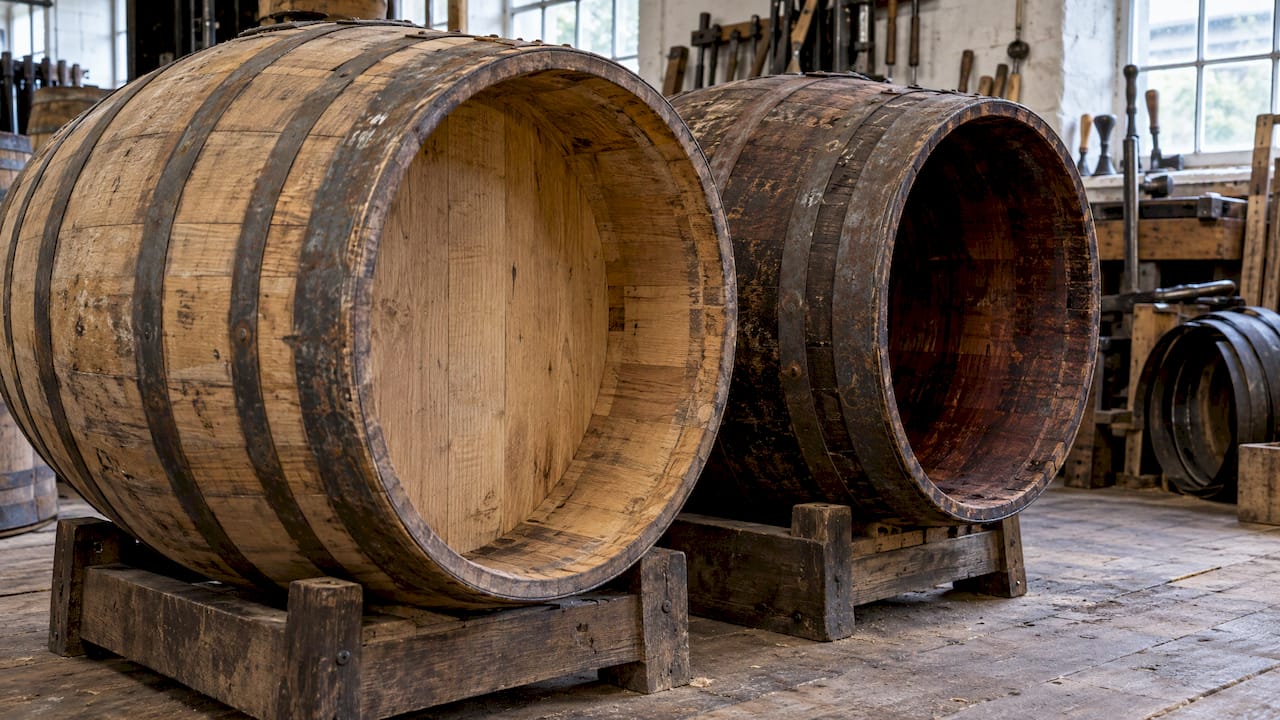
Cask is the biggest single driver of flavour in Speyside. Ex-bourbon American oak typically gives vanilla, honey and fresh fruit; sherry-seasoned oak gives dried fruit, spice and nut. The Macallan built much of its reputation on sherry-seasoned Spanish oak, while Glenfiddich leans heavily on ex-bourbon casks. If a product page tells you the cask, you can predict the glass. If it does not, you are guessing. Our guide on reading cask history in four steps shows how to turn that line into tasting expectations.
3. ABV
Strength matters twice: for flavour and for tax. Most official bottlings are diluted to around 40 to 46%. Cask-strength bottlings are released at the strength the whisky came out of the cask, often well above 50%. They taste more concentrated, you can water them to taste, and in Australia they attract more duty per bottle (worked example below).
4. Batch and outturn
For limited and single-cask releases, the batch number and the number of bottles produced tell you how scarce a bottle really is. A small outturn means fewer bottles to find later, which is what collectors watch. Spear’s, writing about collectable whisky, profiles the Macallan Tales of the Macallan Volume II: a 73-year-old from a cask filled in 1949, bottled at 44.8% ABV in just 344 decanters. That is the extreme end, but the same logic applies to a modest single-cask release: look for the numbers.
5. Official or independent bottling
Many Speyside malts are bottled twice: by the distillery itself, and by independent bottlers who buy casks and release them under their own label. Independent single-cask releases are often bottled at natural cask strength without chill-filtration or added colouring, which is why collectors and enthusiasts seek them out. They also include distillery names that are otherwise hard to find. Established independent bottlers with a long record are the safer place to start, and a product page that states the cask and batch lets you judge the rest.
Australian rules that shape what you pay
Two points about importing whisky explain a lot of what you see on Australian shelves and why certain bottles are missing.
First, imported whisky has to document at least two years of cask maturation to clear customs under the Customs Act 1901. Japan Whisky Press explains that this paperwork rule, rather than distributor oversight, is often why a buzzy new release never turns up locally.
Second, duty is charged on the alcohol in the bottle. The same source reports Australia’s excise-equivalent duty rate for spirits as A$110.15 per litre of pure alcohol from 3 August 2026, indexed each February and August, with 10% GST on top. Because the rate moves twice a year, check the Australian Taxation Office’s current table when you compare bottles.
A worked example using that August 2026 rate:
| Bottle | Pure alcohol | Duty at A$110.15/L |
|---|---|---|
| 700 ml at 58% cask strength | 0.406 L | about A$44.72 |
| 700 ml at 40% | 0.28 L | about A$30.84 |
So a cask-strength Speyside carries roughly A$14 more duty than a 40% bottle. The same article notes that, as duty is fixed per bottle, it weighs far more heavily on entry-level whisky than on premium single malts, in proportion to price.
For travellers, adults can bring in 2.25 litres of alcohol duty free, which is three 700 ml bottles. Posted bottles pay duty and GST regardless of value, because alcohol is excluded from the A$1,000 low-value concession. In practice that means ordering from an Australian retailer is the simpler route: the local price already accounts for it, and nothing sits at the border waiting for you to settle.
Choosing by budget, collecting and gifting
Drinking bottles
If you want a Speyside to open this weekend, a lighter fruit-led malt from one of the big names is the dependable start, and a sherried bottle is the step up when you want depth. Our top 20 single malts to buy in Australia and 24 single malts to try lay out options across price points.
Sherry-matured bottles tend to cost more, because sherry casks are scarcer and dearer than they once were. When you compare two bottles of similar age, the cask is often the reason for the price gap.
Collectors
Collectors look for a different list: closed or rarely bottled distilleries, old age statements, low outturn, strong provenance. Colin Hampden-White, a whisky adviser to Spear’s 500 and director of Cask Trade, told Spear’s that established houses are increasingly producing one-offs and limited releases, and that provenance is never in question when buying direct from the distillery. The same principle holds for any bottle you plan to keep: a clear record of where it came from, with batch and cask information, protects its value. See our best single malts for Australian collectors for current picks.
Gift buyers
For a gift, pick the style the recipient already drinks, then go one tier up in age or cask quality. A bottle with a clear age statement and a readable story is easier to give than a mystery. If you are sending abroad, we ship internationally as well as locally, and our free shipping thresholds are shown on the site.
Not on the shelf?
Some Speyside bottlings are simply not in stock anywhere locally. We take personalised sourcing requests for bottles that are unavailable elsewhere, so tell us the distillery, age or release you are after and we can look for it.
Where to start in our range
Our Scotch whisky collection carries Speyside malts alongside the rest of Scotland, each with ABV, batch and cask details on the product page. If you are new to the region, our buyer’s guide to 40+ Speyside distilleries is the best map before you add anything to the cart. Prefer to compare with something outside Scotland? The same store carries Japanese, Australian and American bottles.
Browse the full range on uisuki.com.au, pick the bottles that suit your taste, and send a sourcing request if what you want is not listed.
Our view on buying Speyside
Most people come to Speyside thinking of it as one flavour. Spend an evening with a light, ex-bourbon malt and then a sherried one and you will see it is closer to a dozen.
What we care about is that you can tell which one you are buying. That is why every product page shows the batch, the ABV and the cask. A name and an age are a start, but the cask and the strength are what you taste.
We also know the best bottles are often the ones you cannot find. When someone asks us for a particular Speyside release, we would rather go looking than send them away, which is why we take sourcing requests. Buying from a store that does this, and that publishes the detail, is the easiest way to build a shelf you are proud of.
Brendan
FAQ
Is there a real Speyside whisky shop I can visit?
Yes, there are whisky shops in the Speyside area of Scotland that cater to visitors, and stock there changes often. If you are in Australia, buying from a local online retailer that stocks Speyside malts avoids the travel and the import paperwork.
What is the best Speyside whisky for a first purchase?
Start with a lighter, fruit-led malt such as Glenfiddich, Glenlivet or Cardhu if you like easy-drinking whisky. If you prefer rich, dessert-like flavours, look at sherried styles such as Macallan, Aberlour or GlenDronach. Our Speyside style guide helps you match a bottle to your taste.
Why do cask-strength Speyside bottles cost more in Australia?
Duty is charged on the pure alcohol in the bottle. At the A$110.15 per litre rate from 3 August 2026, a 700 ml bottle at 58% carries about A$44.72 in duty, against about A$30.84 for a 700 ml bottle at 40%, before GST, according to Japan Whisky Press. The rate is indexed each February and August.
Can you find a Speyside bottle that is not in your catalogue?
Yes. We take personalised sourcing requests for bottles that are hard to find. Send us the distillery, age or release you want through the site.
Sources
- The Serious Eats Guide to Single Malt Scotch
- These are the best collectable whiskies on the market right now, Spear’s
- Where to buy Japanese whisky in Australia: tax and rules, Japan Whisky Press