

Glenfiddich types split into three clear tiers: the core age range (12, 14, 15 and 18 Year Old) built for everyday-to-special drinking, the Grand Series of cask-finished expressions for those chasing bolder flavour, and the Experimental Series plus rare collector releases for adventurous or serious buyers. Beginners start at 12. Bourbon fans lean toward 14. Spice lovers reach for 15. Collectors chase the limited runs.
TL;DR:
- The core Glenfiddich range increases in complexity from 12 to 18 years, with each step showing distinct differences in flavor influenced by aging and cask types.
- The Grand Series and experimental releases use specialised casks like Champagne or Cognac to add unique top notes, often at a price premium.
- Tasting the 12 and 18 side by side can reveal core flavor differences, with the 12 offering fresh fruit and the 18 highlighting oak and spice.
- Most bottles are priced according to age and complexity, with collector editions exceeding $1,600 for limited, aged releases.
- A quick palate test with nosing and water can help buyers identify the Glenfiddich expression that suits their preferences before purchasing.
Table of Contents
- What are the main Glenfiddich types?
- Grand Series and experimental releases explained
- How to choose the right Glenfiddich for you
- Rarity and typical price bands across the range
- Brendan’s curated Glenfiddich picks from Uisuki
- Glenfiddich’s flavour profile and how it’s distilled
- The history behind the Glenfiddich name
- Understanding Glenfiddich’s different product lines
- How Glenfiddich compares to other single malt Scotch whiskies
- Uisuki’s perspective: collecting and gifting Glenfiddich
- Shop the Glenfiddich range at Uisuki
- Sources
What are the main Glenfiddich types?
Glenfiddich’s core range is built as a ladder, and it’s worth climbing in order if you’re new to single malt. Each step changes one or two variables, so you can actually taste the difference age and cask make rather than guessing at tasting notes on a shelf talker.
Glenfiddich 12 Year Old is the entry point, matured in American bourbon barrels and European oak sherry casks. Expect fresh pear, green apple and a light, buttery oak finish. It sits around 40% ABV and is priced as an everyday dram, usually the cheapest bottle in the range. If you’ve never tried a Speyside malt, this is the reference point everything else gets compared against.
Glenfiddich 14 Year Old (often labelled “Bourbon Barrel Reserve” depending on the market) pushes further into vanilla, toffee and toasted oak, a direct result of extra time in first fill and refill bourbon casks. It reads richer and slightly sweeter than the 12, without tipping into heavy sherry territory. Bourbon drinkers migrating into scotch tend to land here first.
Glenfiddich 15 Year Old Solera is where the range gets genuinely interesting. Rather than simple cask ageing, it uses a solera vat system: whisky matured separately in European oak, ex-bourbon and new American oak casks is married together in a giant Portuguese oak tun that’s never fully emptied, so each batch carries a thread of the last. That process delivers honey, marzipan and dried fruit in a way no single-cask expression can quite replicate, and it explains why the 15 tastes remarkably consistent bottle to bottle despite the complexity.
Glenfiddich 18 Year Old moves into oloroso sherry and oak-led territory. It’s darker, drier, with dried fig, dark chocolate and a long, spiced finish. This is the bottle for a slower evening, not a mixer or a quick pour after work.
Independent tasting guides describe this same progression: 12 crisp, 14 brighter with bourbon character, 15 richer with solera sweetness, and 18 moving toward oak-driven elegance — a useful mental map if you’re comparing bottles side by side in a store.
A few practical notes before you buy:
- Buy a 50ml or 100ml sample of the 14 and 15 before committing to a full bottle if you’re unsure which suits your palate.
- ABV sits at 40% across most of the core range, though some limited batches run slightly higher.
- Price climbs steadily with age, but the jump from 15 to 18 is usually bigger than 12 to 14, reflecting both maturation time and cask cost.
Pro Tip: Nose the 12 and 18 side by side before tasting either. The contrast in aroma alone (green apple versus dried fruit and oak) tells you more about where your palate sits on the Glenfiddich ladder than any tasting note on the box.
Grand Series and experimental releases explained
Once you’ve worked through the core range, the Grand Series is where cask finishing takes over as the main flavour driver. These bottles start life as standard Glenfiddich spirit, then spend extra months or years finishing in specialised casks that previously held Champagne, rum, Cognac or wine. That finishing period reshapes the top notes considerably while the underlying Speyside fruit character stays recognisable underneath.
Magazine tasting coverage of the range notes that Champagne casks add floral, tangy brightness, rum casks bring tropical sweetness, and Cognac casks contribute a grape-driven richness that’s quite different from anything in the core lineup.
The Experimental Series sits alongside this, but with a different job: it exists to push flavour profiles outside classic Speyside balance for drinkers who’ve already got the core range figured out and want something less predictable.
A few notable names worth knowing:
- Grand Cru — finished in French cuvée oak casks, delivering a delicate, almost champagne-like brightness over classic Glenfiddich fruit.
- Gran Reserva 21 — rum cask finished, leaning tropical and spiced, popular as a gifting bottle for its striking bottle design.
- Grande Couronne — finished in Cognac casks from Château de Fontpinot, rich and grape forward with long, warming spice.
- Grand Yozakura — finished in awamori casks, a rare Okinawan rice spirit influence that produces unusual tropical and floral notes rarely seen in scotch.
How to choose the right Glenfiddich for you
You don’t need to taste all fourteen-plus expressions to find the right bottle. Three quick paths cover most buyers.
Path one: entry-level and everyday. If you want something to pour most nights without thinking too hard, stick with the 12 or 14. Low oak intensity, moderate price, forgiving with or without a splash of water.
Path two: richer, mid-range. If you already enjoy the 12 and want more complexity without jumping to a $200-plus bottle, the 15 Solera or a Grand Series finish (Grand Cru or Gran Reserva) delivers noticeably more depth for a moderate price increase.
Path three: special occasion or collector. The 18 Year Old, Grande Couronne, or the rarer limited releases suit gifting, milestone occasions, or building a collection you’ll actually open eventually rather than just display.
Three criteria decide which path fits: how much oak influence you enjoy, whether you prefer sweetness (bourbon cask, solera, rum finish) or dryness (sherry, Cognac), and your price ceiling.
Before you commit to a full bottle, run this quick tasting check:
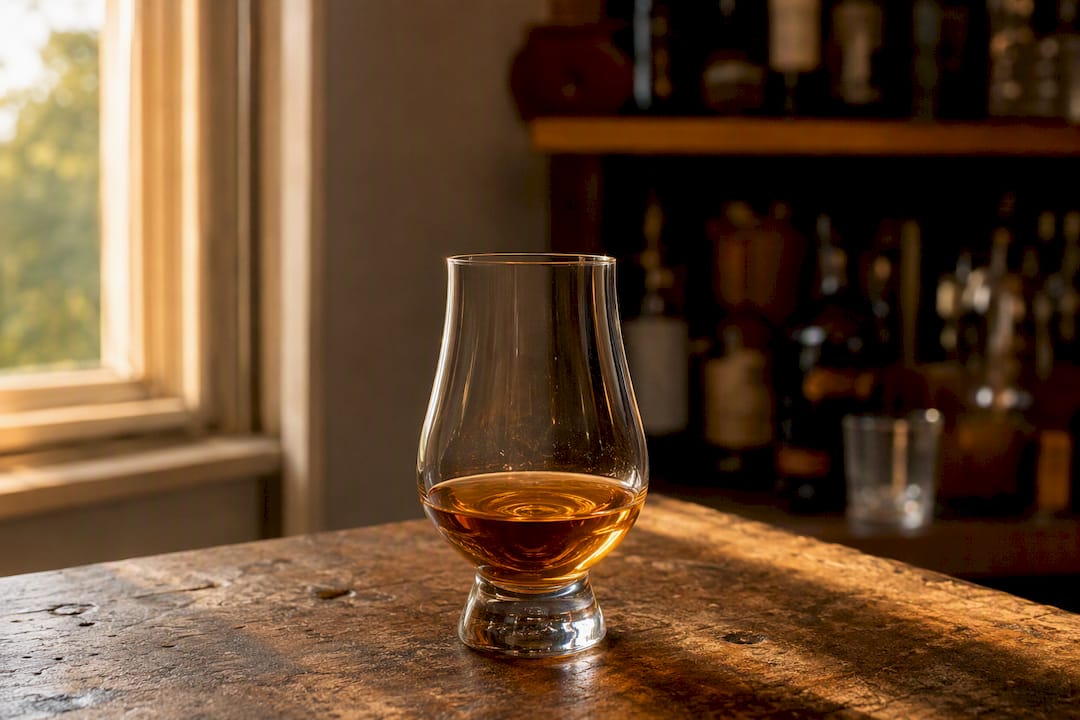
- Pour a small measure into a tulip-shaped glass, never a tumbler.
- Warm the glass gently in your hands for a minute to release aroma compounds.
- Nose it three times before tasting: once at rest, once after a light swirl, once close to the glass.
- Take a small sip neat, let it sit, then add a few drops of water and taste again.
- Compare that second taste to your first impression. Water often unlocks notes the neat pour hides.
Glenfiddich’s own guidance backs this up: cask type and nosing technique both materially change what you detect, and beginners in particular tend to miss solera and finish-driven notes on a single quick sip.
Pro Tip: Multiple gentle nosings beat one long sniff. Your nose fatigues fast on strong aromas, so three short passes reveal more layers than one deep inhale.
Rarity and typical price bands across the range
Price climbs steeply once you move past the core range. The 12 through 18 Year Old bottles sit in a predictable, accessible band, while Grand Series finishes carry a moderate premium for the extra cask time and rarer finishing barrels.
Collector releases are a different game entirely. Expressions like the 29 Year Old Grand Yozakura and the 31 Year Old Grand Château frequently exceed $1,600, reflecting both extreme age and limited-run numbering rather than everyday drinking value.
If you’re buying at that level, check three things: documented provenance, a numbered bottle from a limited run, and a retailer with a track record of sourcing genuine rare stock rather than grey-market imports.
Brendan’s curated Glenfiddich picks from Uisuki
For an everyday dram, start with the 12 Year Old: fresh, affordable, and forgiving enough for daily pours. For best value against complexity, the 15 Year Old Solera earns its price with genuine depth from that marrying system. For a special occasion bottle, a Grand Series finish like Grande Couronne rewards the premium with flavour you won’t find in the core range. Uisuki curates stock across all three tiers, sourced with an eye for genuine provenance rather than volume.
Glenfiddich’s flavour profile and how it’s distilled
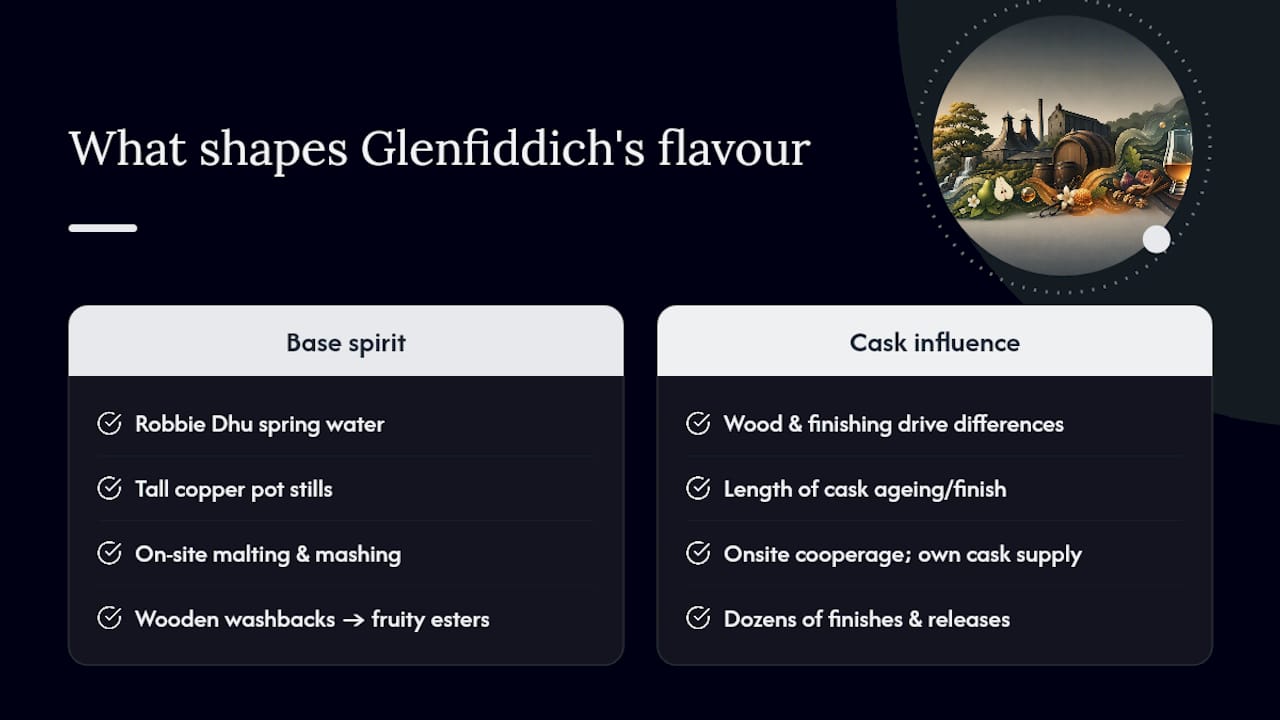
Every Glenfiddich expression traces back to the same production choices: Robbie Dhu spring water, tall copper pot stills, and a house style built around fruit-forward, floral Speyside character rather than heavy peat or smoke. The distillery malts and mashes on-site, ferments in wooden washbacks (which contributes to the fruity esters you taste in the finished spirit), then runs the spirit through pear-shaped stills that favour a lighter, cleaner cut.
That base spirit is what makes cask influence so visible across the range. Because the underlying character stays consistently light and fruity, differences between the 12 and 18, or between the core range and a Grand Series finish, come almost entirely from wood and finishing rather than from changes in the still house recipe. It’s a useful thing to understand if you’re comparing tasting notes: you’re rarely tasting a different spirit, you’re tasting the same spirit shaped by different casks over different lengths of time.
Onsite cooperage also plays a role here. Glenfiddich manages its own cask supply rather than outsourcing it entirely, which supports the consistency reviewers note across expressions even as the range has grown to include dozens of finishes and limited releases.
The history behind the Glenfiddich name
William Grant founded Glenfiddich in 1886 in Dufftown, in Scotland’s Speyside region, building the distillery largely with his own hands and family labour. The name means “Valley of the Deer” in Gaelic, which is why the stag remains the brand’s emblem on every bottle. It remains family owned, now run by the fifth generation of the Grant family, a rarity in an industry where most major distilleries have passed through multiple corporate owners.
That family ownership matters more than it might sound. Long-term decisions, like committing to a solera vat that takes years to mature and never fully empties, are easier to make when you’re not answering to quarterly shareholder pressure. Glenfiddich was also the first Speyside distillery to market single malt internationally rather than selling almost exclusively into blends, a decision in the 1960s that arguably created the modern single malt category as consumers know it today.
Understanding Glenfiddich’s different product lines
The range breaks into three distinct product lines, and understanding the difference helps explain why prices and flavour profiles vary so much across what’s nominally “one brand.”
The standard range covers the 12, 14, 15, 18, and older core age statements (21 and beyond in some markets), matured primarily in bourbon and sherry casks with the solera system reserved for the 15. This is the backbone of the catalogue and where most sales happen.
The Grand Series sits above that, taking spirit from the core range and finishing it in specialised casks (Champagne, rum, Cognac, wine) for a defined secondary maturation period. These are positioned as premium, gift-worthy bottles rather than everyday pours.
The Experimental Series, including the well-known Project XX and IPA Cask releases, exists purely to test unconventional finishes and techniques, often in small batches that don’t return to shelves once sold out. Above all of this sits the rare collection, extremely limited, extremely old expressions aimed squarely at collectors rather than drinkers looking for a Tuesday night pour.
How Glenfiddich compares to other single malt Scotch whiskies
Compared to Islay malts like those built around heavy peat smoke, Glenfiddich sits at the opposite end of the flavour spectrum: fruit-forward, floral, and light on smoke almost entirely. Against other Speyside distilleries, Glenfiddich’s signature is that pear and apple freshness in the 12, carried consistently even as the range gets older and more sherry-driven.
What genuinely sets Glenfiddich apart is scale combined with consistency. Few single malt producers run a solera system at this size, and few offer a range this wide (from a sub $100 entry bottle to $1,600-plus collector releases) while keeping a recognisable house character running through all of it. Highland malts often show more variation between age statements because they draw on a wider spread of cask sourcing; Glenfiddich’s onsite cooperage and long-standing bourbon and sherry cask relationships keep the through line tighter.
Uisuki’s perspective: collecting and gifting Glenfiddich
We select Glenfiddich stock for the catalogue based on provenance and genuine rarity, not just age statements that look impressive on paper. That means checking cask stories, batch numbering and where a bottle has actually been sitting before it reaches us. For gifting, we offer proper packaging and can advise on which expression suits the occasion. If you’re after a specific limited release we don’t currently stock, get in touch. Sourcing rare bottles is something we do regularly, not an afterthought.
— Brendan
Shop the Glenfiddich range at Uisuki
Uisuki is the alternative to hunting through multiple bottle shops for a specific Glenfiddich expression: one catalogue covering the core range through to rare finishes, with sourcing requests handled directly rather than leaving you to chase down a distributor yourself.

Our core range listings sit alongside rarer finished whiskies, and if you’re building out a broader palate before committing to a Glenfiddich purchase, browsing something like the Hobart Whisky rum-finished single malt shows how cask finishing plays out in a different distillery’s hands. For limited or hard-to-find Glenfiddich bottles not currently listed, submit a sourcing request and we’ll track it down. All purchases require buyers to meet the legal drinking age in their jurisdiction, and international shipping timeframes vary by destination, so check delivery details before ordering. Browse the current range at Uisuki and place an order today.
Sources
- A heritage of innovation — our solera vat | Glenfiddich
- Glenfiddich for beginners: a no-nonsense guide to the range — The Whiskey Wash
- Robb Report India — coverage of Glenfiddich rare releases