

You can buy rare whisky reliably, and it starts with picking the right channel. Trusted specialist retailers, distillery allocations, and reputable auction houses cover most of what serious collectors want, but none of it matters if you skip the provenance checks. Ask for documentation, inspect the bottle before you pay, and buy something you’d genuinely want to drink. Any potential appreciation is a bonus, never the plan.
TL;DR:
- Confirm provenance by requesting documentation and inspecting bottles before purchase to avoid counterfeit or altered products.
- Focus on production quantity, distillery status, age, vintage, and unique finishes to identify genuinely rare and collectible whiskies.
- Expect auction prices to include buyer’s premiums and additional costs; set strict bidding limits based on recent comparable sales.
- Verify bottles through provenance, label details, fill level, and auction archives, especially for high-value lots, to prevent scams.
- Store bottles upright in a cool, dark space with original packaging and maintain detailed records for valuation and insurance purposes.
Table of Contents
- Where to buy rare whiskies: retail, auctions, brokers and private sales
- What makes a whisky genuinely rare and collectible?
- How much should you actually pay?
- How do you verify a rare whisky is genuine?
- A practical checklist for your first rare whisky purchase
- Protecting a bottle’s value after you buy it
- Why trust this guide on buying rare whiskies?
- How long does it take to actually receive a rare bottle?
- Common scams and red flags when buying rare whisky
- Insuring rare whisky during transit and storage
- Understanding the full price: taxes, duties and shipping
- A collector-minded approach to buying rare whisky
- How Uisuki helps you source rare and hard-to-find bottles
- Sources
Where to buy rare whiskies: retail, auctions, brokers and private sales
Every sourcing channel has a different risk profile, and knowing which one suits your target bottle saves you money and grief.
Specialist retailers carry curated stock with fixed prices and clear provenance, because the bottles come through verified distributor chains rather than unknown third-party hands. You pay a premium over the original release price, but you know exactly what you’re getting.
Distillery shops and allocations are the cleanest source of all, since the bottle never leaves an accountable chain of custody before it reaches you. The catch is access. Allocations for sought-after releases sell out in minutes, and many are limited to members’ clubs or mailing-list customers.
Auction houses carry the widest selection of genuinely rare and discontinued stock, and most collectible whiskies now trade through the secondary market rather than retail shelves. That breadth comes with variable seller quality, so vetting the house matters as much as vetting the bottle.
Brokers work well when you’re after something specific and don’t have time to hunt, though you’re paying for that convenience on top of the bottle’s value.
Private sales through collector networks or social groups can turn up genuine bargains, but they carry the least buyer protection of any channel.
Before committing to any seller, run three checks:
- Confirm the platform or shop has a track record of past sales and public reviews
- Ask directly what documentation comes with the bottle
- Check whether the seller offers any return or authenticity guarantee
A collector’s guide to sourcing rare whisky is worth reading in full if you’re weighing retail against auction routes for the first time.
What makes a whisky genuinely rare and collectible?
“Limited edition” gets printed on labels far more often than genuine scarcity justifies it. Learning to separate marketing language from real collectibility protects you from paying rare-bottle prices for an ordinary release.
Four factors do most of the work:
- Production quantity and numbering. A bottle numbered 47 of 150 tells you something concrete. A vague “limited release” with no stated run size tells you nothing, and collectors frequently get burned trusting limited-edition labelling without checking actual production numbers.
- Distillery status. Bottles from closed or silent distilleries, such as the various long-shuttered Scottish names that still circulate on the secondary market, tend to hold or grow in value because supply is genuinely finite. A bottle from an actively producing distillery can be reprinted or re-released, which caps its ceiling.
- Age statements and vintage years. An 18-year-old single malt from a well-regarded distillery carries weight because it represents real time in the warehouse, not just a marketing claim. Vintage-dated releases tied to a specific year add a layer of story that collectors pay for.
- Unique finishes and collaborations. A cask finish done in partnership with another distillery, a specific sherry butt, or a one-off collaboration release adds documented provenance that a standard expression doesn’t have.
None of these factors work in isolation. A high age statement from a distillery still in full production is a different proposition to the same age statement from a distillery that closed decades ago.
How much should you actually pay?
Retail price and secondary-market price are two different numbers, and confusing them is the single most common way new collectors overpay or underpay.
Retail price is what the distillery or a retailer charged at release. Hammer price is what a bottle sold for at auction, and it almost never matches retail once a bottle is desirable enough to resell. On top of the hammer price, expect a buyer’s premium, which most auction houses add as a percentage on top of the winning bid, along with shipping and, depending on where you live, taxes or duties.
A note on market volatility: rare whisky indices have outperformed some traditional asset classes over long stretches, but that history is no guarantee of future performance. Treat any bottle purchased for its investment potential as a bonus outcome, not the primary reason to buy.
Before bidding, check these value drivers:
- Recent hammer prices for the same or comparable bottles
- Distillery reputation and whether it’s still producing
- Bottle condition, fill level and packaging completeness
- How many similar lots have sold in the past 12 months
Set a strict buy limit before you start bidding, including fees, and stick to it. Sotheby’s own guidance to whisky buyers is blunt about factoring in the buyer’s premium before you fall in love with a lot.
How do you verify a rare whisky is genuine?
Counterfeit and altered bottles exist at every price point above a few hundred dollars, and the risk climbs sharply once you’re bidding on anything with real scarcity value. A short, methodical process catches most problems before money changes hands.
- Request provenance first. Ask the seller for original receipts, any lot notes from a previous auction, and details of how and where the bottle has been stored.
- Inspect the label and capsule. Look for crisp, consistent printing, correct embossing on the glass, and a capsule seal that hasn’t been disturbed or re-glued.
- Check the fill level. A level noticeably lower than expected for the bottle’s age suggests evaporation through a compromised seal or a bottle that’s been opened and topped up.
- Compare against auction archives. Search for the same bottle and batch in past auction listings and cross-check label details, since comparing lot photos against auction archives is standard practice among experienced buyers.
- Escalate for high-value lots. For anything approaching four figures or more, ask whether a specialist inspection or lab verification is available before you commit.
Pro Tip: Photograph every angle of a bottle the moment it arrives, including the underside of the capsule and the base. If a dispute ever arises over condition or authenticity, you’ll want a timestamped record from day one.
A practical checklist for your first rare whisky purchase
Whether you’re bidding at auction, buying retail, or arranging a private sale, the same sequence protects you.
- Research recent sales for the exact bottle or its closest comparable, and set a firm all-in budget that includes fees and shipping before you start looking.
- Verify the seller independently, checking reviews, sales history, and whether they’ll provide documentation before you pay.
- Add buyer’s premium, taxes and shipping to your maximum bid so the number in your head is the number you’ll actually pay.
- Arrange insured shipping the moment the sale confirms, and have your storage space ready before the bottle arrives.
- Log the purchase immediately. Record the seller, price, date, and any documentation received, and keep the original box, capsule, and receipts together.
Following this order, rather than improvising as you go, is what separates collectors who build a coherent collection from those who end up with a shelf of impulse buys.
Protecting a bottle’s value after you buy it
What you do in the weeks after a purchase matters almost as much as the buying decision itself. Store bottles upright, in a cool, dark space with stable temperature, since heat cycling and light exposure degrade both the liquid and the label over time.
Keep everything that came with the bottle:
- Original box, capsule and any certificate of authenticity
- Purchase receipts and auction lot documentation
- Photographs taken on arrival
A simple tracking spreadsheet pays for itself the first time you need to sell or insure a bottle. Record the distillery, expression, age, ABV, bottle number, release year, purchase date, seller, and price paid. Independent collectors widely recommend this kind of structured record over relying on memory or scattered emails, and it’s the same information an insurer or auction house will ask for if you ever consign the bottle. For anything genuinely high-value, specialist storage and dedicated insurance are worth pricing out separately from your home contents policy.
Why trust this guide on buying rare whiskies?
A specialist online retail platform can offer a curated selection of premium whiskies from regions including Scotland, Japan, Australia and the United States alongside expert guidance for collectors. The site’s product listings go deep on detail, ABV, provenance, and background, and its collector’s guide to buying rare whisky in 2026 reflects the same provenance-first thinking running through this article.
Some whisky retailers support personalised sourcing requests and ship both locally and internationally, which matters when a specific bottle you want simply isn’t listed anywhere public.
How long does it take to actually receive a rare bottle?
Timelines vary enormously depending on the channel, and knowing what’s normal stops you panicking when a bottle doesn’t show up the next week.
A retail purchase from an online whisky shop with stock on hand typically ships within a few business days, with delivery times depending on domestic versus international shipping. Distillery allocations can take longer, since some releases are dispatched in batches over weeks after the initial sale closes.
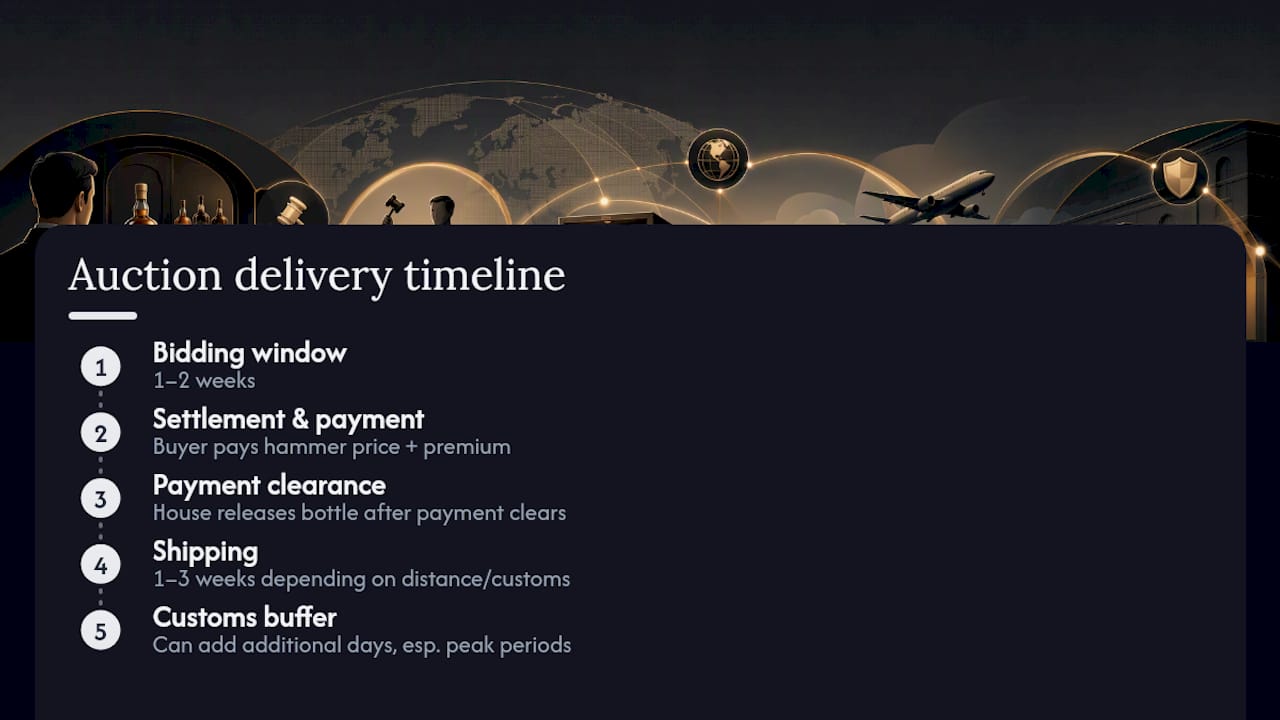
Auctions run on a completely different clock. Most houses hold a bidding window of one to two weeks, followed by a settlement period where the winning bidder pays the hammer price plus premium, typically within a set number of days after the sale closes. Only once payment clears does the house release the bottle for shipping, which itself can take another one to three weeks depending on distance, customs processing, and whether specialist insured couriers are used for high-value lots.
Private sales are the least predictable of all, because timing depends entirely on the two parties involved. Some collectors handle a swap within days; others drag on for weeks over back-and-forth negotiation.
Build in buffer time for anything crossing a border. Customs clearance on alcohol shipments can add days beyond what a courier’s standard tracking estimate shows, particularly during peak shipping periods around end of year.
Common scams and red flags when buying rare whisky
The rare whisky market attracts opportunists precisely because bottles can be worth thousands and buyers are often emotionally invested in landing a specific release. A few patterns show up again and again.
Sellers who refuse to provide any documentation or photos beyond a single stock image are the clearest warning sign. Legitimate sellers, whether private or commercial, will happily show you the actual bottle, capsule, and fill level on request.
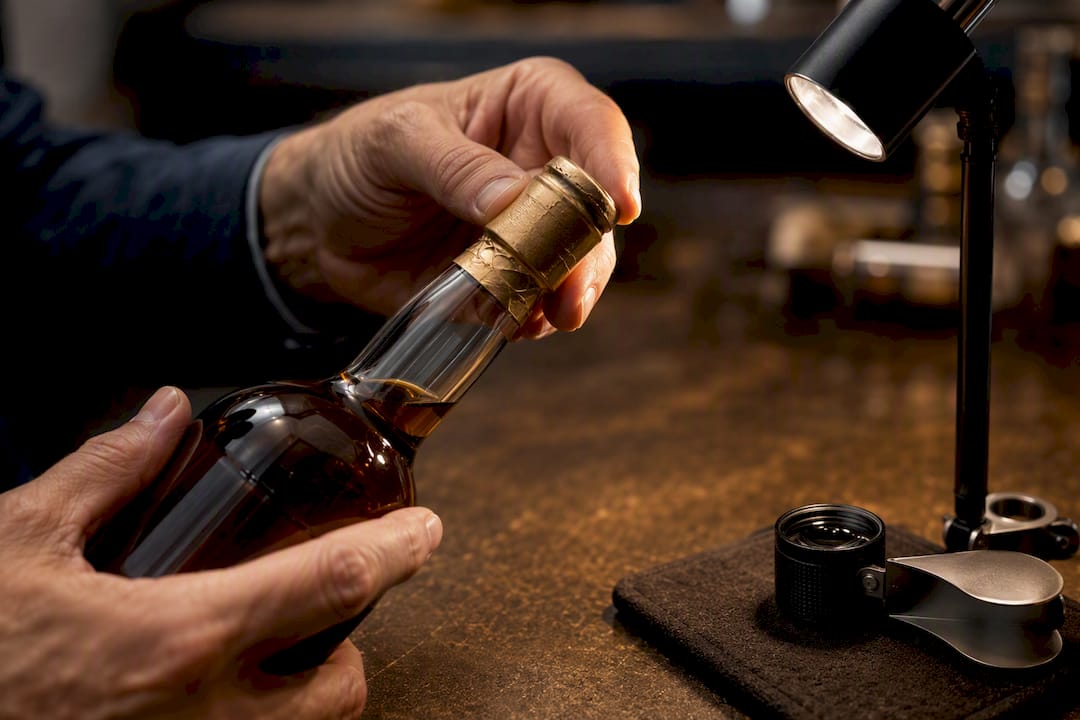
Prices that sit dramatically below recent auction results for the same bottle deserve suspicion rather than excitement. A genuine bargain exists occasionally, but a price far below every comparable recent sale is far more likely to signal a fake, a damaged bottle being misrepresented, or a payment scam that vanishes once you’ve sent funds.
Watch for pressure tactics: sellers pushing you to pay immediately via bank transfer outside a platform’s protected payment system, or claiming “someone else is about to buy it” to rush your decision. Reputable auction houses and retailers never need to pressure you this way.
Be wary too of bottles advertised with vague or shifting stories about provenance. If a seller’s explanation of where the bottle has been for the last twenty years changes between messages, treat that as a serious red flag rather than a minor inconsistency.
Finally, always buy through a platform or auction house with a genuine dispute resolution process. Private sales through unmoderated social media groups offer no recourse at all if something goes wrong.
Insuring rare whisky during transit and storage
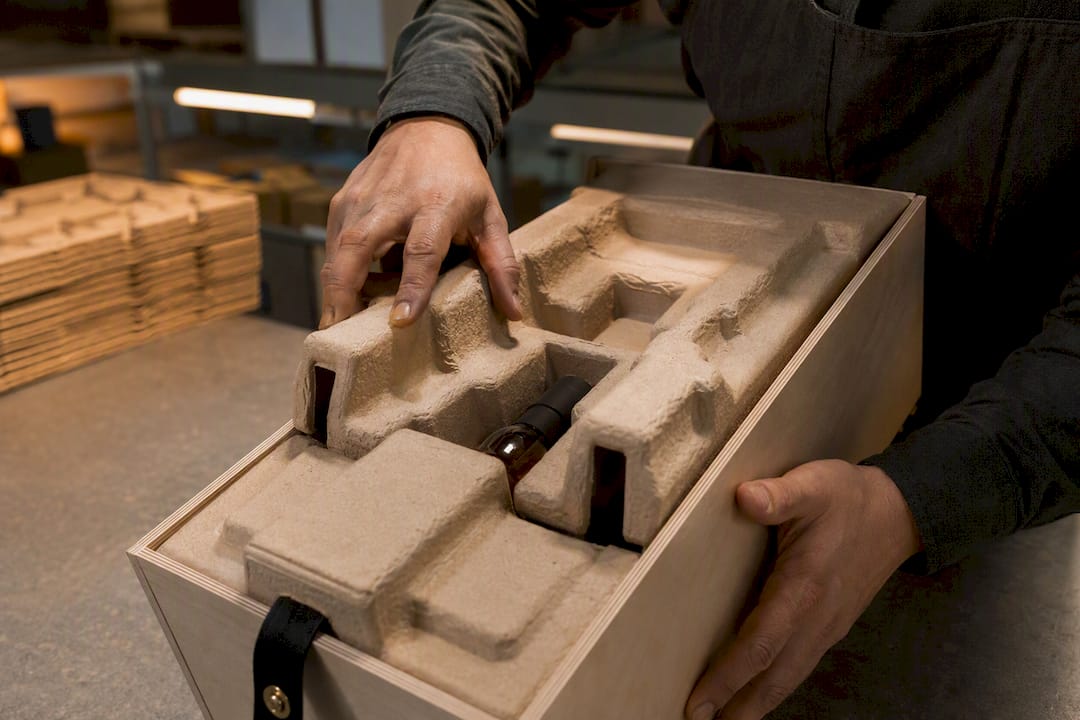
A bottle worth several hundred dollars or more deserves cover that a standard courier’s default liability simply doesn’t provide. Most shipping carriers cap compensation for damaged or lost items at a modest flat rate, which is nowhere near what a genuinely rare bottle costs to replace.
For transit, always ask whether the seller or auction house offers insured shipping as an option, and take it for anything beyond an entry-level purchase. If insurance isn’t offered, arrange it yourself through a specialist courier or a standalone shipping insurance provider before the bottle leaves the seller’s hands, not after.
Once a bottle reaches your home, standard contents insurance policies often exclude or severely cap coverage for collectible items like whisky, treating them the same as ordinary household goods. If your collection is worth a meaningful sum, look into specialist collectibles insurance or a rider added to your existing home policy that explicitly names high-value bottles.
Keep your documentation current for insurance purposes. An insurer settling a claim will want proof of purchase price, condition photos taken on arrival, and ideally a professional valuation for anything genuinely high-end. This is another reason the tracking spreadsheet mentioned earlier isn’t just a hobbyist’s nice-to-have. It’s the paper trail that gets a claim paid quickly instead of disputed for months.
Understanding the full price: taxes, duties and shipping
The number you see listed rarely reflects what you’ll actually pay once a bottle changes hands, especially across borders.
Domestic purchases are the simplest to budget for. You’re typically looking at the listed price, any applicable sales tax, and a shipping fee that scales with distance and whether the courier requires an adult signature on delivery, which most alcohol shipments do.
International purchases add layers. Import duties and taxes on alcohol vary significantly by destination country, and many governments apply excise duty specifically to spirits on top of standard import tax, calculated on the bottle’s declared value. Some countries also charge per-litre-of-alcohol excise rates rather than a flat percentage, which can make a low-ABV bottle cheaper to import than a high-proof one of similar price.
Auction purchases stack an additional cost: the buyer’s premium, calculated as a percentage of the hammer price, which most houses disclose upfront but which new bidders frequently forget to include in their mental budget until the final invoice arrives.
Before you bid or buy internationally, get a landed-cost estimate that includes the bottle price, buyer’s premium if applicable, shipping, insurance, and an estimate of your destination country’s import duty and tax on spirits. Treat that total, not the sticker price, as the number you’re actually deciding whether to pay.
A collector-minded approach to buying rare whisky
Buy for enjoyment first, provenance second, and appreciation last. That order has served collectors far better than chasing whatever index or auction trend is generating headlines this year, and it lines up with what Whisky Magazine’s guidance on building a collection with meaning argues: collections built around genuine interest hold up better, financially and personally, than ones built purely on speculation.
If you’re starting out, pick one distillery or region that genuinely interests you and go deep before you go wide. Track everything from bottle one. Those two habits will do more for your collection’s future value than any amount of auction-watching ever will.
— Brendan
How Uisuki helps you source rare and hard-to-find bottles
Finding a specific rare bottle often comes down to who you know, not just what’s listed online. Uisuki’s personalised sourcing requests exist for exactly that gap. You tell the team what you’re chasing, whether that’s a specific vintage, a closed-distillery release, or something from a collaboration series, and Uisuki works its network to track it down rather than leaving you to comb auction sites alone.
Some specialised retailers provide documentation and authenticity checks, plus insured shipping arranged as standard rather than something you have to request and hope for. The Hobart Whisky bourbon-matured, rum-finished single malt is a good example of the kind of limited-batch Australian release that rarely stays listed for long. If there’s a specific bottle on your list, browse the current stock or submit a sourcing request and let Uisuki do the hunting.
Sources
- 10 Tips to Navigating the Whiskey Market like a Pro | Sotheby’s
- How to build a whisky collection – with meaning and feeling | Whisky Magazine