

Bold moves in the rare whisky market start with meticulous documentation. For Australian collectors pursuing investment-grade bottles, establishing provenance can increase a bottle’s value by up to fifty percent compared to unverified counterparts. In a global marketplace where authenticity is constantly challenged, expert guidance on records, condition checks, and scientific verification is crucial. Discover practical steps for building a credible valuation portfolio while ensuring your prized whiskies meet the strictest international standards.
Table of Contents
- Step 1: Gather Essential Documentation And Provenance
- Step 2: Inspect Bottle Condition And Packaging Details
- Step 3: Research Market Trends And Valuation Benchmarks
- Step 4: Verify Authenticity Through Expert Resources
- Step 5: Assess Investment Potential And Resale Options
Quick Summary
| Key Point | Explanation |
|---|---|
| 1. Compile thorough documentation | Gather receipts, certificates, and records to establish provenance and authenticity. |
| 2. Conduct a detailed inspection | Assess bottle and packaging condition to detect flaws that affect value. |
| 3. Stay informed on market trends | Research auction results and expert evaluations to understand valuation benchmarks. |
| 4. Verify authenticity with experts | Consult professionals for scientific analysis and verification of your whisky’s legitimacy. |
| 5. Evaluate investment options | Explore diverse resale channels and understand market dynamics for better returns. |
Step 1: Gather essential documentation and provenance
Authentic valuation of rare whisky depends entirely on meticulously collected documentation. Your goal in this step is to compile a comprehensive portfolio of records that trace your whisky bottle’s complete historical journey, proving its legitimacy and potential investment value.
Start by gathering every available piece of documentation related to the whisky. This means hunting down original purchase receipts, certificates of authenticity, auction records, and shipping documents. Comprehensive provenance research is critical for establishing a bottle’s genuine history and market worth. Look for detailed records showing the bottle’s ownership timeline an export and import history. Professional collectors often maintain detailed logbooks tracking each bottle’s movement, which can significantly enhance its perceived value.
Photographic evidence becomes equally crucial. Take high resolution images documenting the bottle’s physical condition, original packaging, label integrity and any unique markings. Expert documentation practices suggest capturing multiple angles that showcase authenticity markers. Consider having a professional whisky authenticator review your collected documentation to validate its comprehensiveness and legal standing.
Top Tip: Always store original documentation in archival quality protective sleeves or folders to prevent degradation and maintain the records’ pristine condition.
Step 2: Inspect bottle condition and packaging details
In this critical stage of whisky appraisal, your goal is to conduct a forensic examination of the bottle’s physical condition, which directly impacts its market value and collectibility. A meticulous inspection process will help you assess the bottle’s authenticity and potential worth.
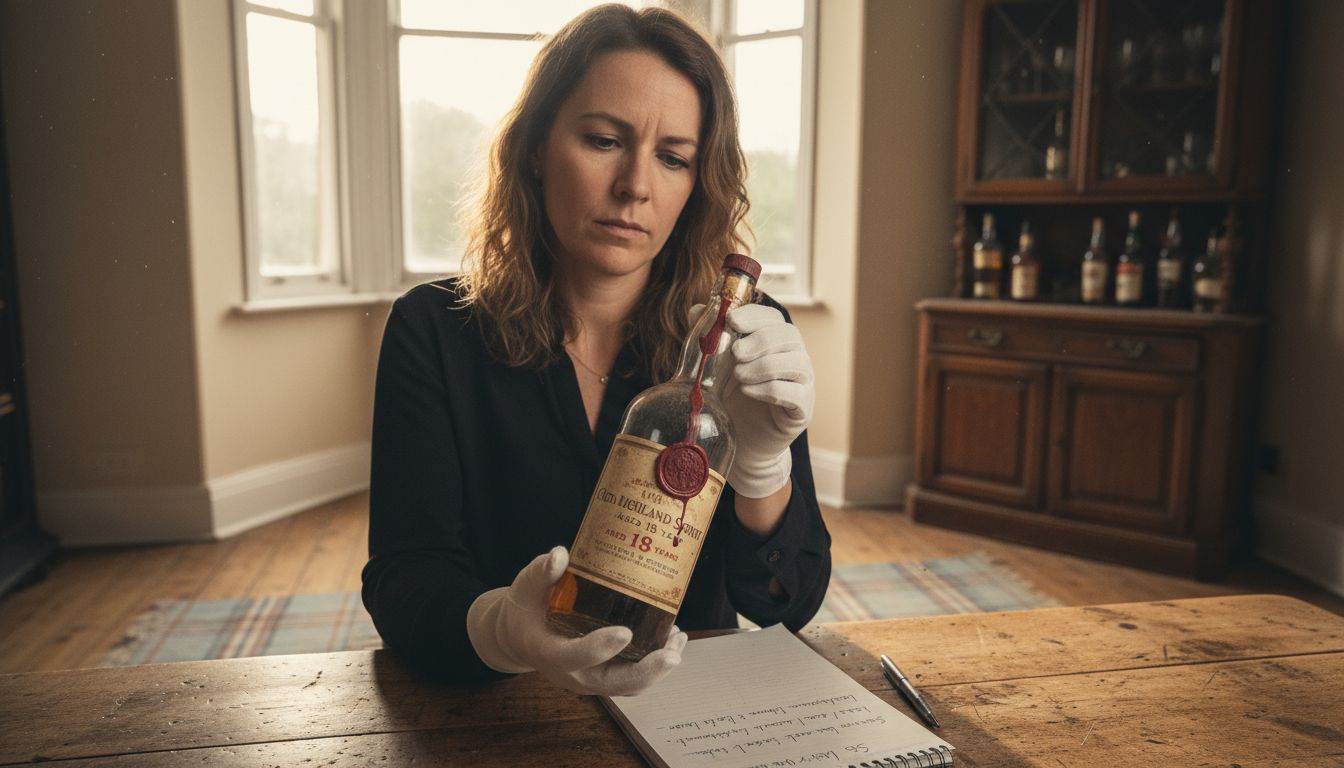
Begin with a comprehensive visual assessment of every aspect of the bottle. Examine the label for any signs of wear, fading, or damage. Look closely at the seal integrity, checking whether the original cork or closure remains intact and undamaged. Condition reporting techniques recommend documenting any imperfections through high resolution photographs. Pay special attention to the bottle’s exterior for scratches, discolouration, or structural compromises. Even subtle marks can significantly influence a rare whisky’s valuation. Professional collectors typically use specialised lighting and magnification tools to detect minute details that might escape casual observation.
While examining the packaging, verify the bottle’s original presentation box or protective casing. Collectors prize bottles with complete original packaging, as this demonstrates the whisky’s preservation and enhances its collectible status. Record the condition of secondary packaging elements such as tissue paper, cardboard inserts, or additional documentation that accompanied the original purchase. Systematic documentation of these details creates a comprehensive provenance profile that authenticates the bottle’s history and potential investment value.
Top Tip: Invest in archival white cotton gloves when handling rare whisky bottles to prevent oils from your skin causing potential damage or degradation.
Step 3: Research market trends and valuation benchmarks
Valuing rare whisky requires deep understanding of current market dynamics and expert insights that drive collector interest. Comprehensive industry research reveals that whisky valuation is a complex interplay of factors including distillery reputation, production techniques, age, and global market demand.
Start by consulting authoritative sources that track whisky market movements. The globally recognised whisky evaluation resources like Jim Murray’s Whisky Bible provide crucial benchmarks for understanding bottle worth. Pay attention to recent auction results, collector magazines, and specialised online platforms that track rare whisky sales. Look for trends in specific distilleries, limited editions, and vintage releases. Consider factors like production volume, historical significance, and current collector sentiment. Professional appraisers typically analyse multiple data points including recent sale prices, market demand fluctuations, and emerging collector preferences to develop an accurate valuation.
Digital platforms and specialised auction houses now offer real time market insights that can help you understand the current value of rare whiskies. Track price histories for similar bottles, noting how factors like bottle condition, original packaging, and provenance impact market value. Attend whisky collector forums and networking events to gain insider knowledge about emerging trends and potential investment opportunities.
Top Tip: Create a digital spreadsheet to track whisky prices across multiple platforms and update it regularly to maintain an accurate market value reference.
Step 4: Verify authenticity through expert resources
Authenticity verification represents the most critical step in rare whisky appraisal and requires a multifaceted approach that combines scientific analysis and expert consultation. Advanced scientific authentication techniques now provide unprecedented precision in identifying genuine rare whiskies.
Consult multiple authoritative expert resources to cross reference your bottle’s credentials. Renowned whisky experts like Jim Murray offer comprehensive evaluation resources that can help validate your bottle’s authenticity. Seek opinions from professional whisky authenticators who specialise in detailed provenance research. These experts utilise advanced techniques including chemical analysis, historical documentation verification, and comparative assessments against known benchmark bottles. Professional authentication involves examining microscopic details such as label printing techniques, bottle manufacturing characteristics, and unique distillery markers that counterfeiters struggle to replicate accurately.
Expand your verification strategy by engaging with specialised whisky authentication networks. Join collector forums, attend whisky conventions, and connect with industry professionals who can provide nuanced insights. Consider submitting your bottle to recognised authentication services that offer comprehensive scientific and historical verification processes. These services can provide official certification documents that significantly enhance your whisky’s credibility and potential market value.
Top Tip: Always retain original authentication documentation and certification as these become crucial supporting evidence for future valuations and potential sales.
Step 5: Assess investment potential and resale options
Effective whisky investment requires a strategic approach that goes beyond simple acquisition. Comprehensive investment analysis reveals multiple factors that influence potential returns and market performance for rare whisky collectors.
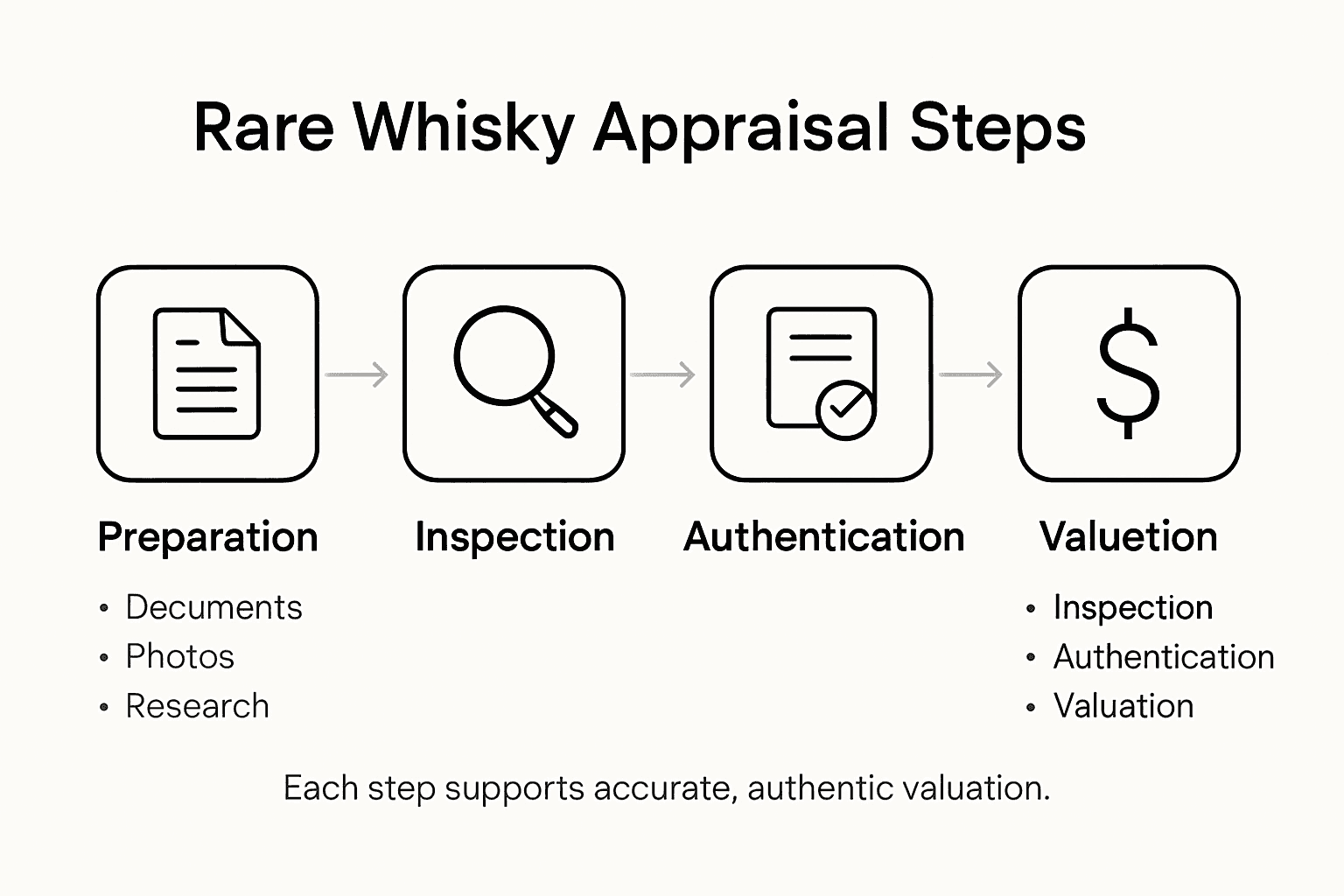
Strategic investment considerations involve understanding the complex ecosystem of rare whisky markets. Evaluate potential investments by examining critical variables such as distillery reputation, production volume, historical performance, and emerging collector trends. Professional collectors track multiple metrics including annual appreciation rates, market demand fluctuations, and regional collector preferences. Consider factors like limited edition releases, historical significance, and the bottle’s potential for long term value appreciation. Some rare whiskies can demonstrate impressive investment returns particularly those from discontinued distilleries or commemorative releases with compelling provenance.
Develop a diversified approach to whisky investment by exploring different resale channels. Specialist auction houses, online collector platforms, and international whisky exchanges offer various opportunities for selling rare bottles. Network with professional whisky brokers who can provide insights into optimal selling strategies. Research recent sale prices for similar bottles and understand the timing and market conditions that maximise potential returns. Remember that whisky investment requires patience and strategic planning rather than expecting immediate financial gains.
The following table summarises popular rare whisky resale channels and their distinct advantages:
| Resale Channel | Key Benefit | Typical Fees | Best For |
|---|---|---|---|
| Specialist Auction House | Expert audience access | Moderate to high | High-value bottles |
| Online Collector Platform | Fast transactions possible | Low to moderate | Broad range of bottles |
| Whisky Broker | Personalised sales strategy | Variable | Complex portfolios |
| International Exchange | Global buyer exposure | Varies | Limited editions |
Top Tip: Maintain a detailed digital portfolio documenting each whisky’s purchase details, market value trends, and potential future appreciation to make informed investment decisions.
Here is an overview comparing key considerations for rare whisky valuation at each appraisal step:
| Appraisal Step | Main Focus | Professional Practice | Impact on Value |
|---|---|---|---|
| Gather Documentation & Provenance | Original records & ownership | Keep detailed archives | Confirms authenticity |
| Inspect Condition & Packaging | Physical state & packaging | Use magnification tools | Detects hidden flaws |
| Research Market Trends & Benchmarks | Sales data & benchmarks | Track price histories | Informs investment timing |
| Verify Authenticity with Experts | Scientific & expert review | Seek expert authentication | Provides legal confidence |
| Assess Investment & Resale Potential | Market channels & returns | Diversify resale strategies | Maximises future profit |
Discover and Invest in Authentic Rare Whiskies with Uisuki
Appraising rare whiskies demands expert knowledge of provenance, condition, market trends and authenticity. At Uisuki, we understand the challenges collectors face when verifying a bottle’s true value and investment potential. Our curated selection of rare and premium whiskies, including exceptional Scottish malts like Glendronach and diverse options from around the world in our World Whiskies collection, offers you trusted bottles with detailed information to help you build provenance and confidence.
Gain access to expertly sourced whiskies with accurate descriptions and provenance details to support your valuation efforts. Visit Uisuki.com.au now to explore our exclusive range and strengthen your whisky collection with authentic products verified for quality and heritage. Act today to secure rare finds that combine investment potential with enjoyment.
Frequently Asked Questions
How do I gather documentation to appraise my rare whisky?
Start by collecting every piece of paperwork related to your whisky, including original purchase receipts, certificates of authenticity, and shipping documents. Organise these records meticulously to establish your bottle’s provenance and value.
What should I look for when inspecting the condition of my whisky bottle?
Examine the bottle’s label, seal, and overall appearance for any wear, damage, or imperfections. Take high-resolution photographs during your inspection to document the bottle’s condition, which can significantly influence its market value.
How can I research market trends for rare whisky valuation?
Consult various resources to gather information on recent auction results and collector insights. Keep track of price histories and market demand for similar bottles to gauge what factors influence valuation.
What steps should I take to verify the authenticity of my rare whisky?
Engage with experts who specialise in whisky authentication to validate your bottle’s credentials. This may involve scientific analysis and comparison with known benchmark bottles to ensure your whisky is genuine.
How can I assess the investment potential of my rare whisky?
Evaluate factors such as distillery reputation, historical performance, and collector interest in limited editions. Create a digital portfolio to monitor your whisky’s market trends and potential appreciation to make informed investment decisions.
What are some resale options for my rare whisky?
Consider various channels like specialist auction houses, online collector platforms, or whisky brokers. Each channel has different advantages and fees, so evaluate which aligns best with your investment goals.