

This page is an alphabetical A–Z index of whisky brands, cross-referenced by country and style, built to help you find a specific name fast or browse an entire category. You’ll find:
- An A–Z index with sample entries across letters
- Brands sorted by region and style (Scotch, Bourbon, Irish, Japanese, and more)
- Practical steps for filtering by ABV, age, or finish
- A pointer to Com’s full searchable catalogue, updated as new bottles arrive
For the exhaustive, constantly updated version of this list, Com’s catalogue is the place to go beyond the samples below.
Key Takeaways
An alphabetical, country-sorted brand index works better than a ranked list because it lets you filter by style and provenance before price ever enters the decision.
| Point | Details |
|---|---|
| Use style before price | Filter by country and style (Scotch, Bourbon, Irish, Japanese) before you compare price tiers. |
| Brand name isn’t the whole story | Check whether a bottle is distillery-bottled or independently sourced before judging rarity. |
| Legal rules shape flavour | Bourbon’s charred new oak and Tennessee’s charcoal filtering directly explain taste differences. |
| Track batch and cask details | Note batch or cask numbers on limited releases to confirm you’re getting a genuine one-off. |
| Com backs the index with stock | Com’s catalogue spans Scotland, Japan, Australia, and the US, with sourcing requests for rare bottles. |
Table of Contents
- The A–Z brands of whiskey list explained
- Whisky brands by country and style
- How to use this list to research and shop
- How Com backs this brand index
- Brands sorted by price tier: entry-level to luxury
- A short history of the brands that shaped the category
- Flagship expressions worth knowing from each brand
- Brands defined by unusual flavour or production choices
- Why an alphabetical index beats a “best of” ranking
- Where to find and buy these brands directly
- Frequently asked questions
- Sources
The A–Z brands of whiskey list explained
An alphabetical brand index works like a phone book for whisky: every entry sits under its first letter, then carries a short profile, country of origin, and style tag so you can tell at a glance whether you’re looking at a Speyside single malt or a Kentucky straight bourbon. A well-built entry shows four things: the brand name, its home country, its primary style, and a one-line note on what makes it distinct. That structure is what separates a genuinely useful list of whisky brands from a wall of unsorted names.
Here’s a sample stretch across the alphabet to show how varied the categories get:
- Ardbeg — Scotland, Islay single malt, known for heavy peat and smoke.
- Buffalo Trace — United States, Kentucky bourbon, one of the most referenced names in US sales data.
- Canadian Club — Canada, blended Canadian whisky, a long-running mainstream label.
- Four Roses — United States, bourbon, distinctive for using ten different bourbon recipes at one distillery.
- Glenfiddich — Scotland, Speyside single malt, one of the best-selling single malts globally.
- Hobart Whisky — Australia, single malt, part of the growing Tasmanian distilling scene.
- Ichiro’s Malt — Japan, blended and single malt releases, prized among collectors for limited card-series editions.
- Jameson — Ireland, blended Irish whiskey, triple-distilled and one of the most exported Irish brands.
- Knob Creek — United States, small-batch bourbon, aged longer than most entry-level bourbons.
- The Macallan — Scotland, Speyside single malt, built its reputation on sherry-cask maturation.
Pro Tip: When you’re scanning an A–Z list, check the style tag before the name. Two brands starting with the same letter can sit in completely different categories, and that tag saves you clicking into a bottle that’s nothing like what you expected.
Com’s full A–Z runs well beyond this sample and gets refreshed as new arrivals, rare drops, and limited releases come into stock. Rather than reproducing hundreds of entries here, this page gives you the shape of the index. The full catalogue lets you search by name directly, and the Australian brands guide is a good companion if you’re starting with the local scene before branching into Scotch or Bourbon.
Whisky brands by country and style
Every major whisky-producing country has its own legal rulebook, and that rulebook is often the fastest way to understand why a bottle tastes the way it does.
- Scotch (Scotland): Must be distilled and matured in Scotland for at least three years in oak casks. Brands like The Macallan, Ardbeg, and Glenfiddich sit here, each tied to a specific region (Speyside, Islay, Highland) with its own house style.
- Bourbon (United States): Legally requires a mash bill of at least 51% corn and ageing in charred new oak barrels, which is where bourbon gets its caramel and vanilla notes. Buffalo Trace, Knob Creek, and Four Roses are commonly referenced examples.
- Tennessee whiskey (United States): Bourbon-adjacent but filtered through the Lincoln County Process, a charcoal mellowing step before barrelling. Jack Daniel’s is the defining name in this category.
- Irish whiskey (Ireland): Typically triple-distilled and matured for a minimum of three years. Jameson is the volume leader, though smaller pot-still producers have grown fast in the last decade.
- Japanese whisky (Japan): Historically modelled on Scotch production but increasingly defined by its own standards body. Ichiro’s Malt is a standout for limited, highly collectible releases.
- Canadian whisky (Canada): Often blended, frequently high-rye, with Canadian Club among the most recognised names.
- Australian whisky: A newer but fast-growing category, with Tasmanian producers like Hobart Whisky building a reputation on local barley and cool-climate maturation.
- Indian whisky: A large domestic market with brands increasingly exporting single malts distilled from Indian-grown barley.
One thing worth knowing before you shop by brand name: a lot of production in the US is concentrated among a small number of parent companies, so several labels you’d assume are independent are actually made at the same distillery. A brand name tells you who bottled and marketed the whisky, not necessarily who distilled it, and that distinction matters more the further up the price ladder you go. The types of whiskey brands explained guide breaks this down further if you want the full picture before you start comparing regions in detail.
How to use this list to research and shop
- Filter by what you actually want first. Decide on country or style before ABV or age, since that narrows the field fastest.
- Check whether it’s distillery-bottled or independently bottled. Independent bottlers source casks from larger distilleries and release them under their own label, which changes rarity and sometimes flavour.
- Note the batch or cask number on anything limited. This is how you tell a standard house expression from a one-off release.
- Sign up for retailer alerts if you’re chasing something scarce. Small-batch and single-cask bottles move fast once listed.
How Com backs this brand index
Com maintains a curated catalogue spanning Scotland, Japan, Australia, and the United States, which gives this brand index real depth rather than a list of names with nowhere to go. Every brand page links through to:
- Detailed product listings with ABV, age statement, and tasting notes
- Educational guides on whisky types and history for context before you buy
- Filters to narrow by country, style, or price
- A sourcing request option if you’re after something rare that isn’t currently listed
Comprehensive catalogues in this space aren’t unusual. Bevvy, for example, tracks hundreds of whiskies across dozens of brands, which shows how much detail a serious index needs to be genuinely useful rather than just decorative.
Brands sorted by price tier: entry-level to luxury
Price tier is often a better starting filter than brand name alone, especially if you’re gifting or building a first collection.
Entry-level (roughly under $60) covers reliable, widely available bottles built for everyday drinking rather than collecting. Standard-strength blends and younger single malts sit here, and they’re the right place to start if you’re still working out what style you prefer.
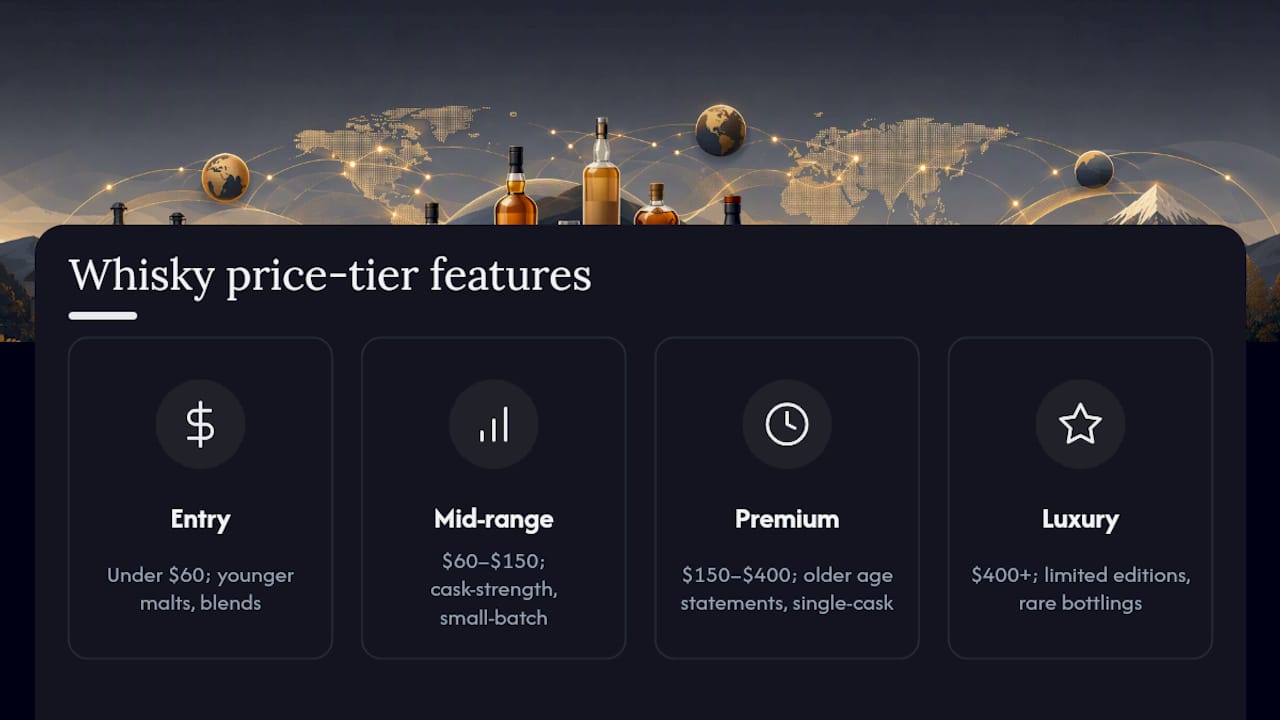
Mid-range (roughly $60 to $150) is where most cask-strength releases, aged single malts, and small-batch bourbons live. This tier rewards a bit of research, since quality jumps noticeably once you’re paying for longer maturation or a specific cask finish.
Premium (roughly $150 to $400) brings older age statements, single-cask releases, and brands with a strong critical reputation. Whisky Advocate’s annual Top 20 draws heavily from this bracket, and its selection criteria are worth understanding: the list balances rating quality against real-world availability and price, rather than naming the single best-tasting whisky regardless of whether anyone can actually buy it.
Luxury (roughly $400 and up) is dominated by limited editions, rare independent bottlings, and heritage names with decades of maturation. This is where provenance checks matter most, because the price gap between a genuine limited release and a marketing-driven “special edition” can be enormous.
A short history of the brands that shaped the category
Most of the names on any brand index trace back further than people expect. Jameson dates to 1780 in Dublin and helped define what Irish whiskey tastes like today: light, smooth, and triple-distilled. Buffalo Trace’s distillery has operated continuously through Prohibition (via a medicinal whiskey licence) and two world wars, which makes it one of the most historically continuous bourbon operations in Kentucky.
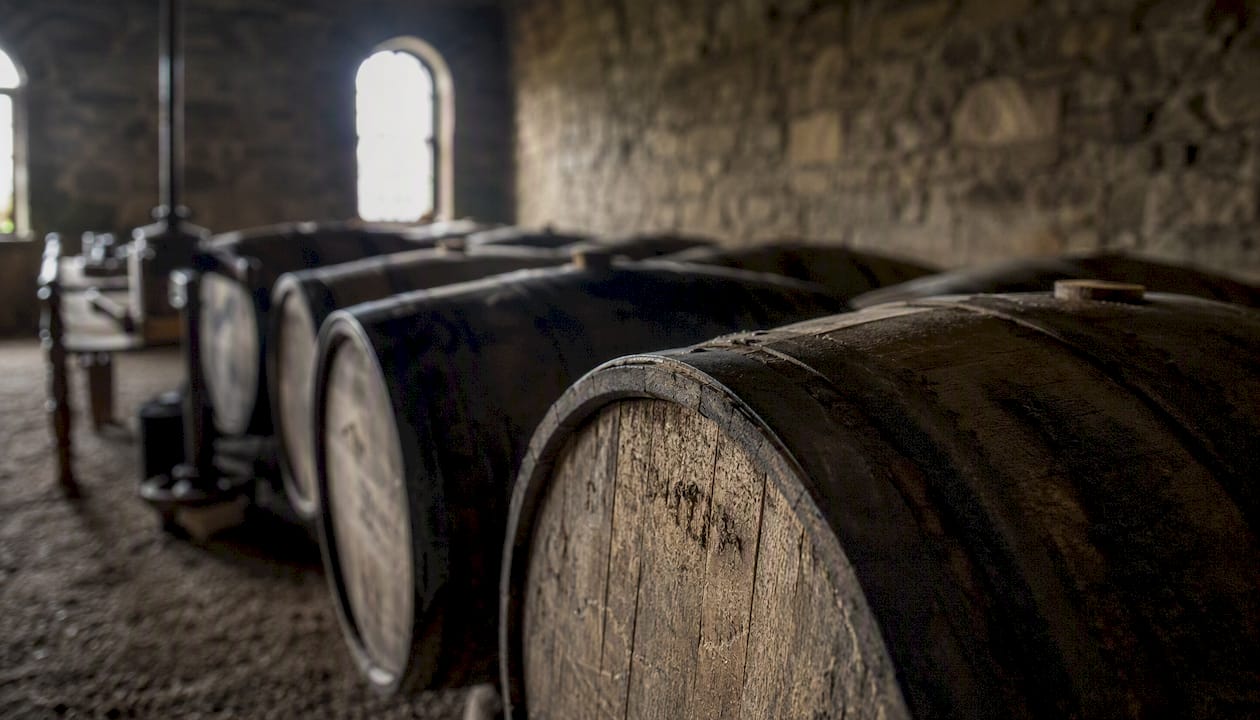
The Macallan built its identity in the 19th century around sherry-seasoned oak, a maturation choice that still defines the brand’s house style. Glenfiddich became the first single malt widely marketed outside Scotland in the 1960s, effectively creating the export single malt category as consumers know it now.
Japan’s whisky story is younger but more disruptive: Ichiro’s Malt emerged from the Hanyu and Chichibu distilleries in the early 2000s, and its limited “Card Series” releases went from obscure to globally chased within a decade, driven largely by collector demand rather than mainstream marketing. Australia’s story is younger again. Hobart Whisky is part of a Tasmanian scene that’s barely two decades old but already produces single malts that compete on quality with much older Scottish and Japanese names, helped by a cooler climate that some distillers argue accelerates cask interaction.
Flagship expressions worth knowing from each brand
Every major brand has a core expression that defines its identity, the bottle you’d hand someone as an introduction to that house style.
Glenfiddich 12 Year Old is the entry point most people meet first, a soft, pear-and-vanilla Speyside style that set the template for approachable single malt. The Macallan 12 Double Cask shows the sherry-oak influence the brand is known for without the price tag of its older releases. Ardbeg 10 is the peaty benchmark against which a lot of Islay whisky gets judged, thick with smoke and iodine.
On the bourbon side, Buffalo Trace’s namesake bottling remains one of the most consistent value releases in American whiskey, while Four Roses Small Batch showcases how blending different mash bill and yeast combinations from a single distillery can produce genuinely distinct results. Knob Creek 9 Year leans into higher proof and longer ageing than most competitors in its price bracket.
Jameson Original is still the reference point for Irish whiskey’s lighter, triple-distilled style, and Ichiro’s Malt & Grain is one of the more accessible entries into Japanese blended whisky before stepping up to single-cask releases that now command significant secondary-market prices. Each of these bottles works as a shorthand for the brand’s entire philosophy, which is exactly why they show up repeatedly across independent brand indexes and retailer catalogues alike.
Brands defined by unusual flavour or production choices
Some brands earn their reputation entirely through a production quirk rather than age or price. Four Roses distinguishes itself by running ten separate bourbon recipes (two mash bills across five yeast strains) at a single Kentucky distillery, then blending selectively rather than relying on one house recipe. Ardbeg leans hard into peat smoke during malting, producing a phenol level that makes it one of the most recognisable noses in Scotch whisky.
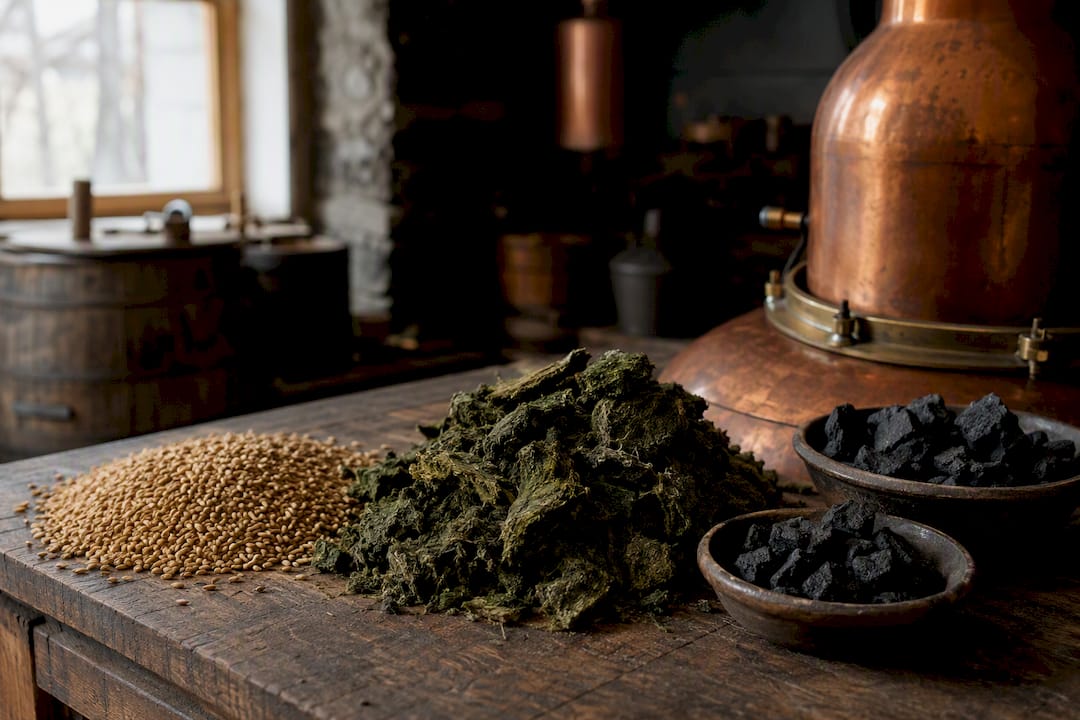
The Macallan’s near-total reliance on sherry-seasoned European and American oak casks is unusual among Speyside distilleries, most of which use a mix of ex-bourbon casks as their primary vessel. Tennessee whiskey brands built on the Lincoln County Process filter new spirit through sugar maple charcoal before barrelling, a step that softens the spirit in a way bourbon distillers don’t replicate.
Japanese producers behind brands like Ichiro’s Malt often work with limited stock from now-closed distilleries, which means some releases are genuinely irreplaceable rather than just marketed as scarce. Understanding which quirk defines a brand tells you more about what’s in the glass than any age statement or price point ever will.
Why an alphabetical index beats a “best of” ranking
Ranked lists tell you what one panel liked this year. An alphabetical index tells you what exists, which is a more useful starting point if you’re actually trying to learn the category rather than be told what to buy. The conventional advice, “just start with what’s rated highest,” skips the part where you figure out whether you even like peated Islay malts or high-rye bourbons in the first place.
Market-based lists showing what sells well are a reasonable proxy for what’s widely available, but sales volume and quality are two different measurements, and treating them as interchangeable is where a lot of buying advice goes wrong. My honest read is that most people should use a regional list to narrow down style first, then use ranked or curated lists like Whisky Advocate’s Top 20 only after they know roughly what they enjoy. Reverse that order and you end up buying critically acclaimed bottles in styles you don’t actually like.
Start with the country and style filters. Everything else, the age statement, the cask finish, the price tier, matters far less than getting that first decision right.
Where to find and buy these brands directly
Com sources bottles internationally and ships them with full product detail, ABV, age, cask finish, and tasting notes, on every listing, so you’re never guessing what’s actually in the bottle.
If you’ve been reading through this index looking for something specific, two current listings show the range on offer: the Ichiro’s Malt & Grain limited edition for a genuinely rare Japanese blend, and the Hobart Whisky bourbon-matured single malt if you want to see what Tasmanian distilling looks like at batch strength. Both are the kind of bottle that doesn’t sit on shelves long.
If you can’t find the exact brand or batch you’re chasing, Com takes personalised sourcing requests for rare and hard-to-find releases, and the newsletter flags new arrivals before they’re publicly listed. Browse the full catalogue or check the Scotch buying guide to narrow down where to start.
Frequently asked questions
What’s the difference between a whisky brand and a distillery? A distillery is the physical site where the spirit is made. A brand is the name it’s sold under, and the two don’t always match, especially in markets where a handful of parent companies own most production.
How often is a whisky brand index updated? A well-maintained catalogue updates whenever new arrivals, limited releases, or discontinued lines change stock, which for an active retailer can mean weekly changes rather than an annual refresh.
Are best-selling brands the same as the best-tasting ones? No. Sales-based lists measure popularity and availability, not critical quality, so a bottle topping a sales chart and one topping a tasting panel’s list can be entirely different bottles.
Can I request a rare or specific bottle that isn’t listed? Yes. Com accepts personalised sourcing requests for hard-to-find or discontinued bottles, and flags new arrivals through its newsletter before they go live on the site.
Sources
- List of whisky brands — Wikipedia
- Top 20 Whiskies of the Year — Whisky Advocate
- 25 Best Selling Whiskey Brands in the US — Yahoo Finance (2023-12-01)
- Bevvy — whisky brand catalogue